https://youtu.be/4Nk24eAYkfc?si=chlTbBNqE7YVeI5i&t=790 Original listing: https://www.ebay.com/itm/136752184522
Paid $17.83 shipped to my door for this clock.
Item description from the seller
The Vintage Westclox "Raven" Alarm Clock is a charming and unique decorative piece that combines functionality with a touch of retro style. With the iconic Westclox brand name and distinctive raven character, this alarm clock is sure to be a conversation starter in any room. Its vintage design adds a sense of nostalgia to your space while providing a practical way to wake up on time every morning. Perfect for collectors or those looking for a standout piece to enhance their home decor.
First Impressions
Compared to the other Big Ben clocks I’ve worked on so far this seems "less substantial"
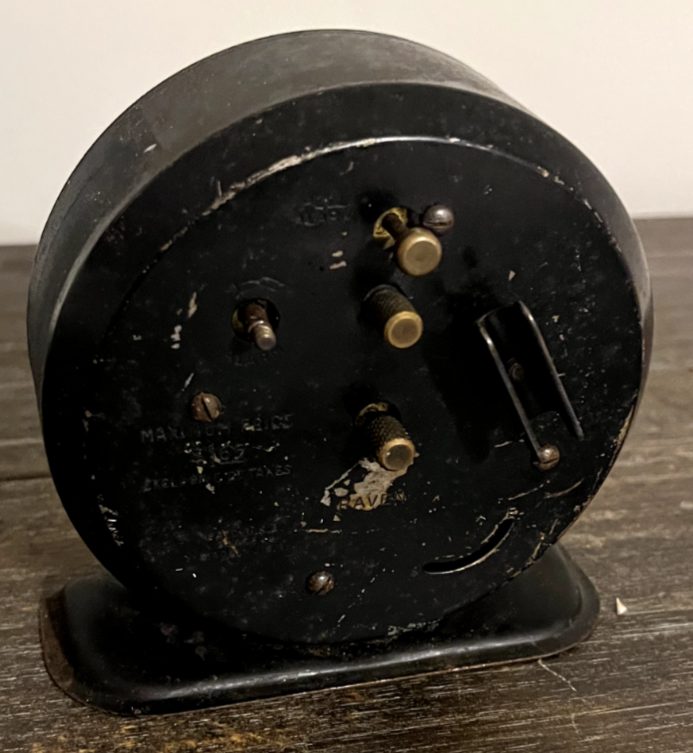
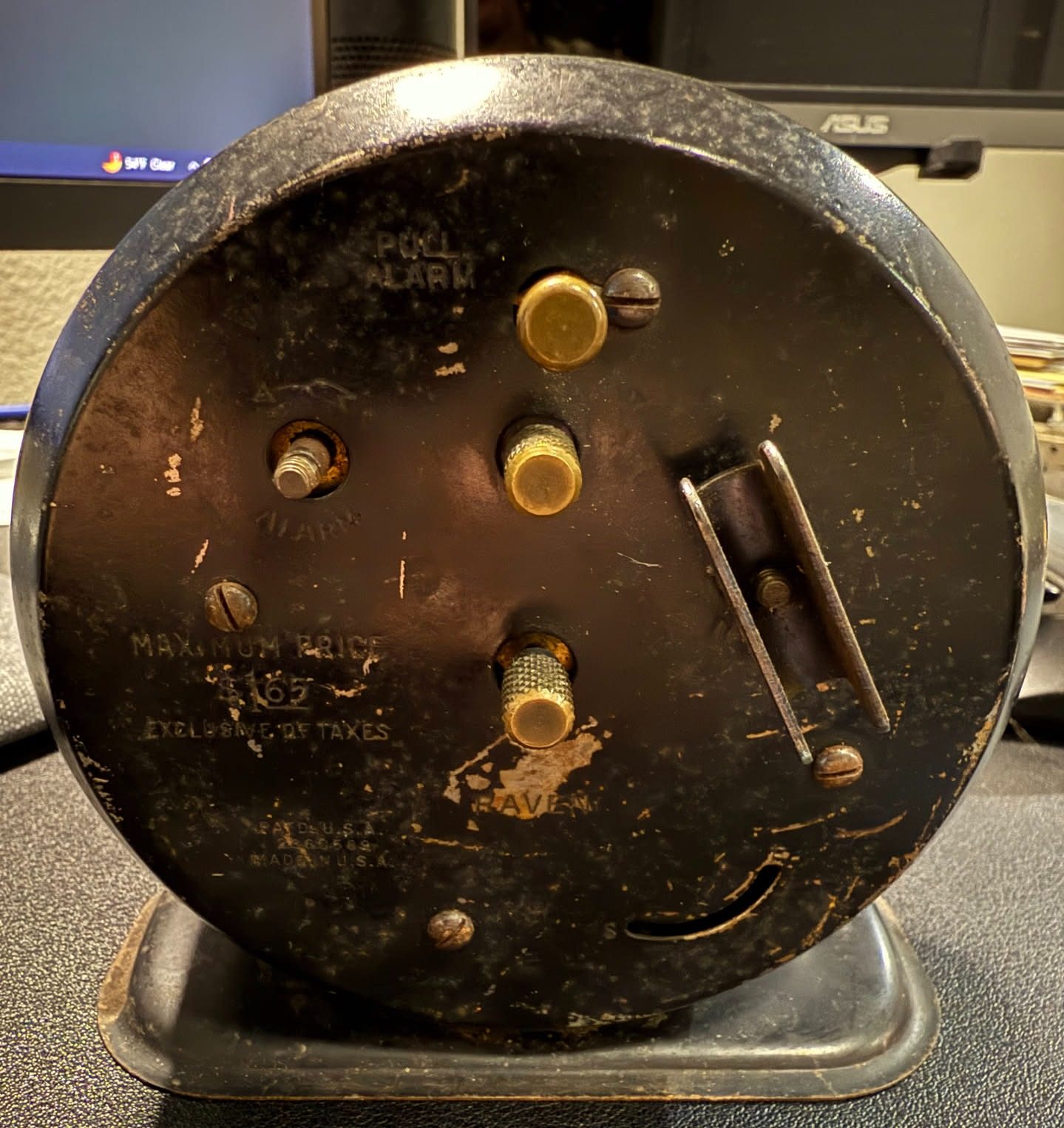
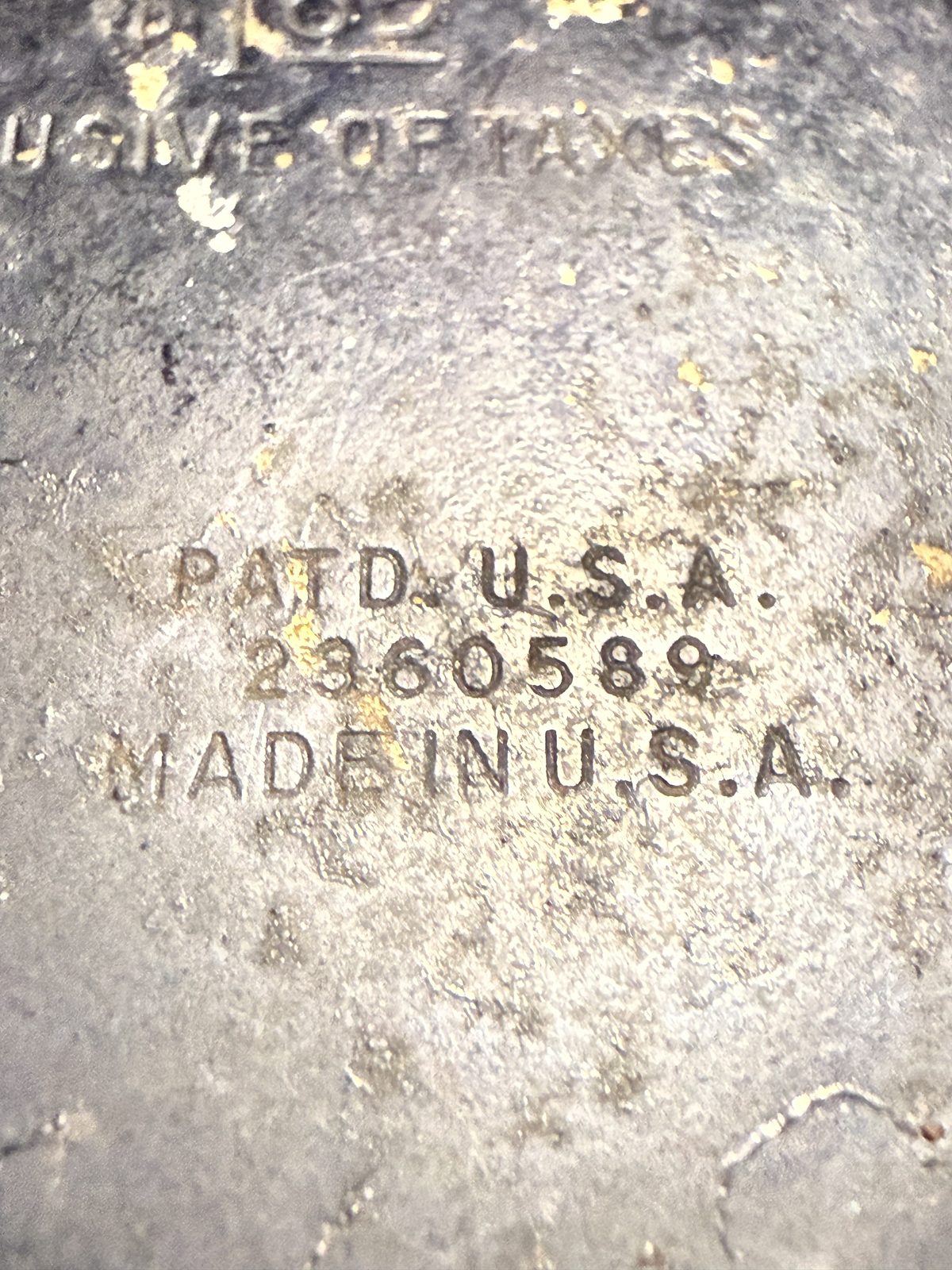
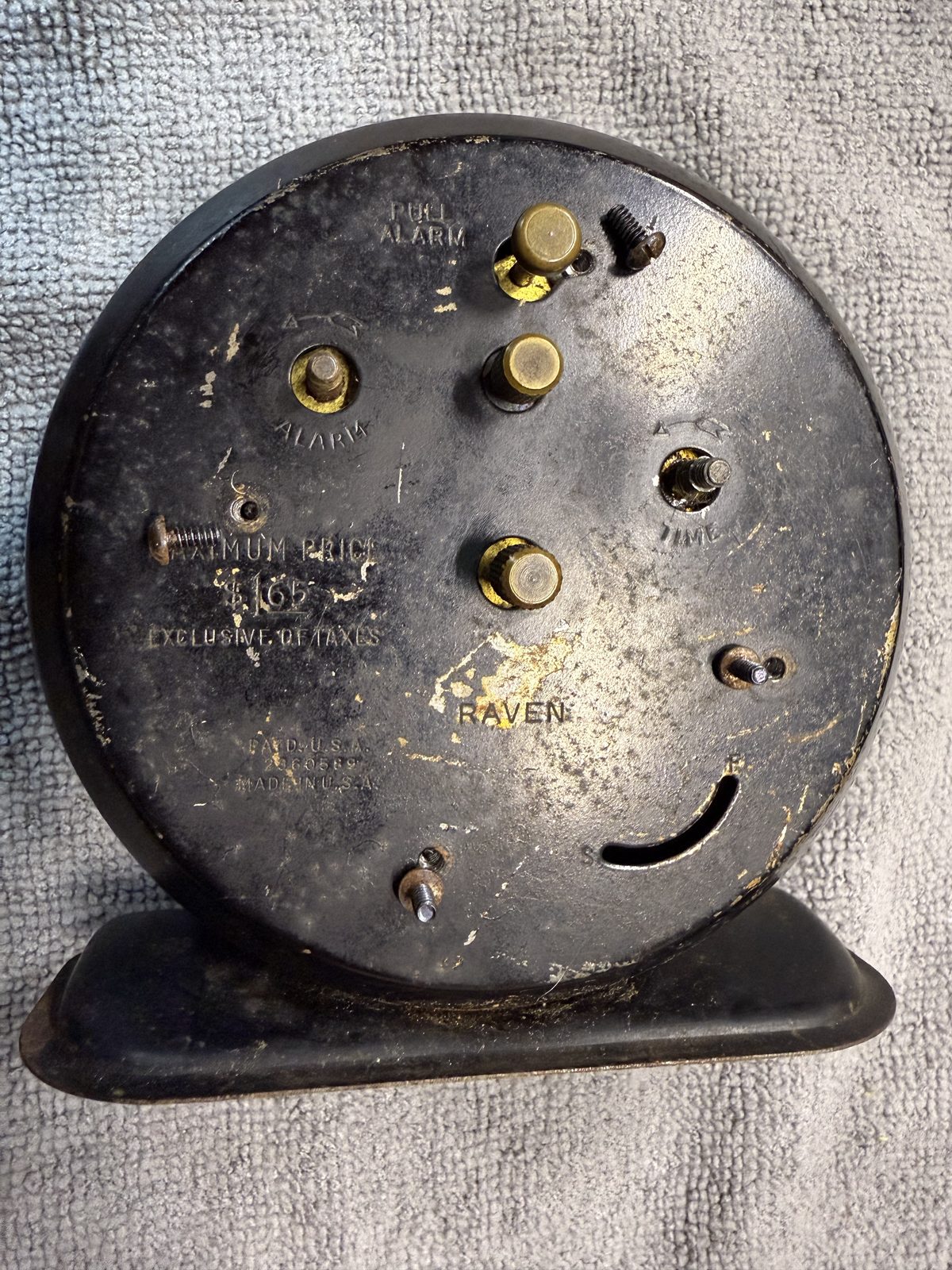
On the back is an interesting stamp "maximum price $1.65 exclusive of taxes" and it does say "RAVEN" on the back.
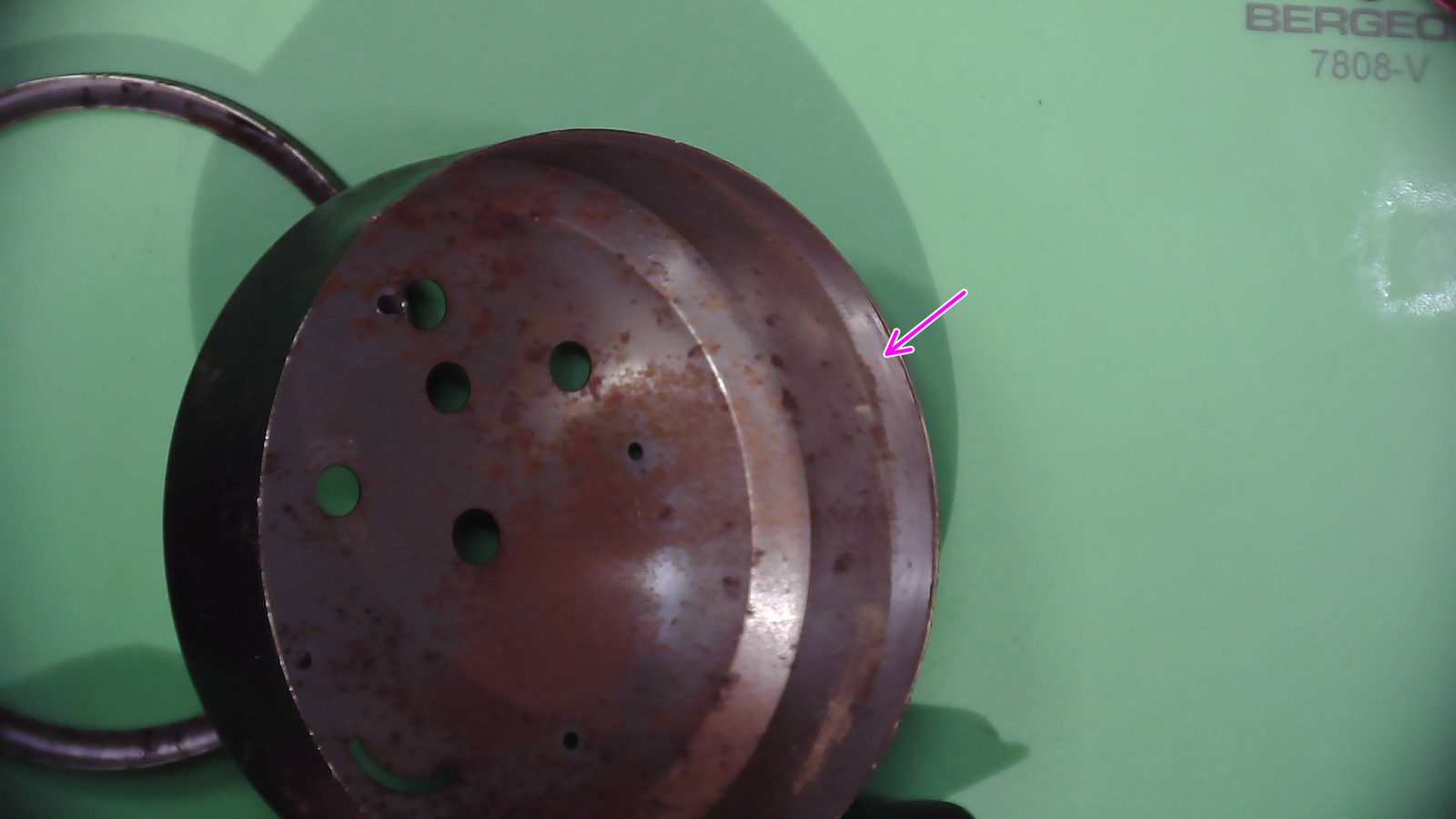
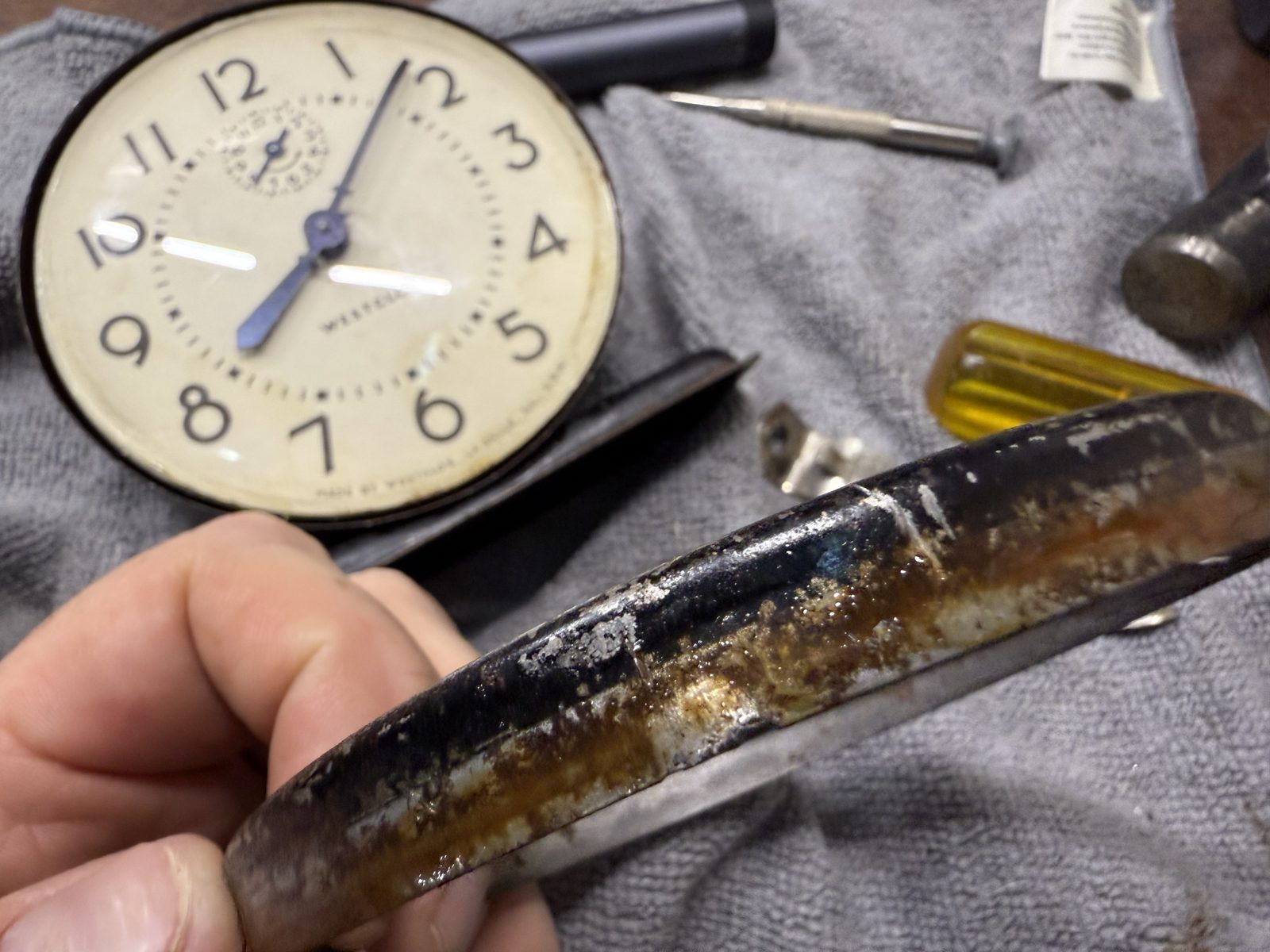
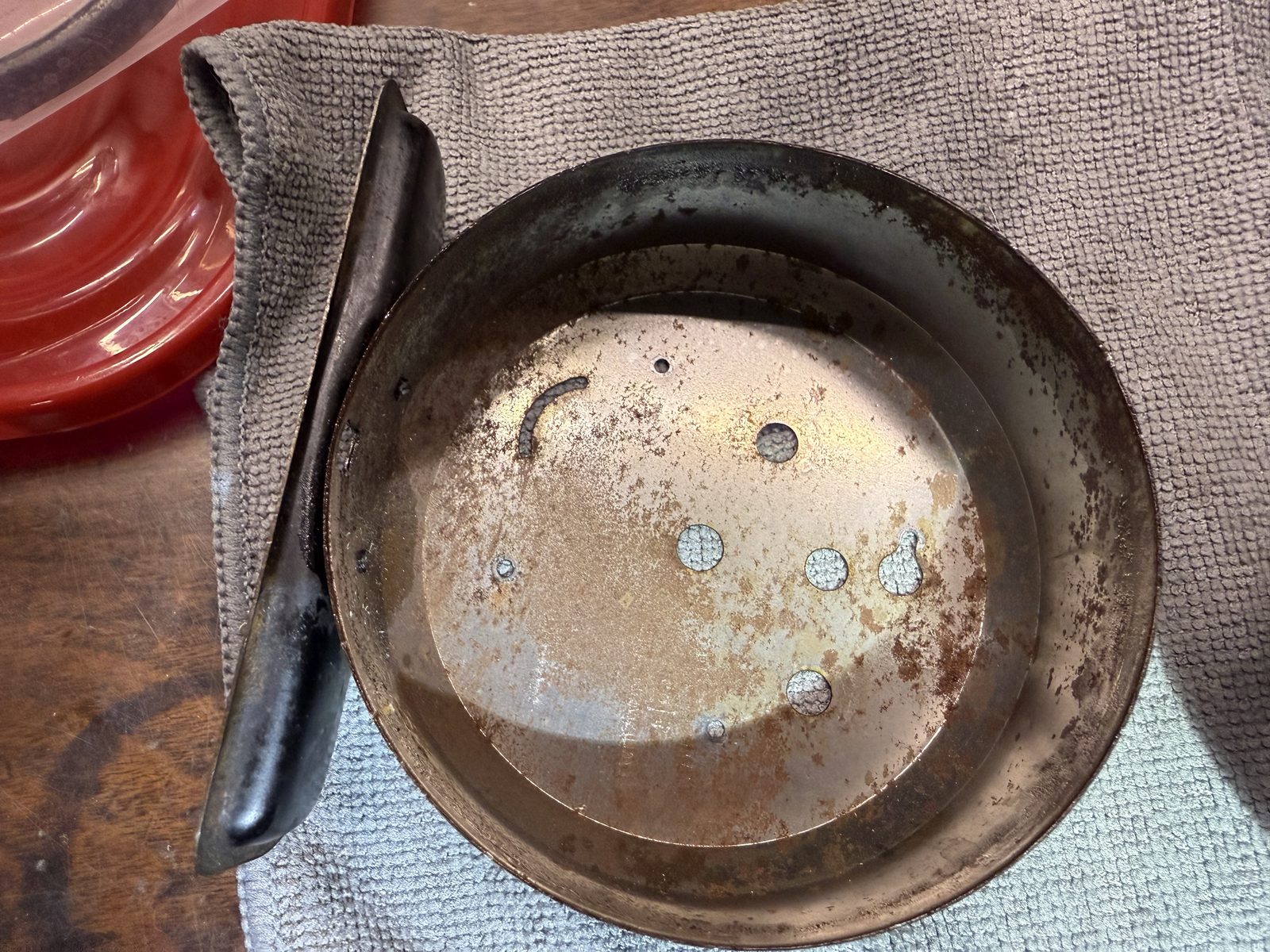
Its case isn’t in the greatest shape, possible candidate for full refurbishment.
Sticky spot on the case on the right side, like a sticker had been there a long time.
Similar Clocks
The Westclox Raven shares its core design, metal case, and movement with wartime and post-WWII models like the Waralarm, Bingo, Bellboy, and Spur
Dissassembly
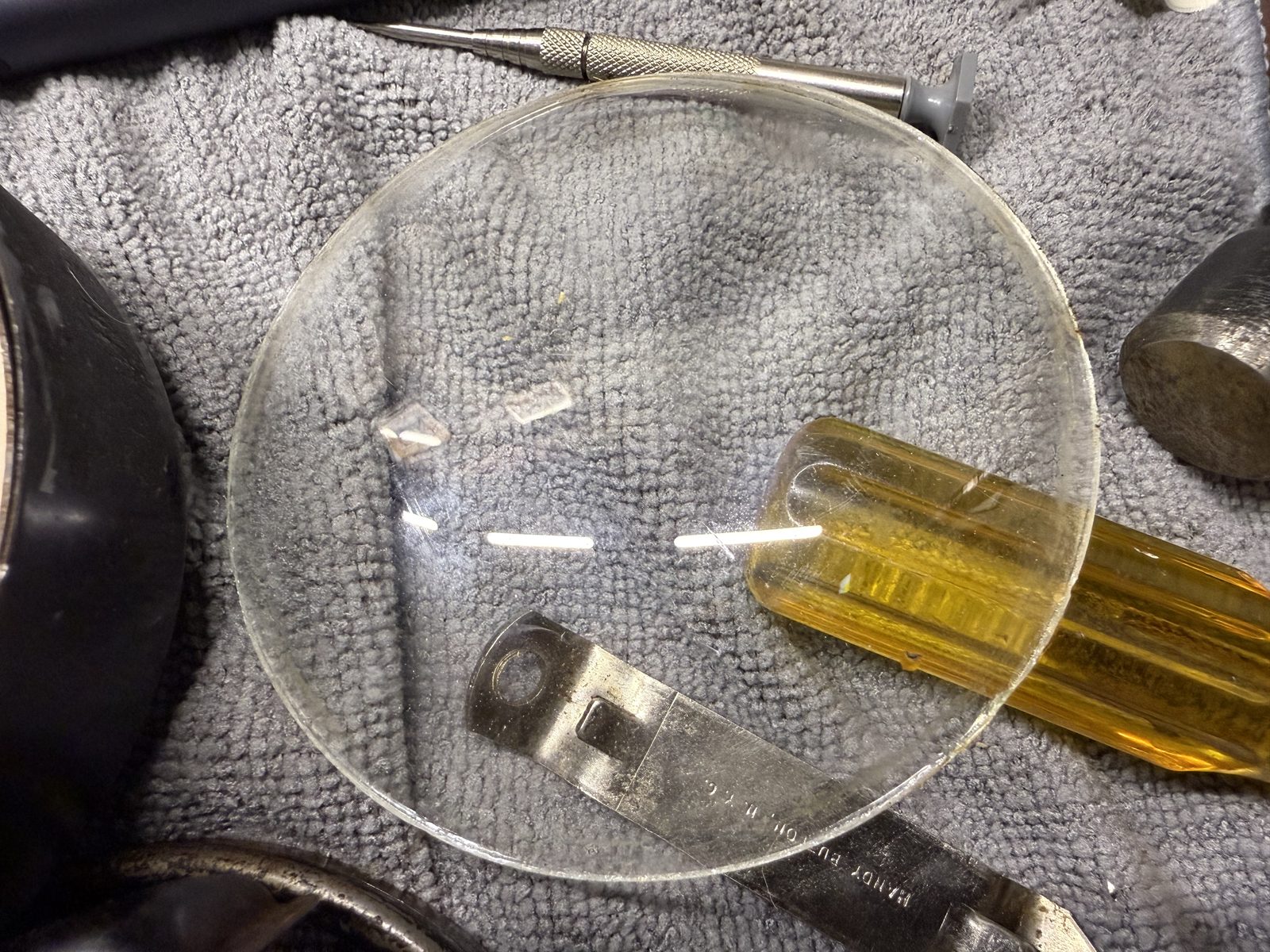
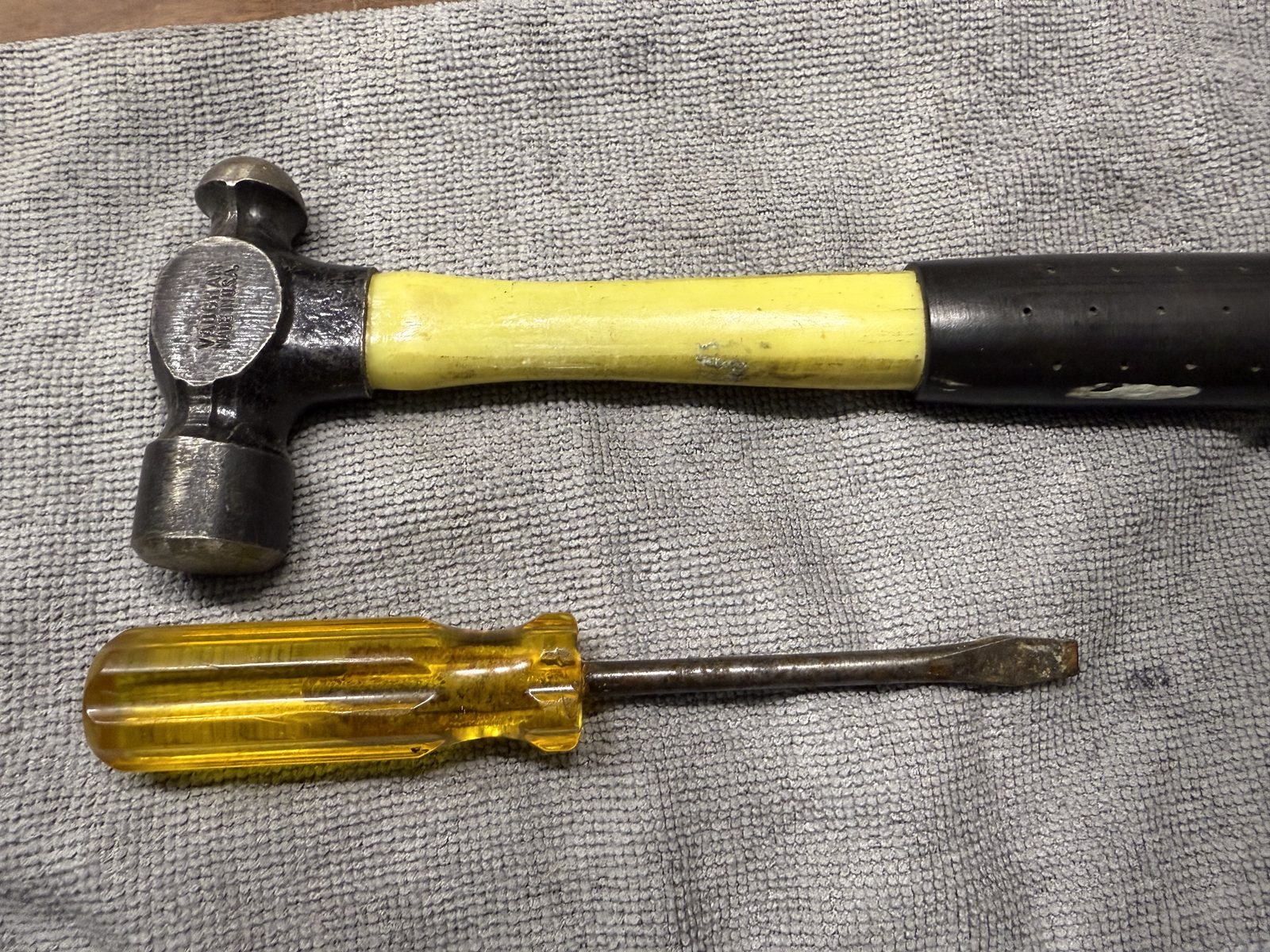
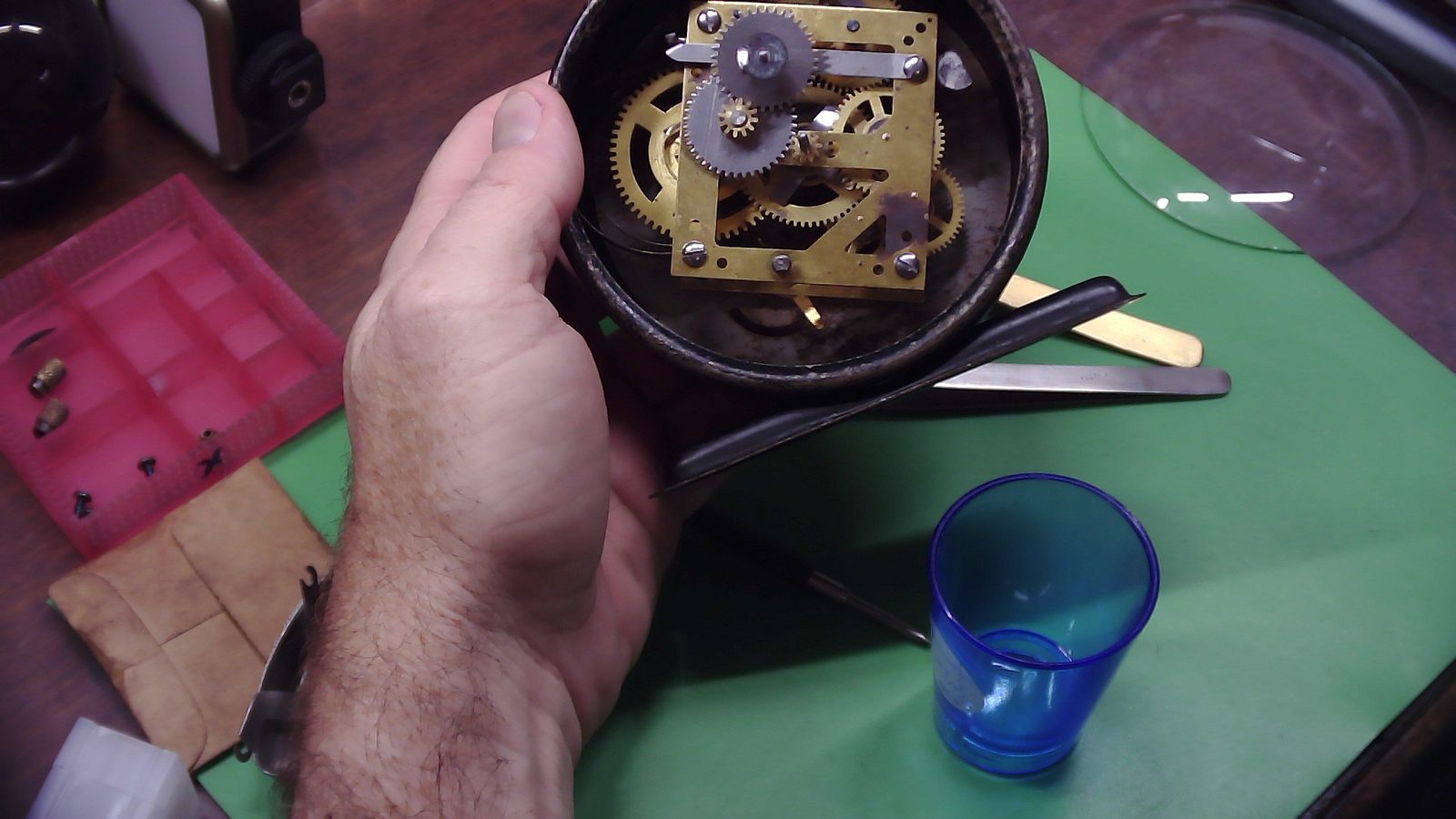
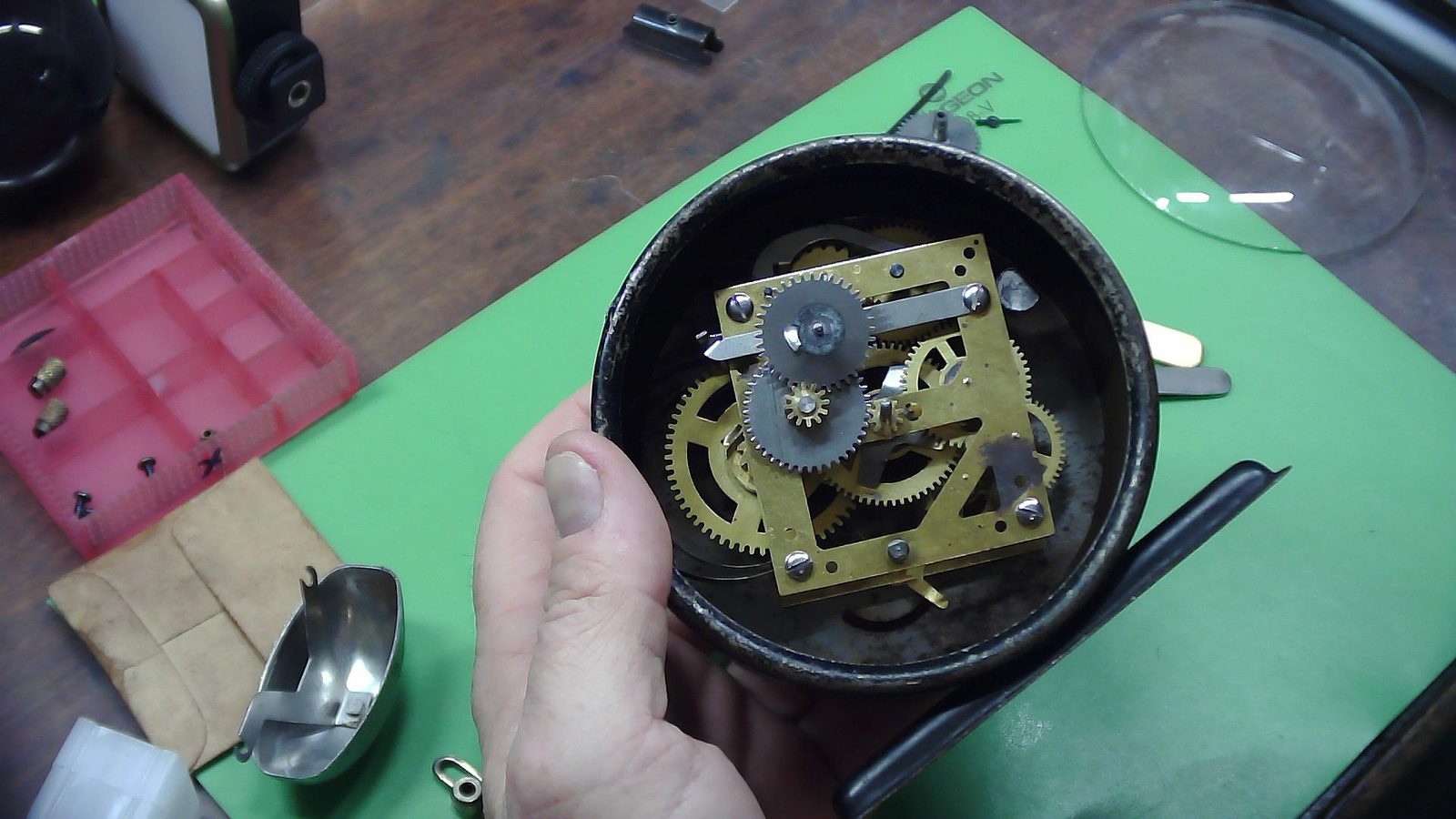
- The case is held together by compression it was very difficult to get it apart because the bezel had rusted onto the case. The only way I could see to do it was to go around with a hammer and a screwdriver and smack it, hoping it would come loose and it eventually did. Luckily without breaking the glass, but I do think that was a definite risk
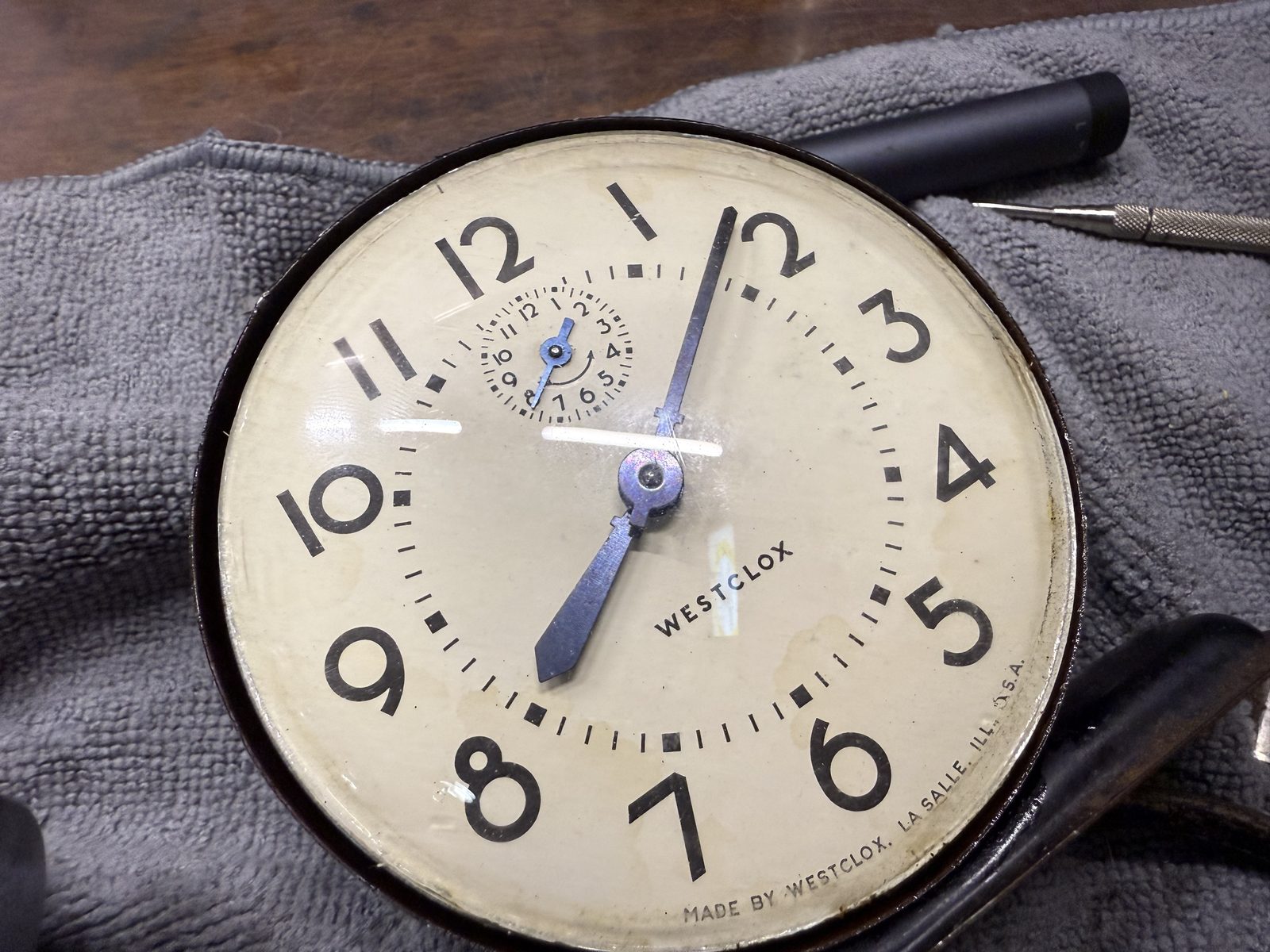
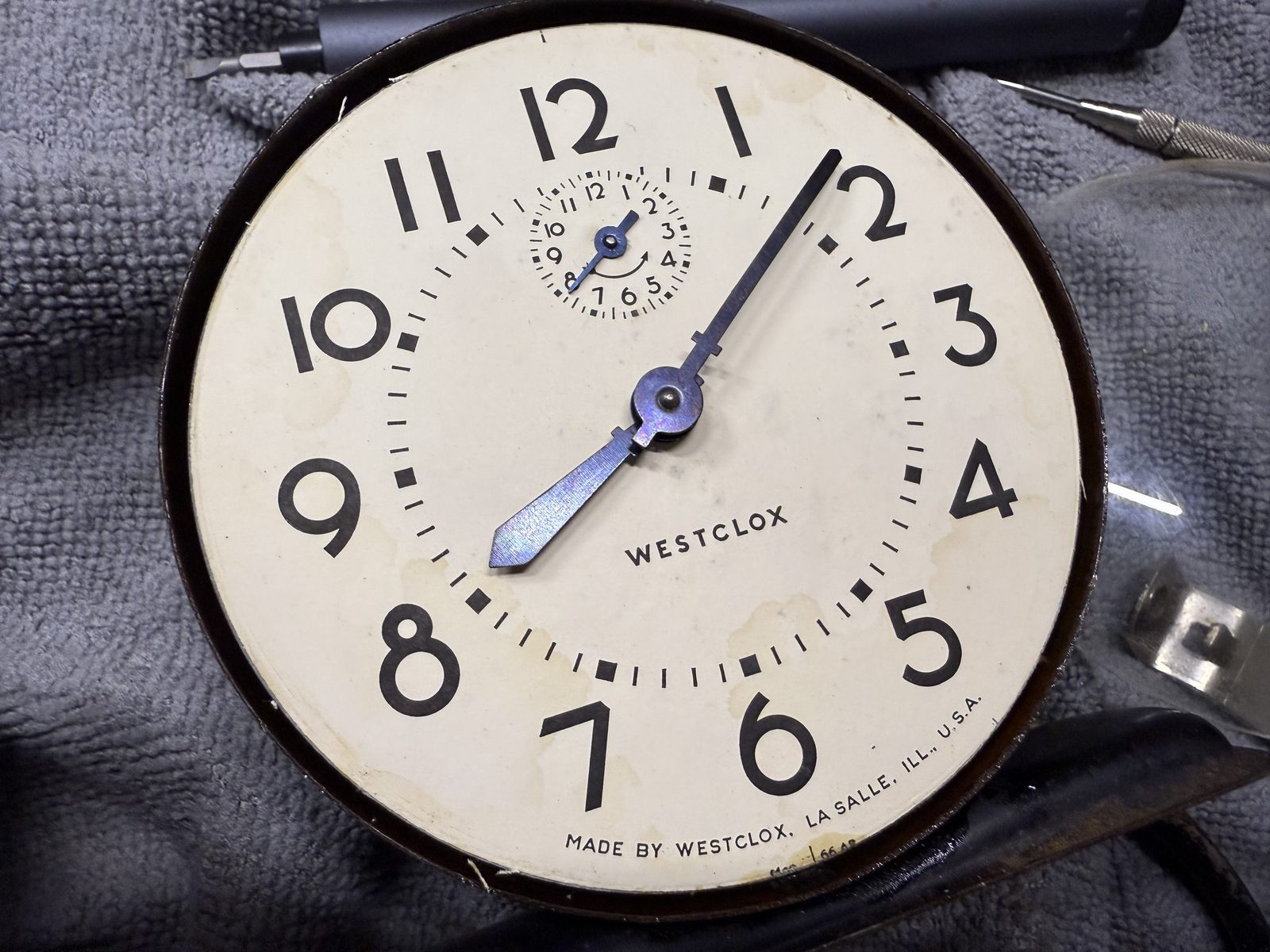
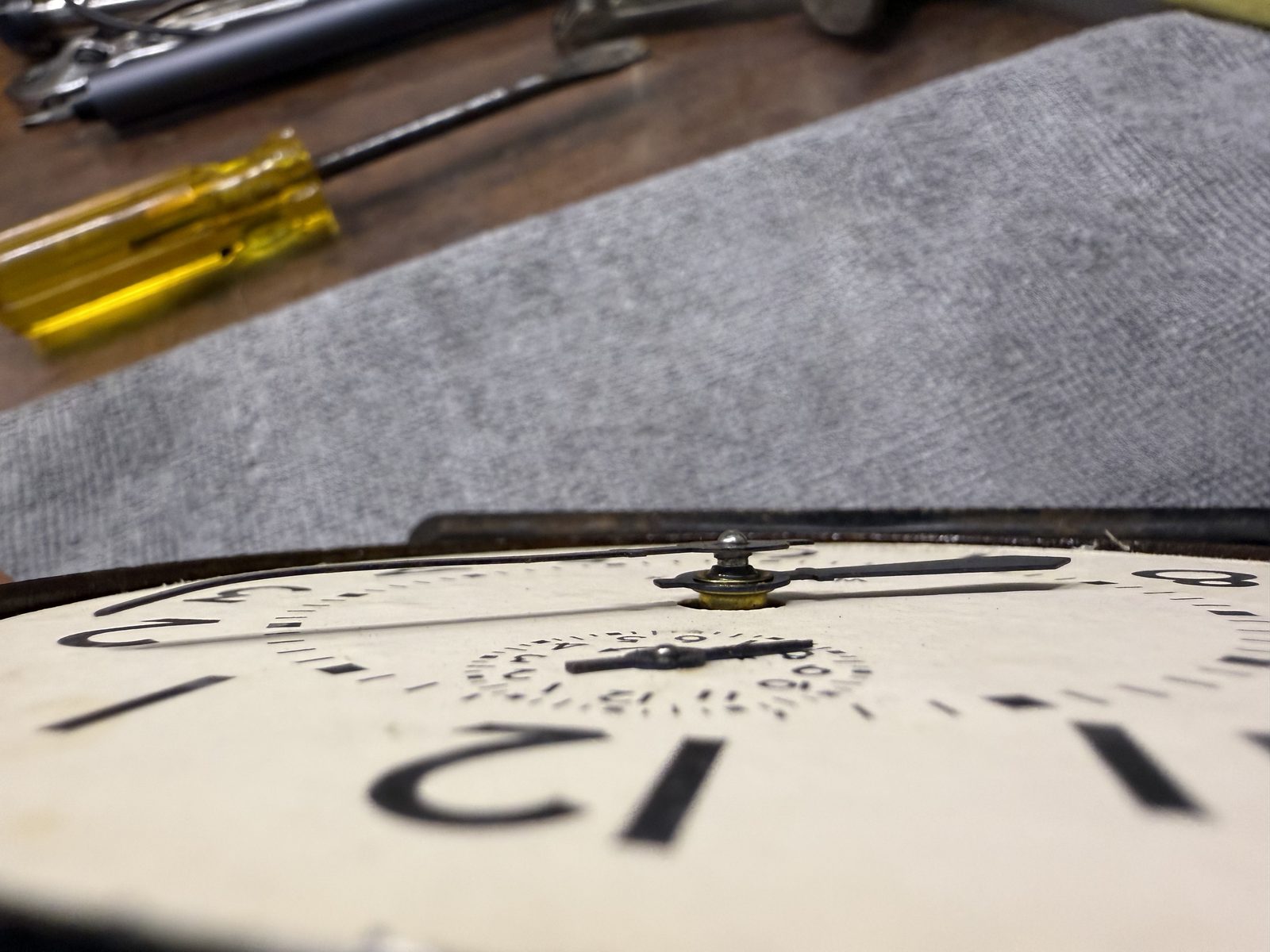
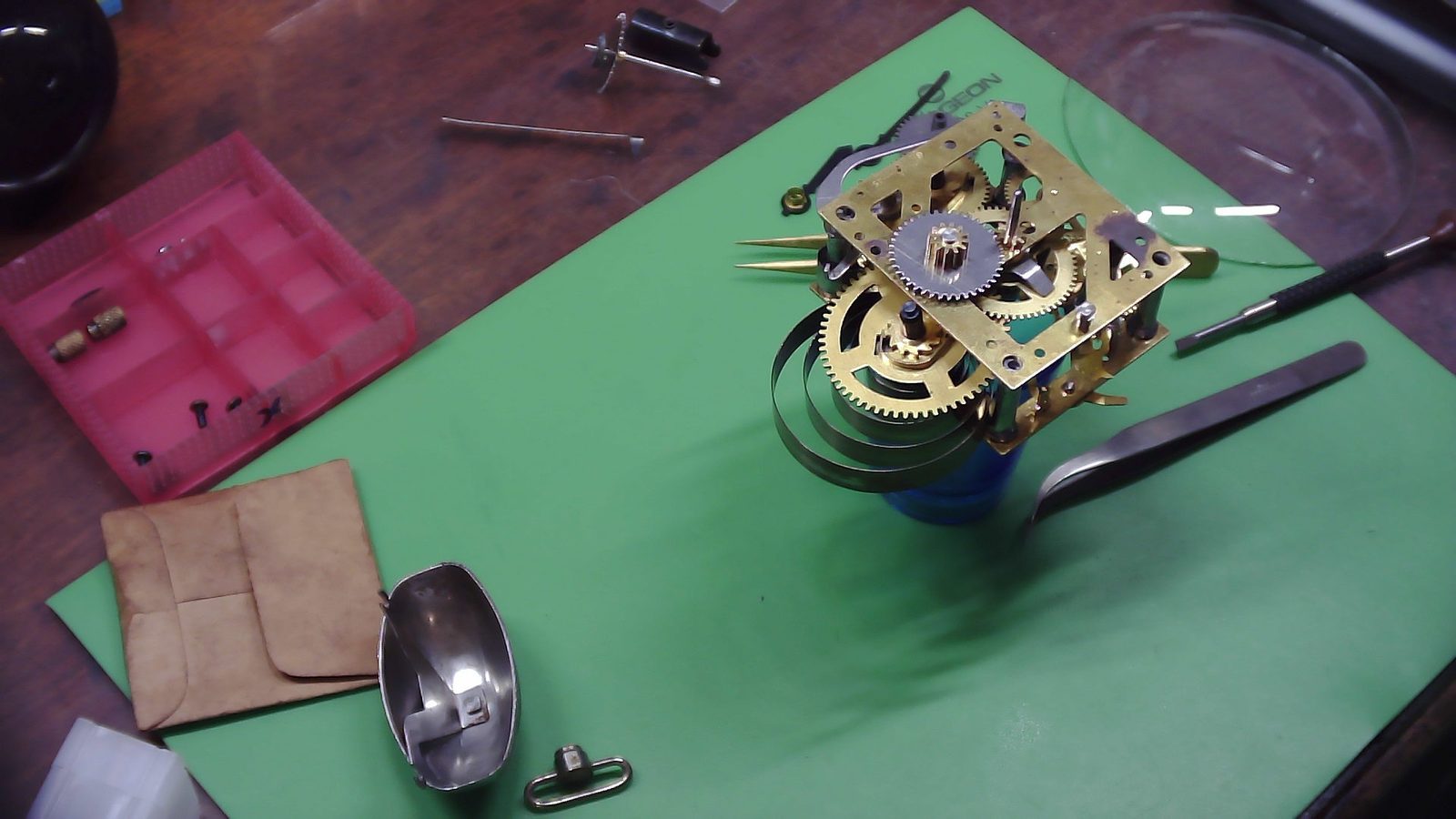
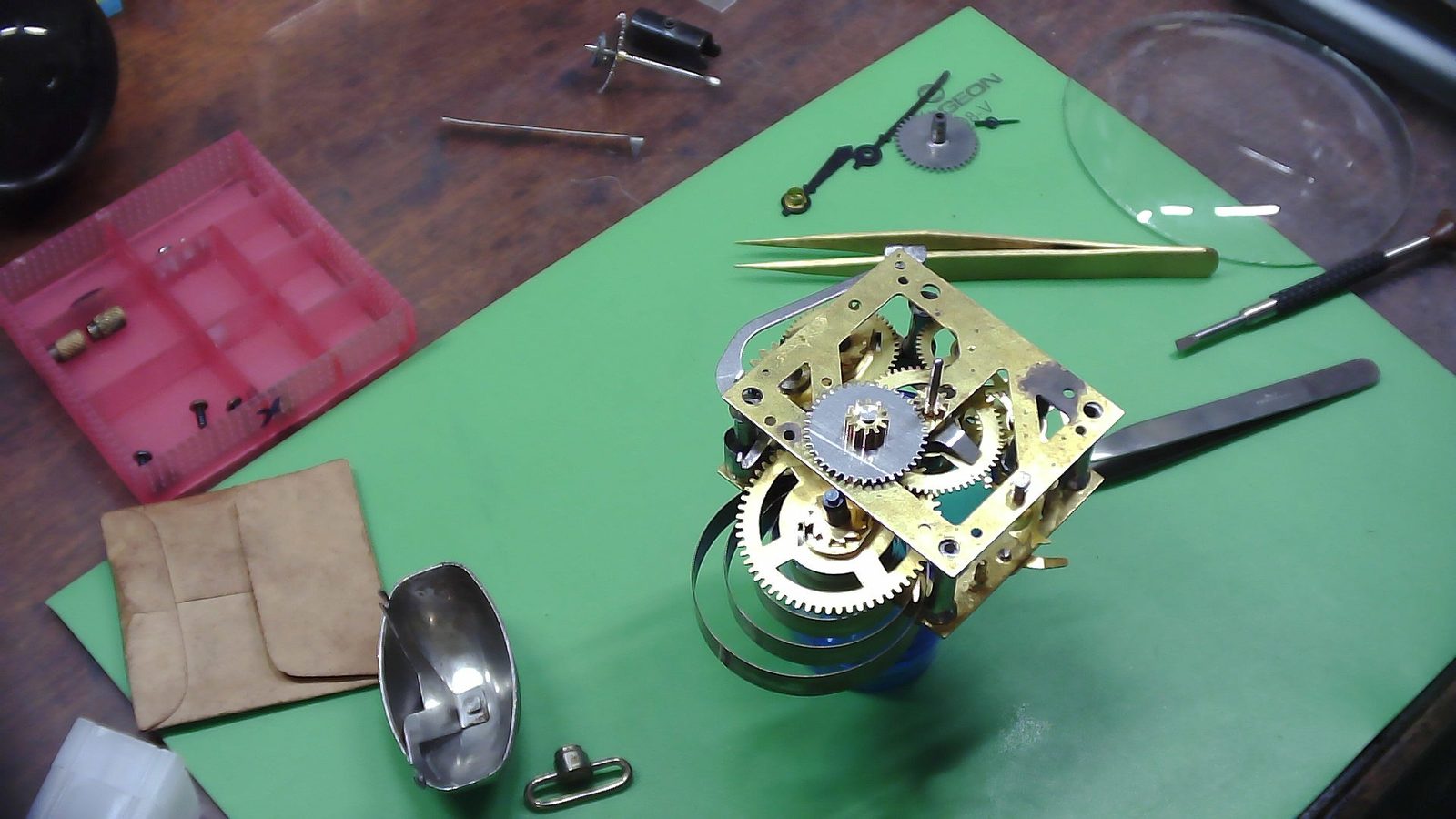
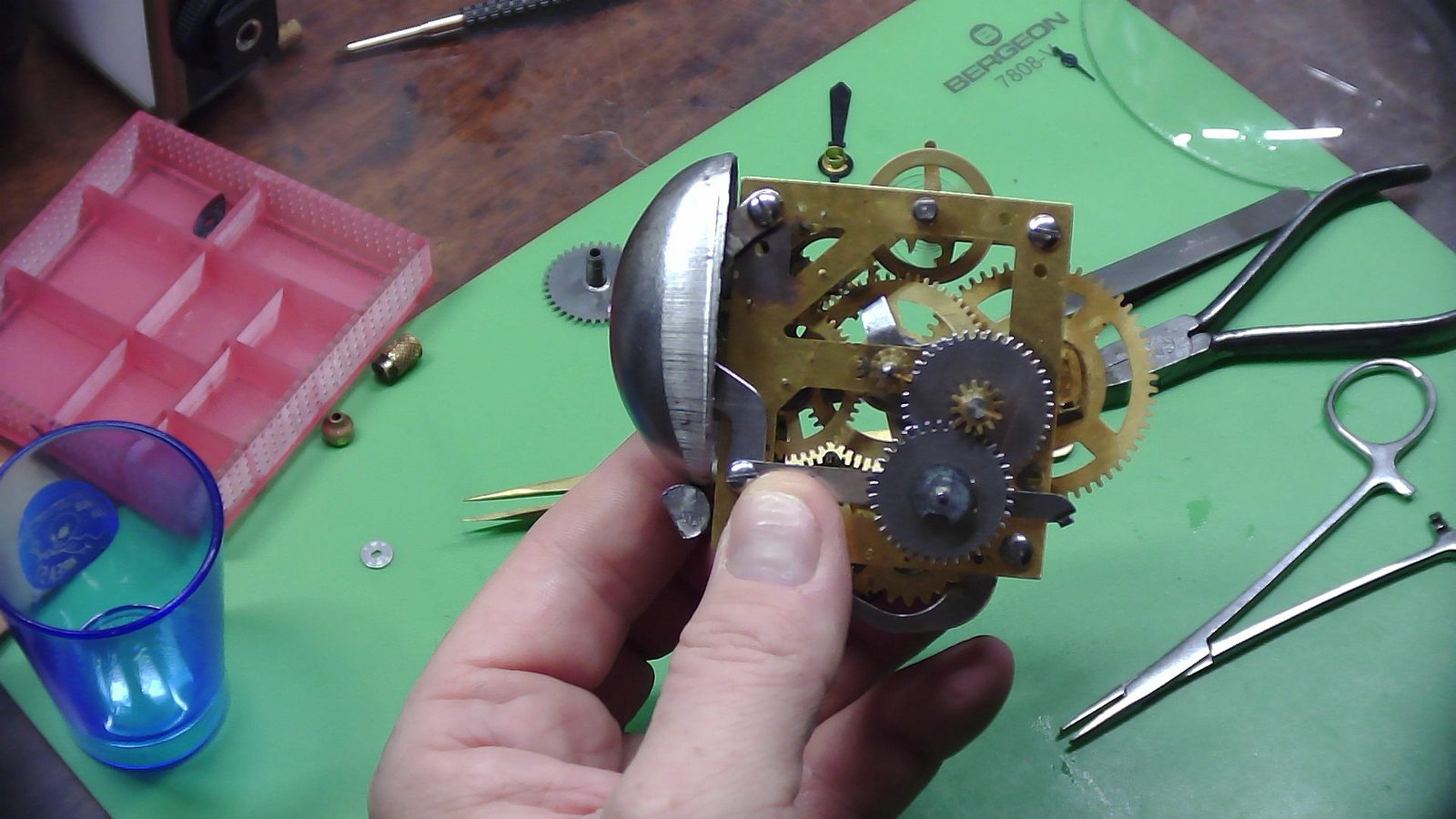
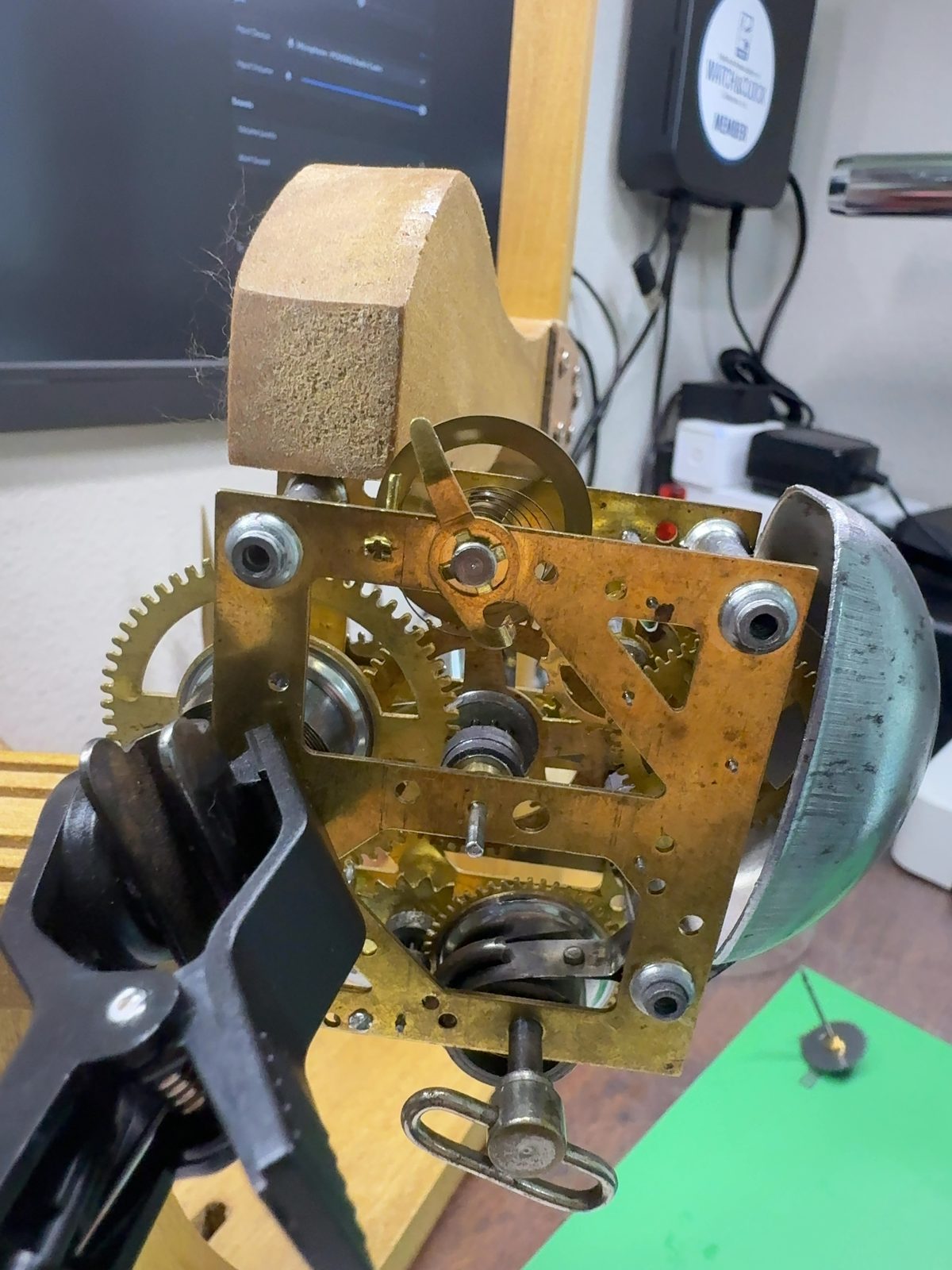
- The movement seems to be generally in good shape. The spring for the alarm is _broken_ and I did a little bit of damage to the dial getting the hand off from the alarm setting.
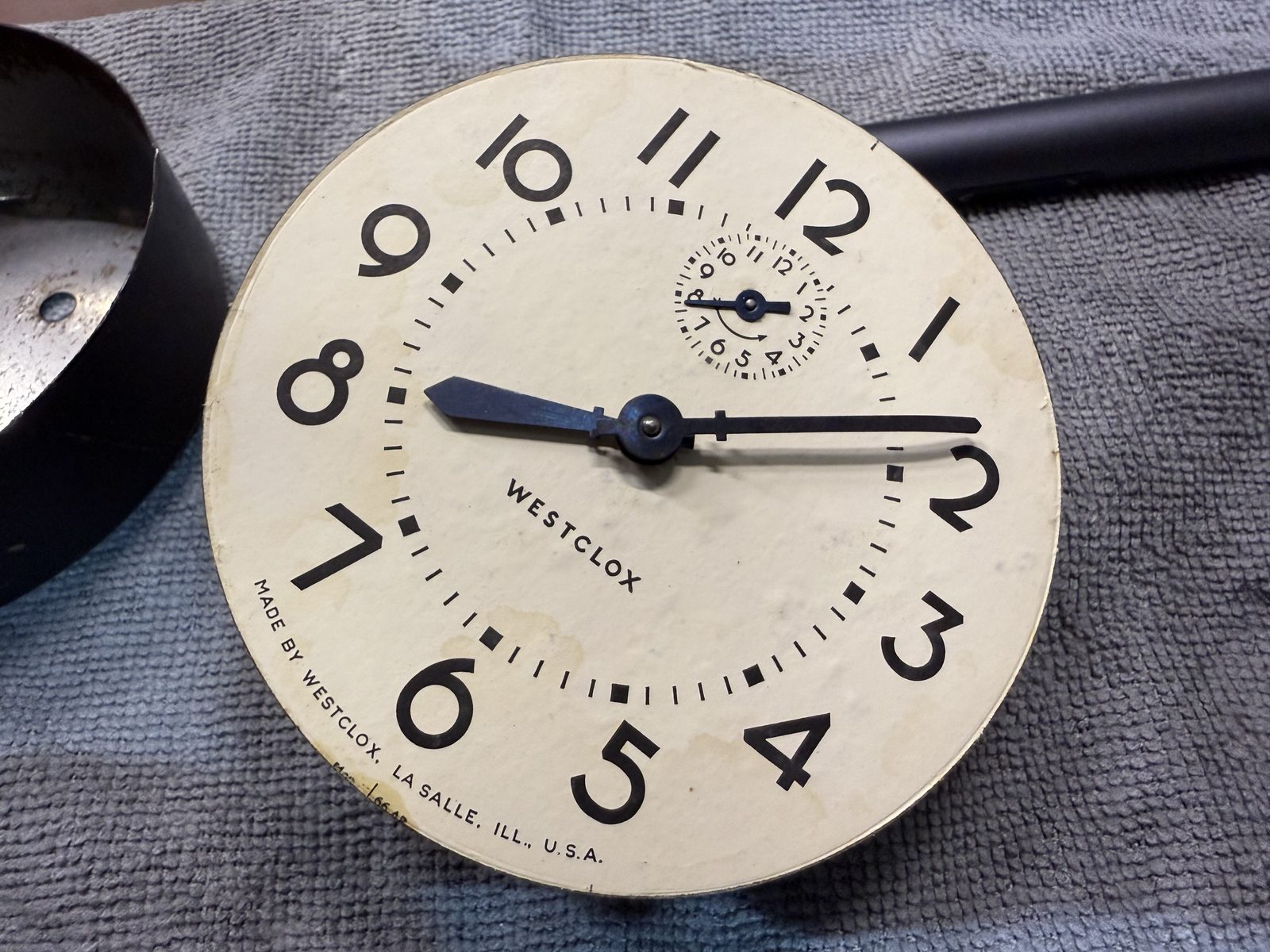
- The dial seems to be in decent condition, but it definitely looks like there was some water that got in around the edges at some point I will probably print a reproduction for this dial so that it looks pristine.
- Due to the case condition I’m contemplating doing an aggressive retorative paint for this one.
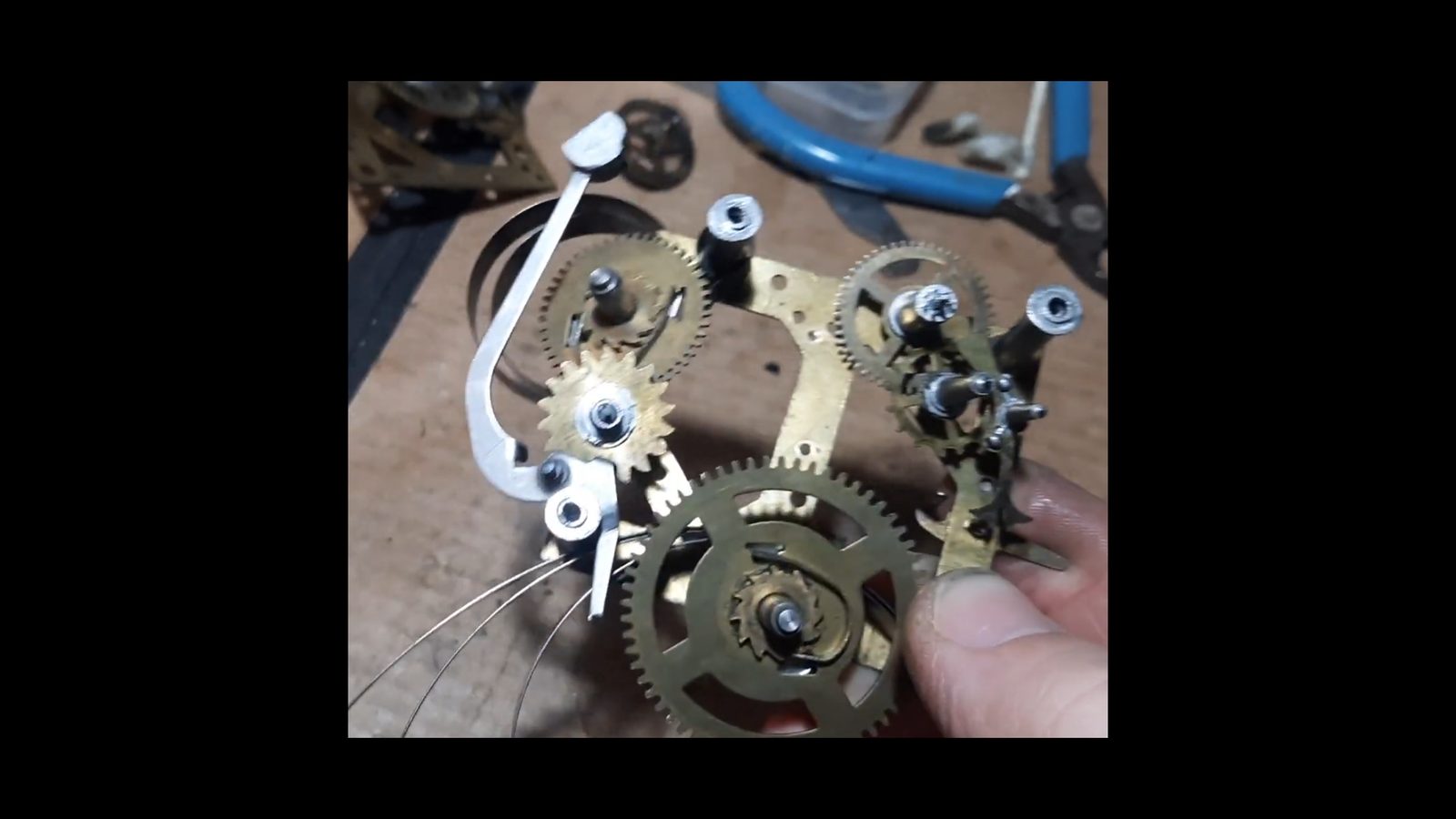
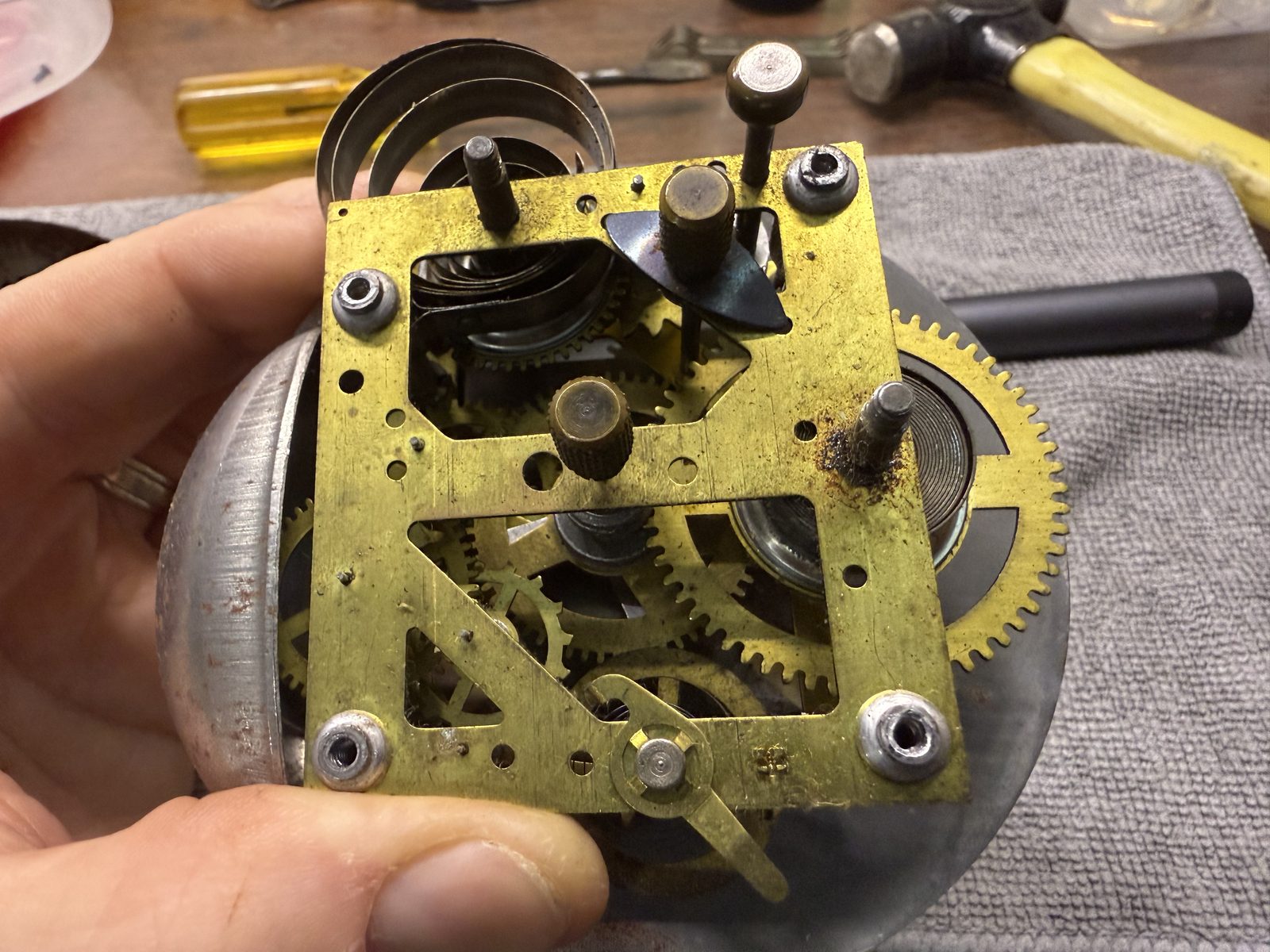
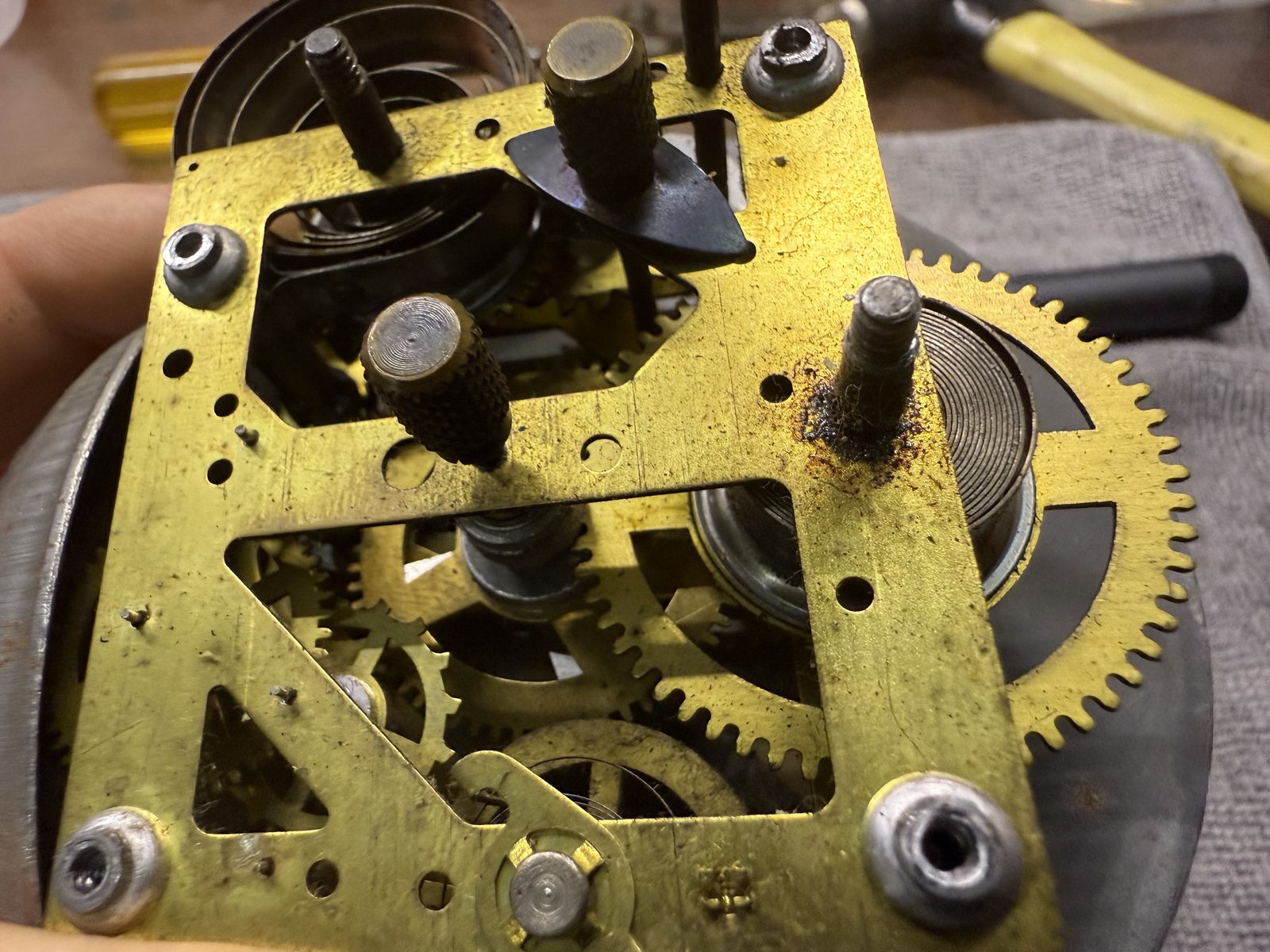
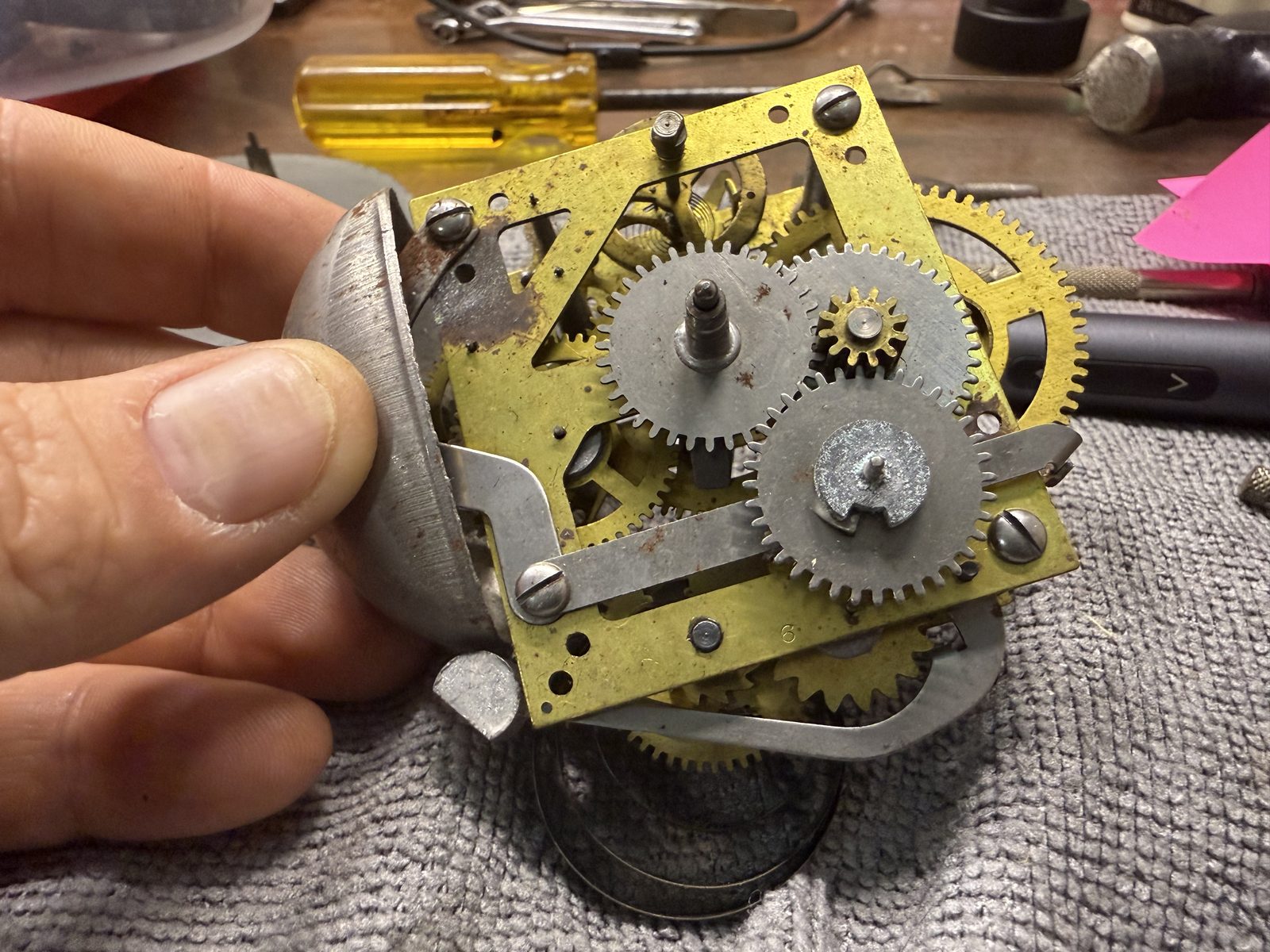
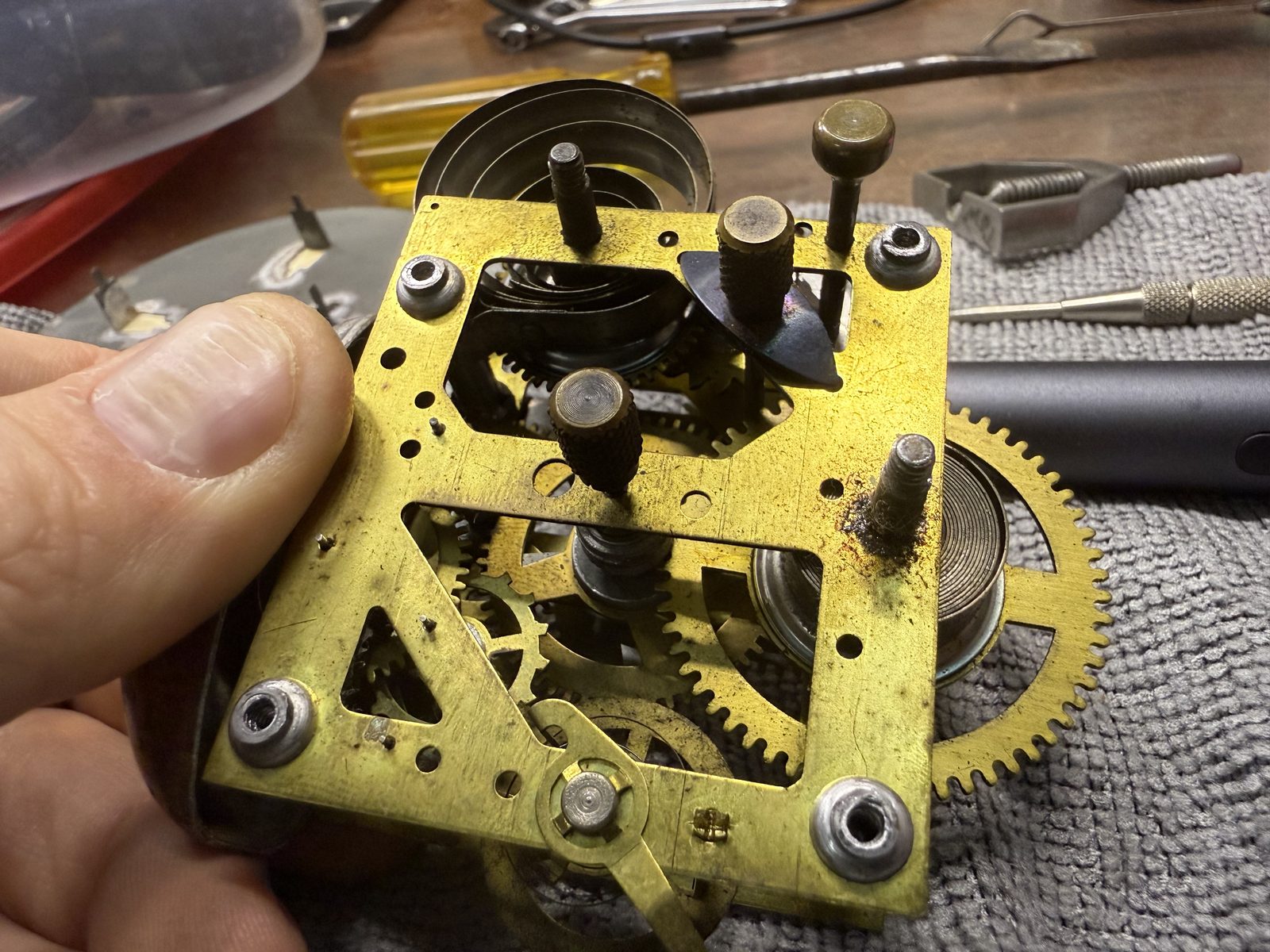
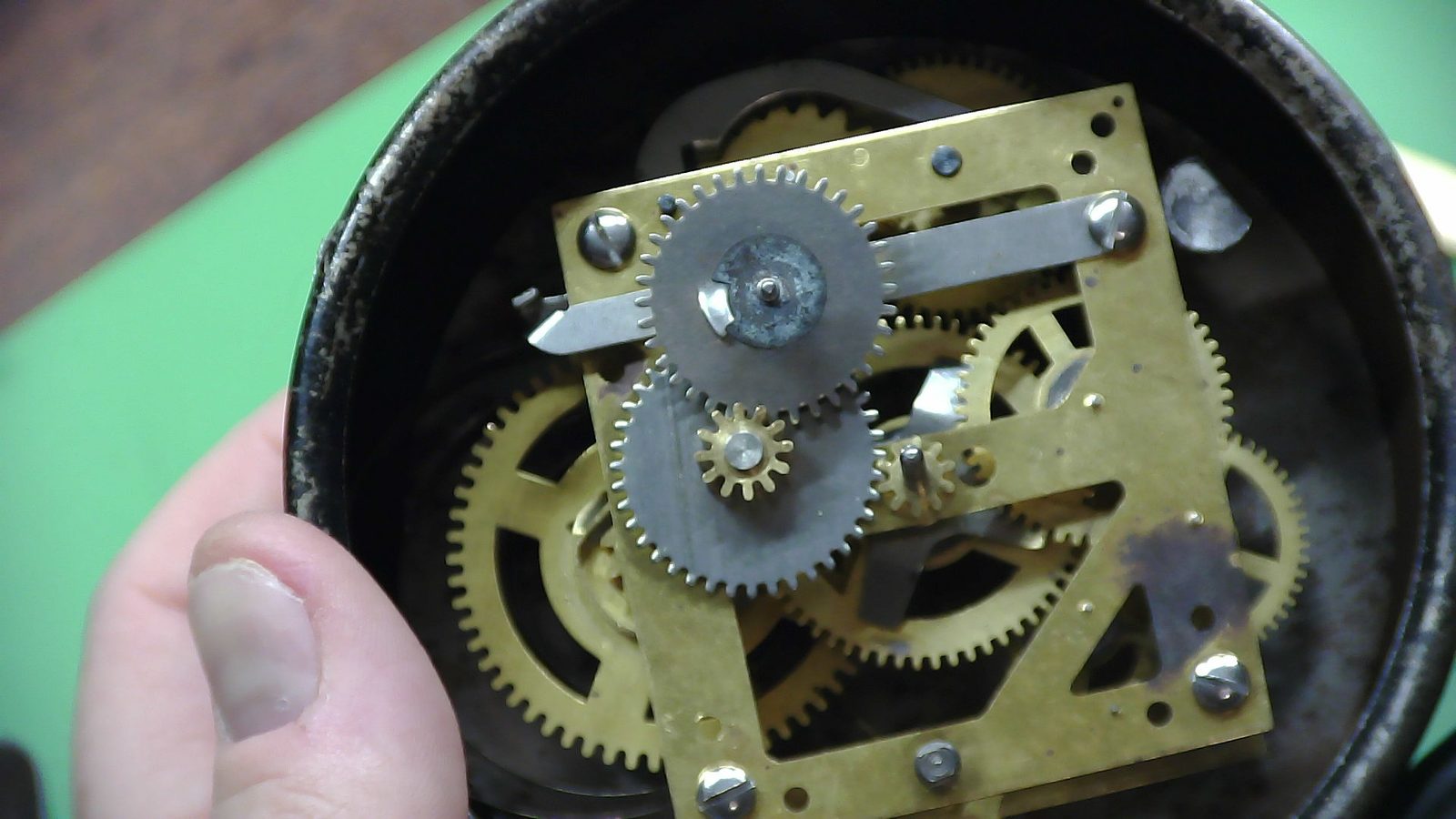
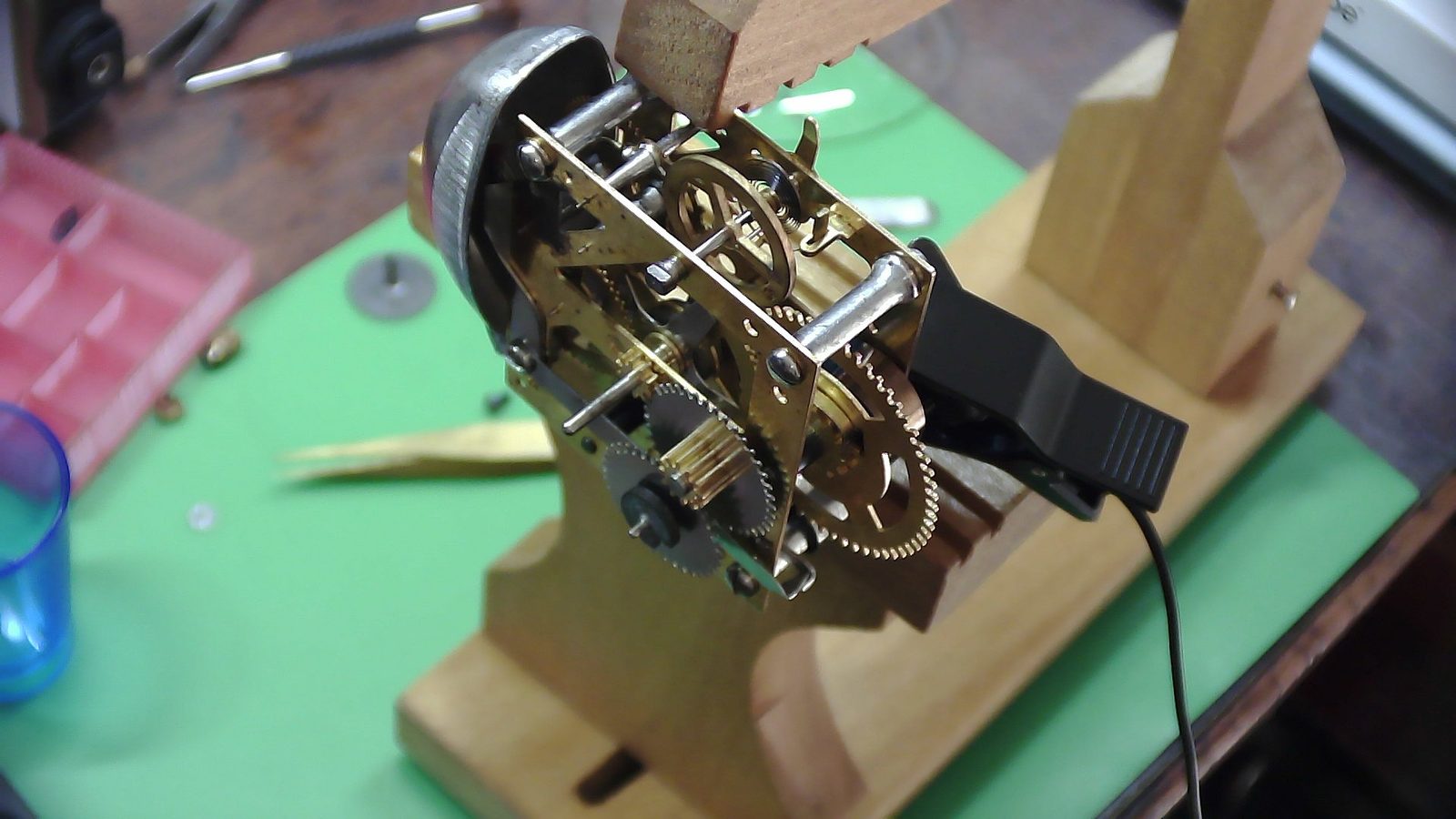
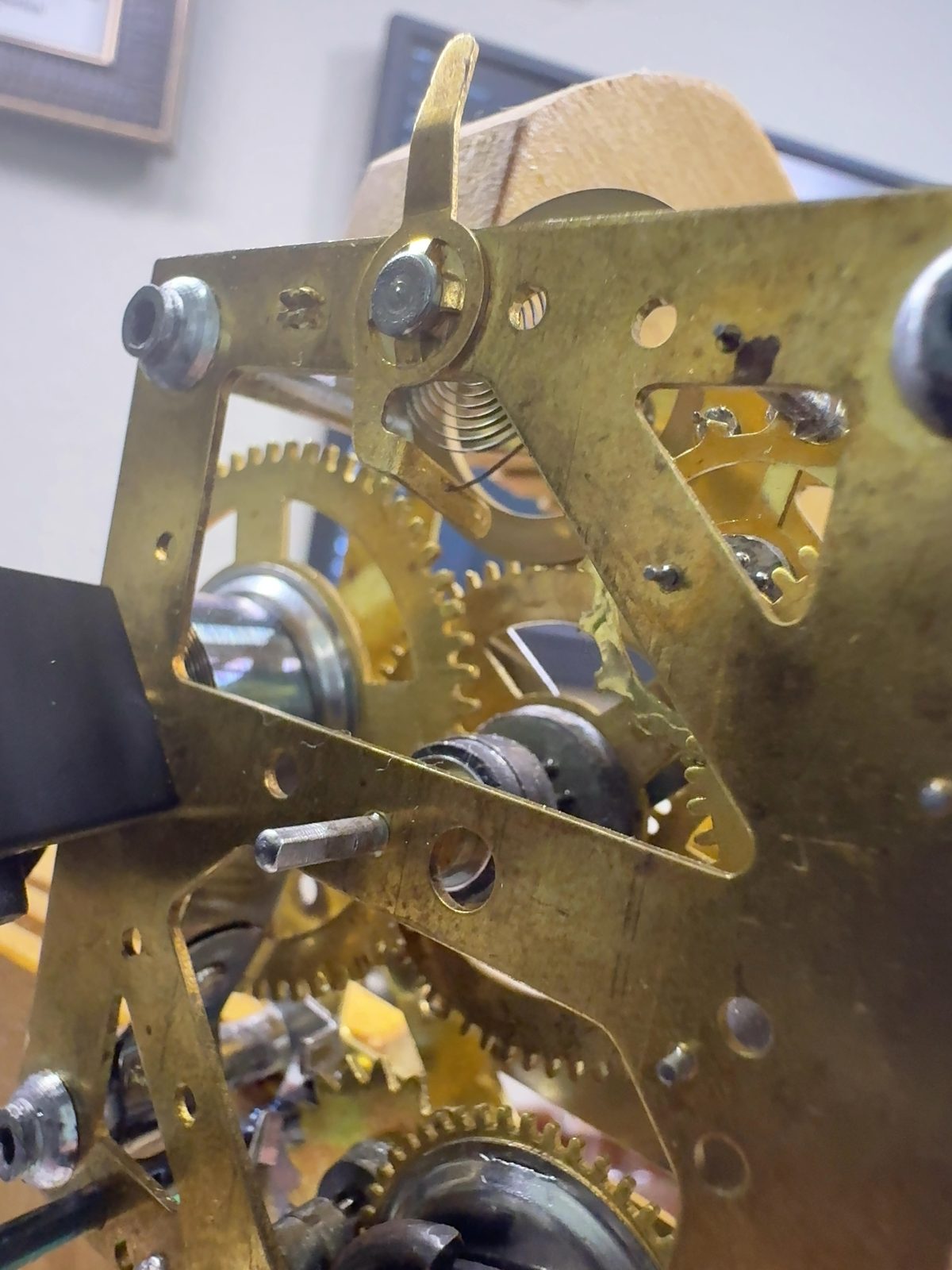
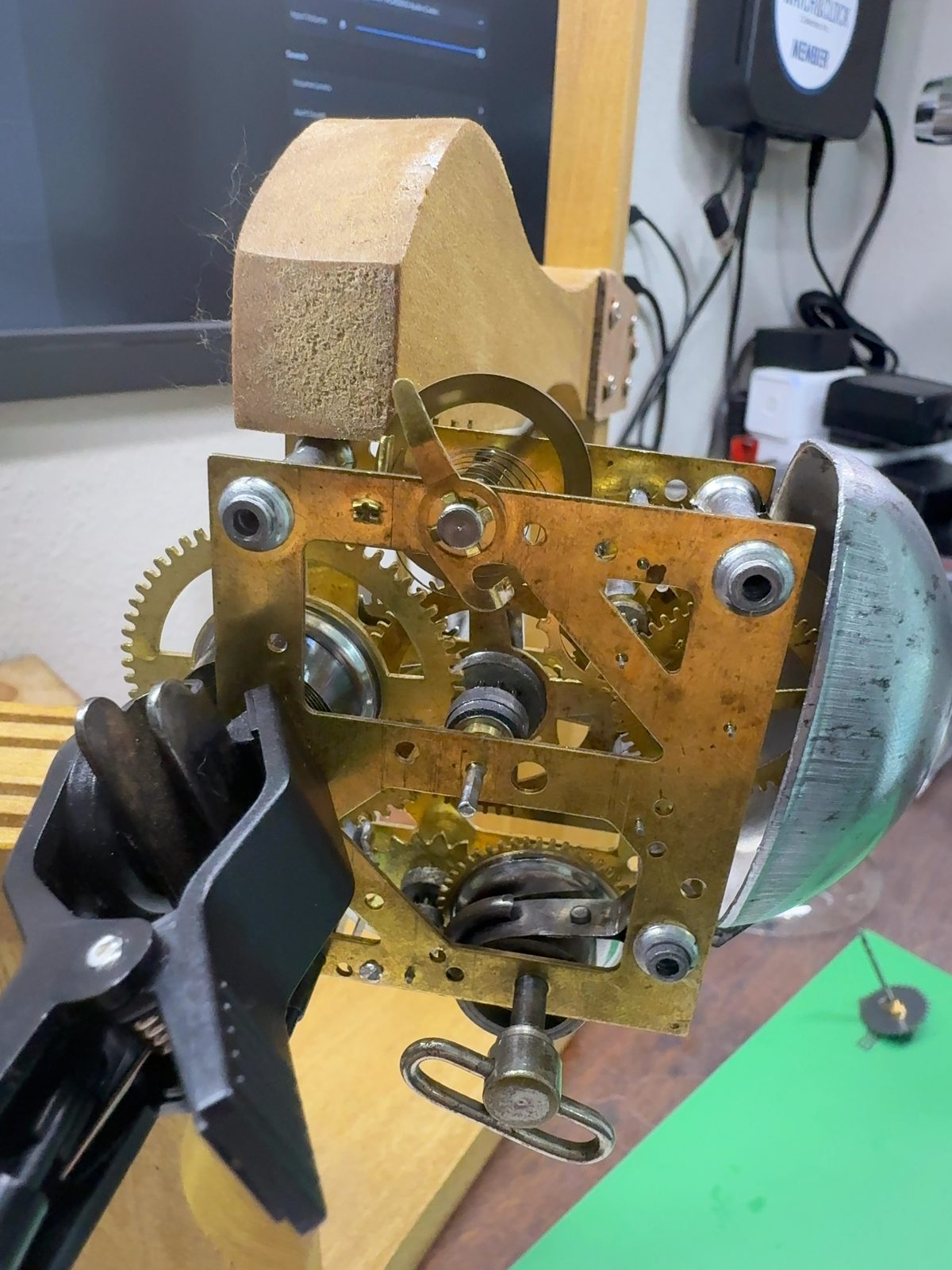
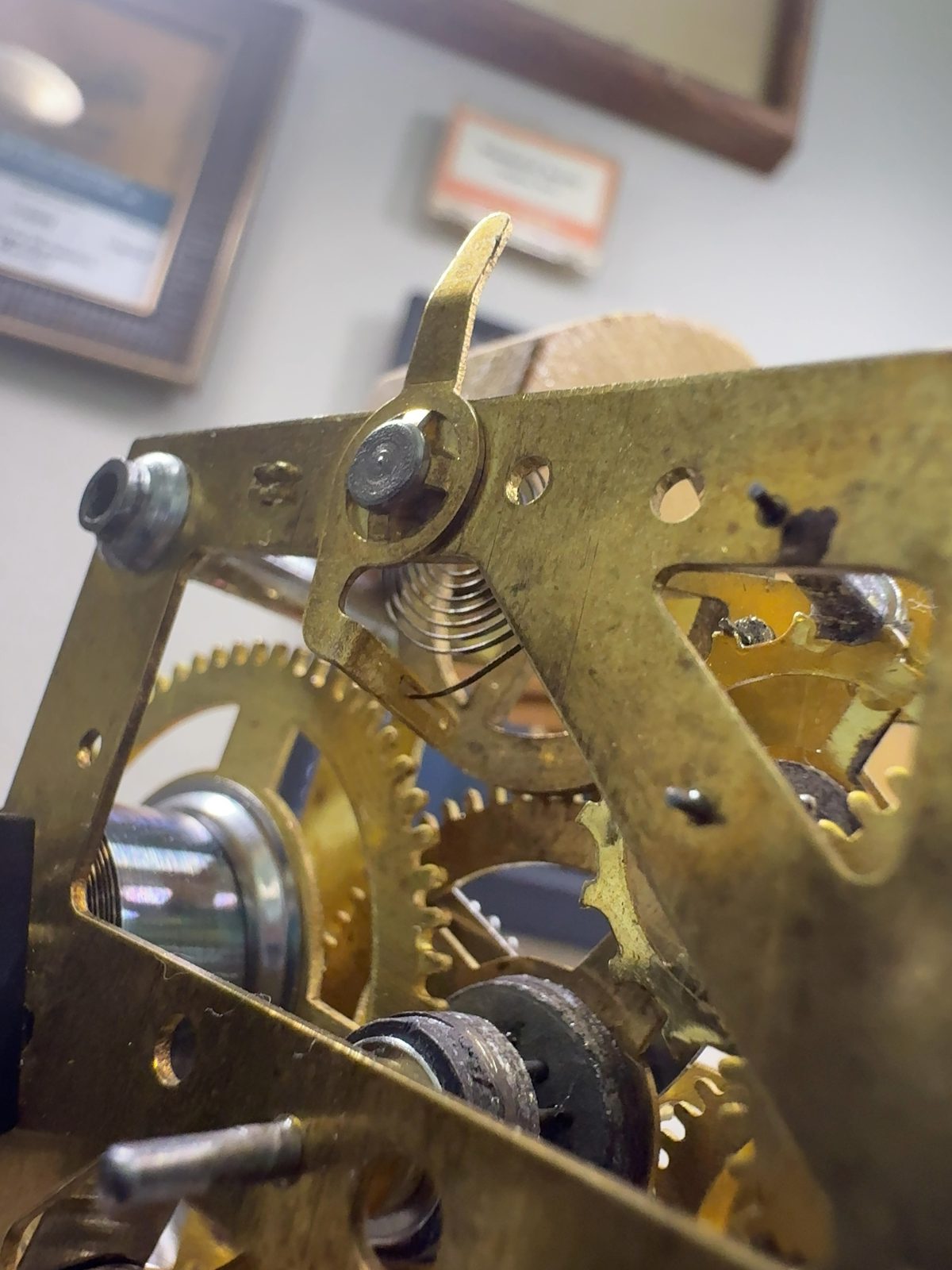
- There’s a lot more brass in the movement than I anticipated considering this was made during a time when brass usage was restricted. It is possible that the plates are brass plated instead of solid brass. There are areas of corrosion on the brass where non-brass parts touch it.
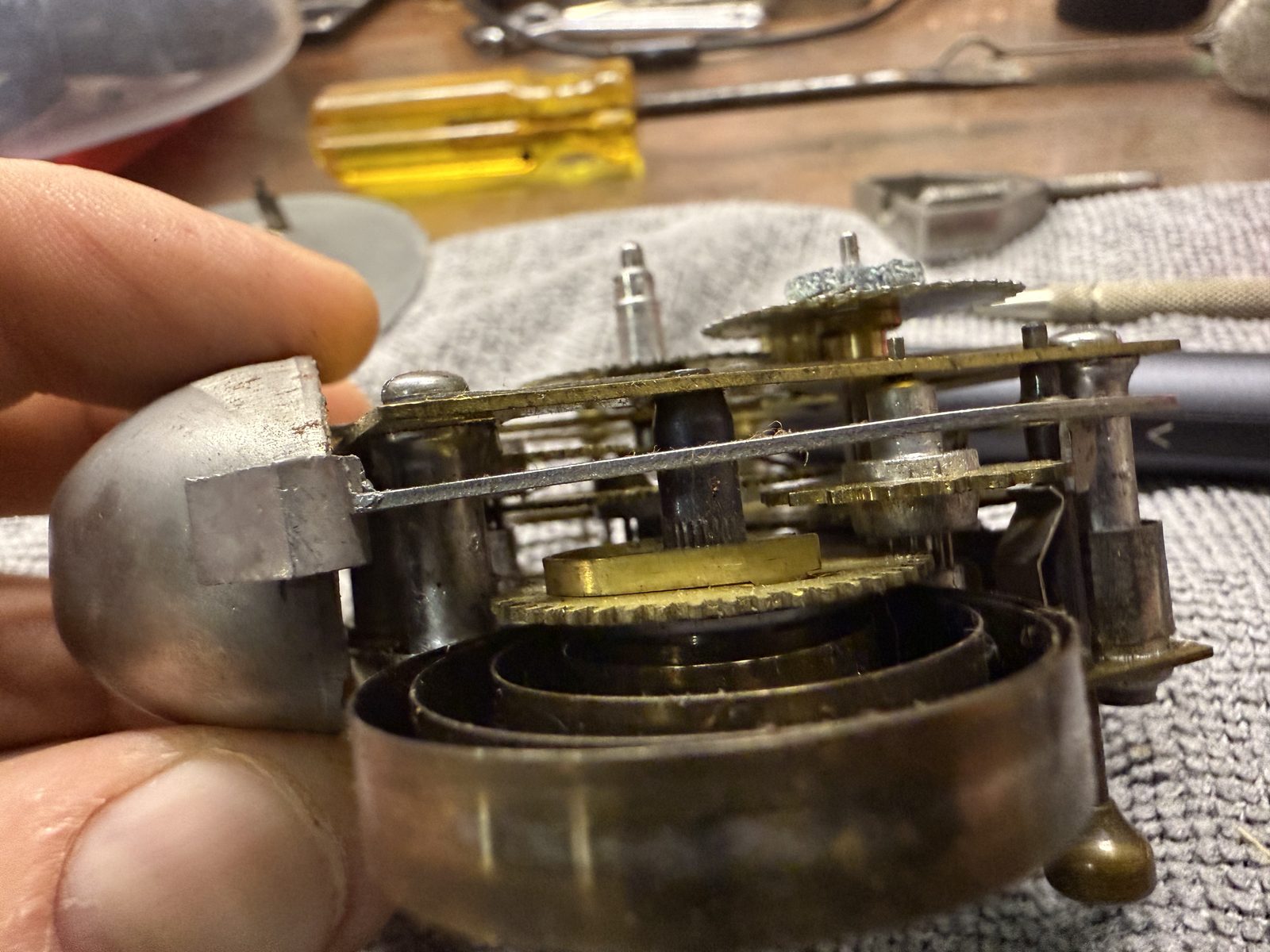
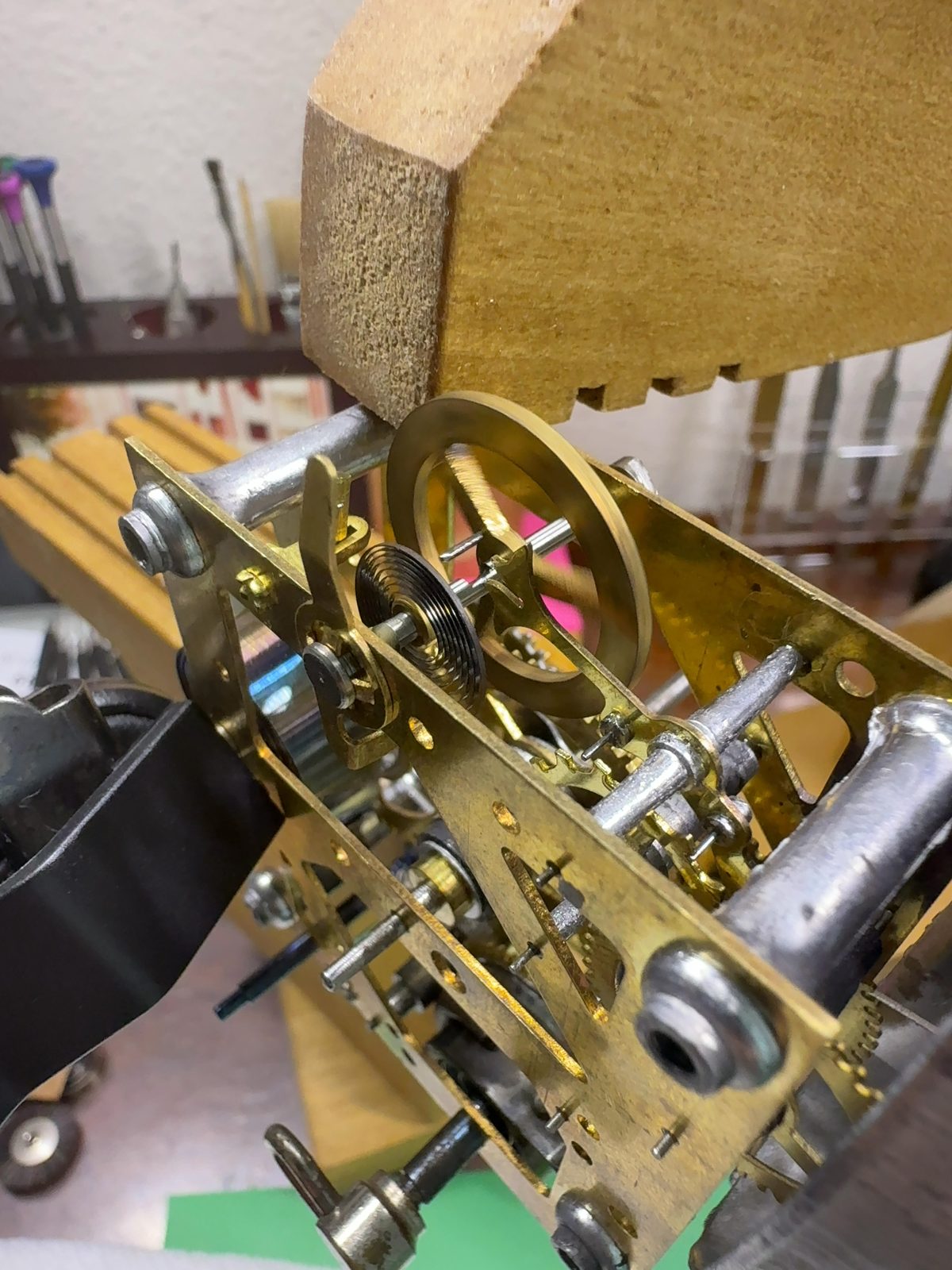
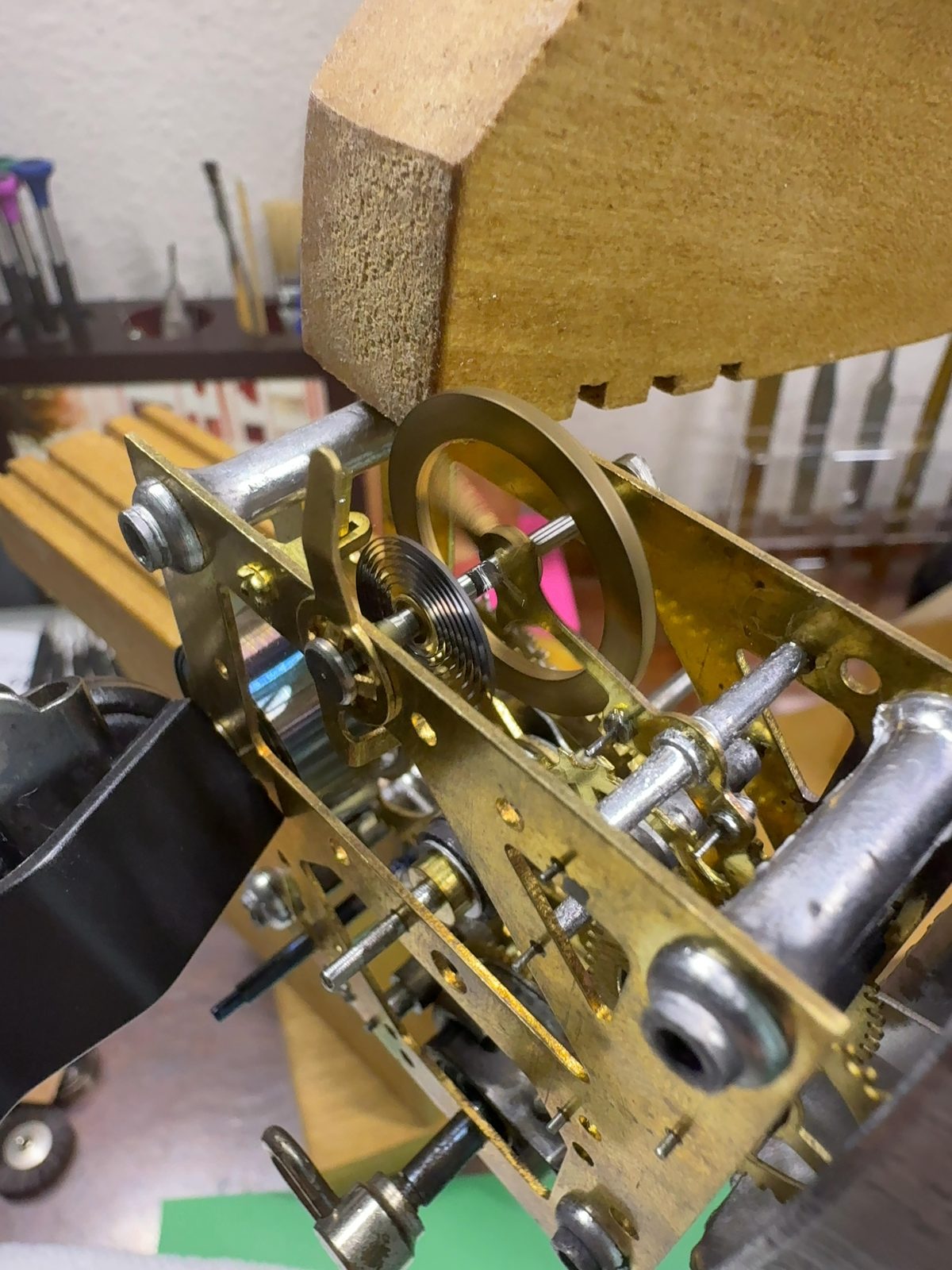
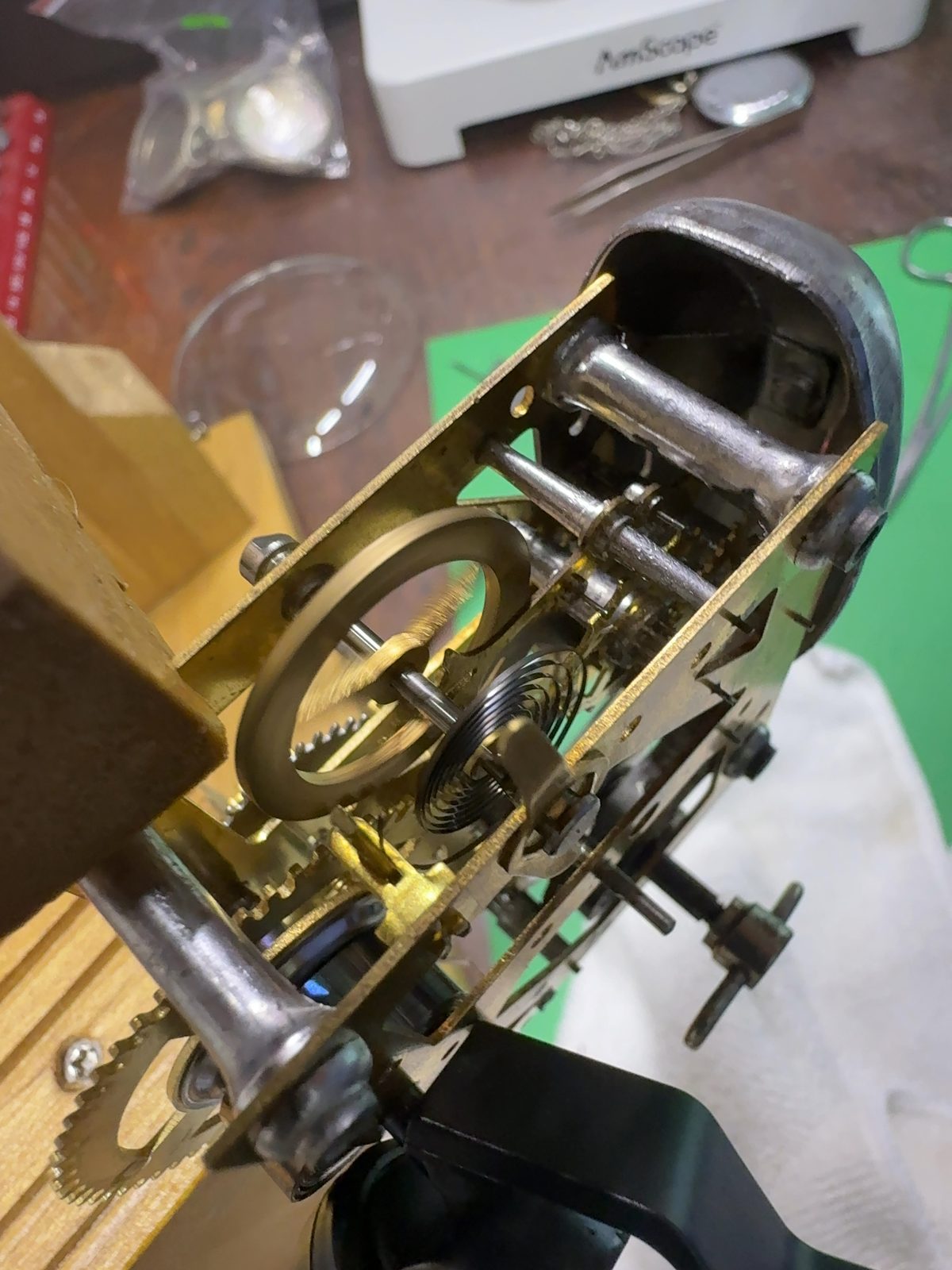
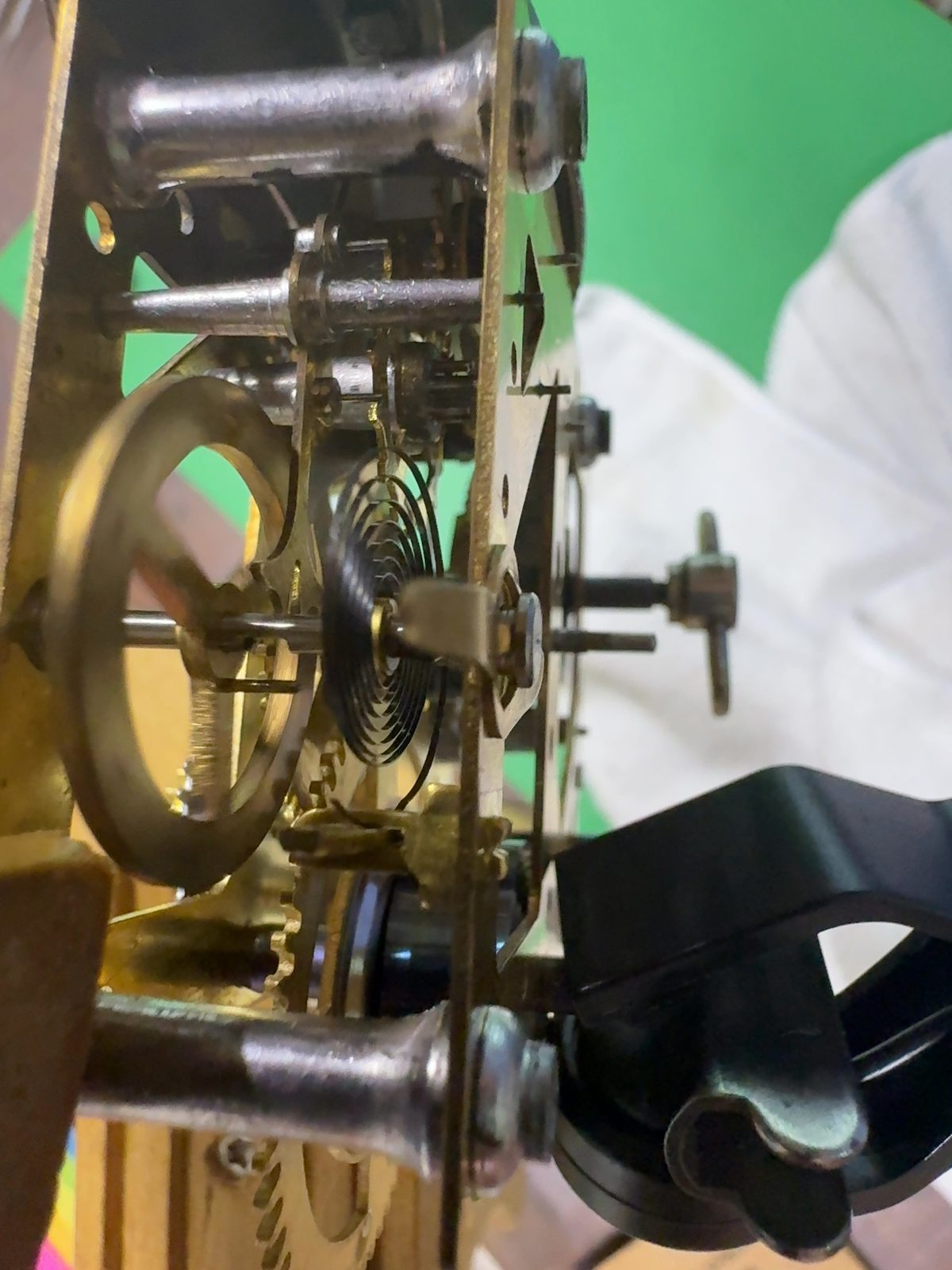
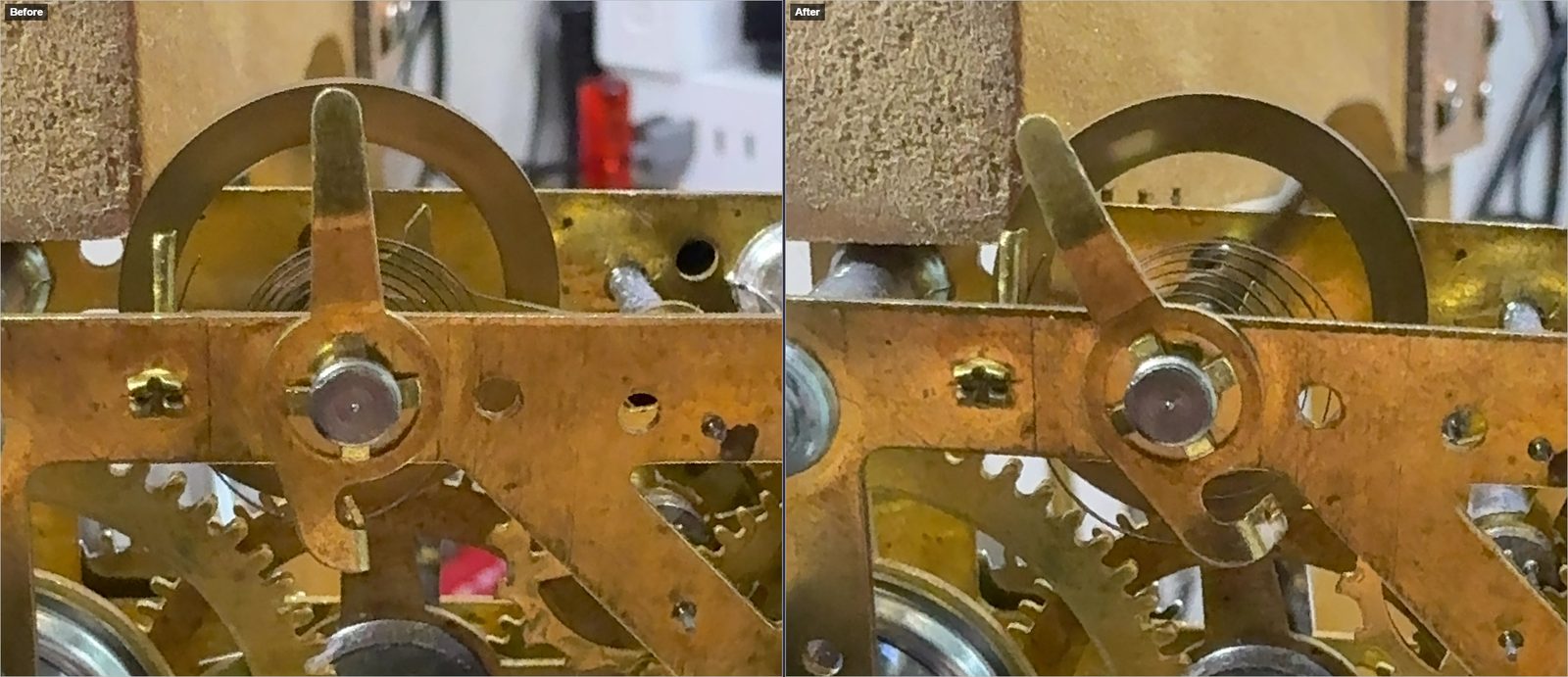
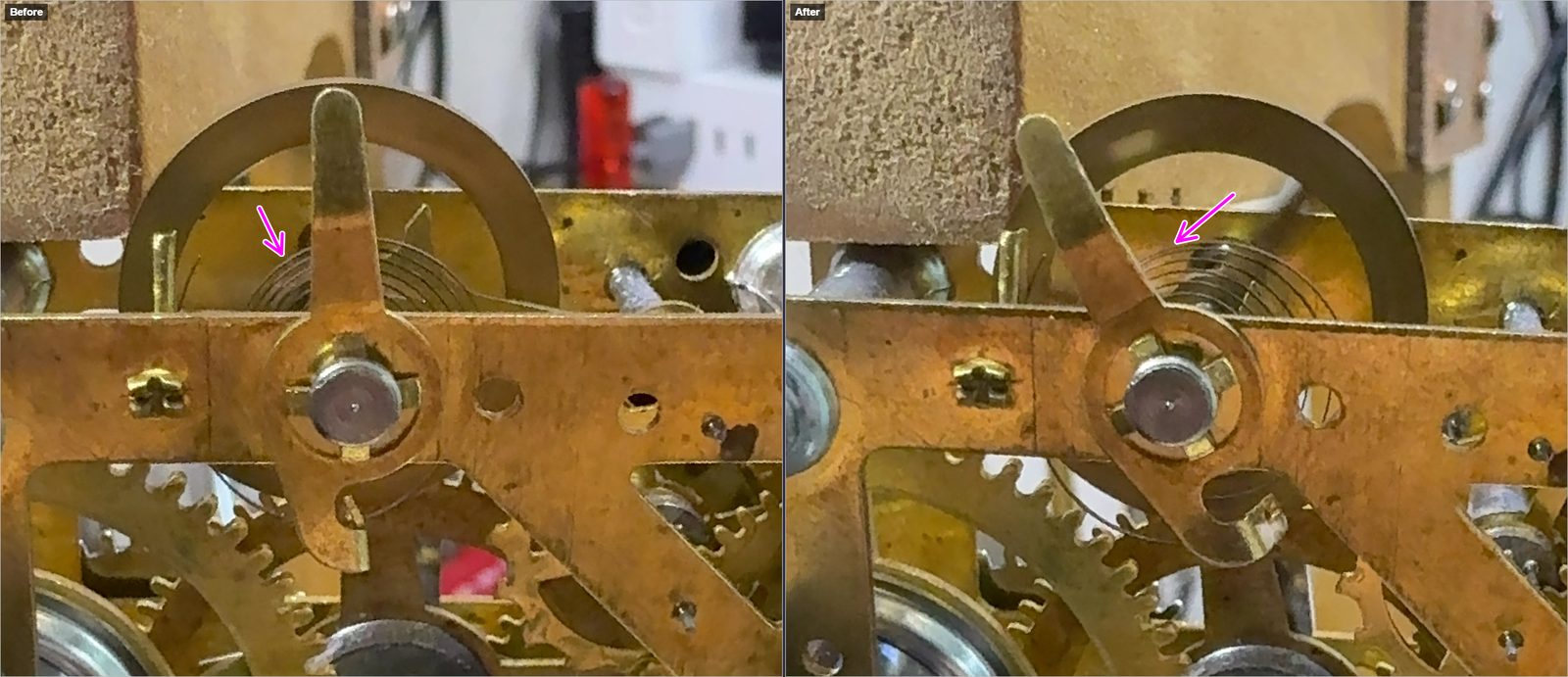
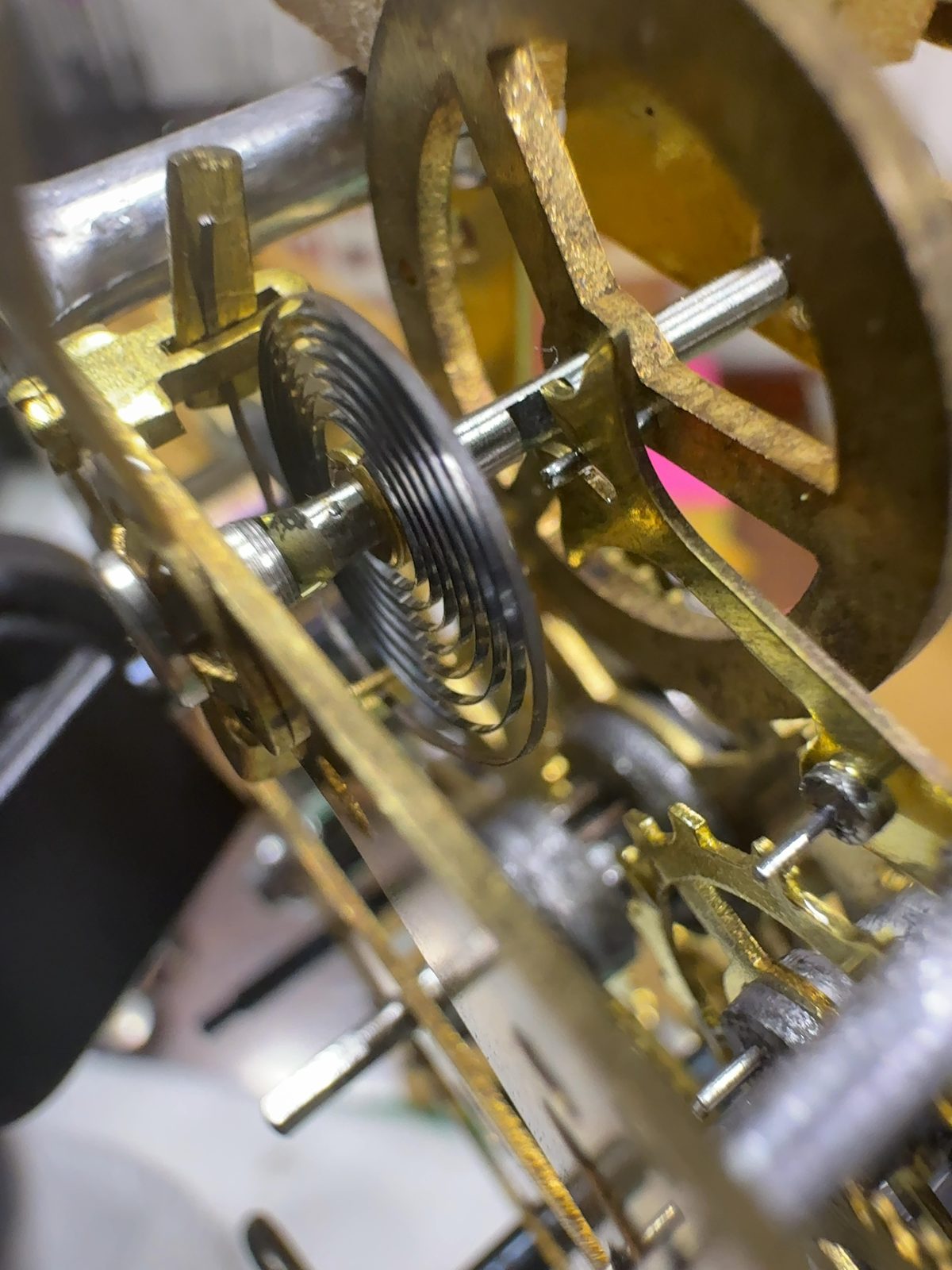
- The hairspring seems to be in good condition however there is some rust on the outer edge of the main spring. I will have to see if that cleans up in the ultrasonic.
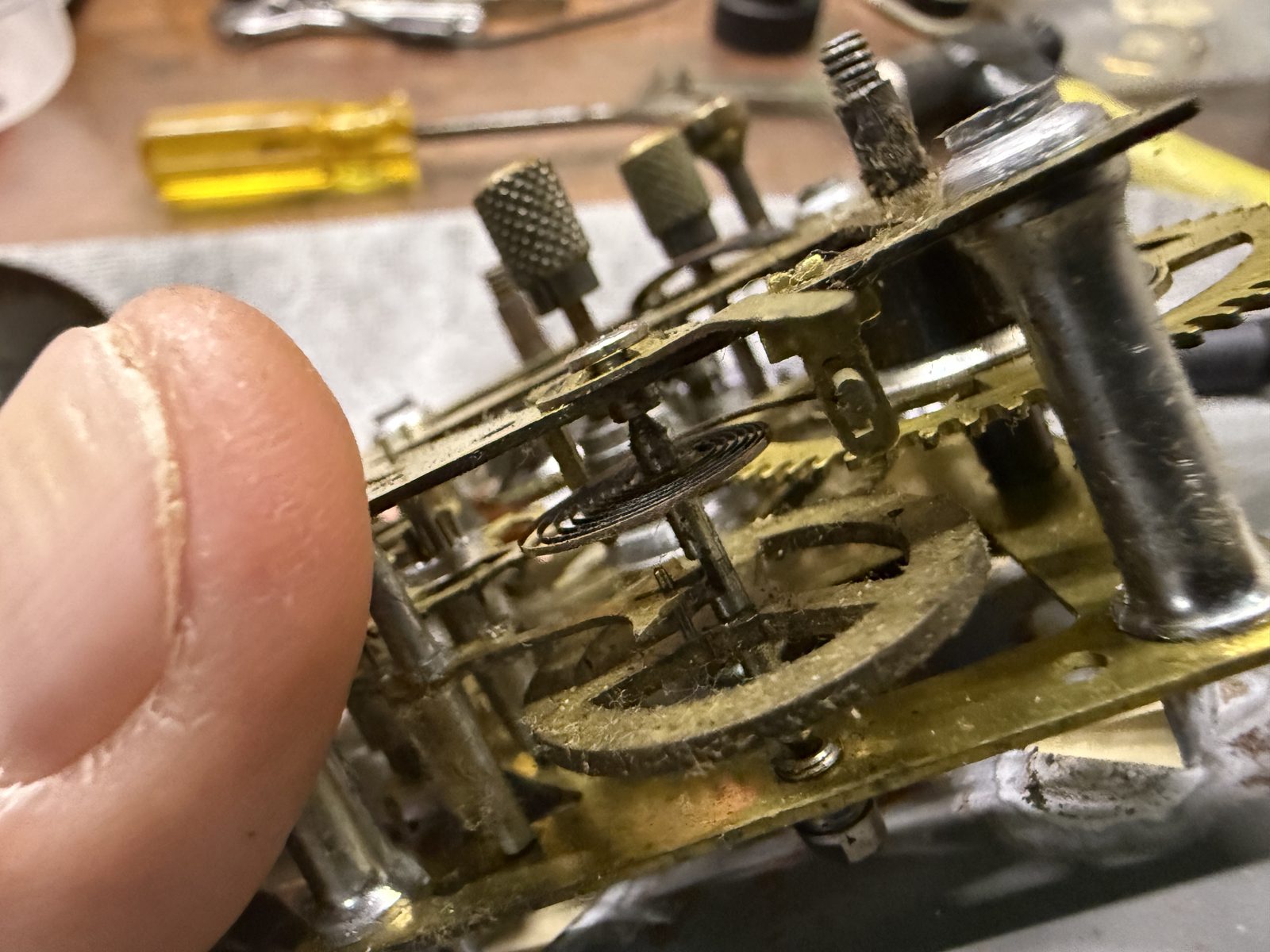
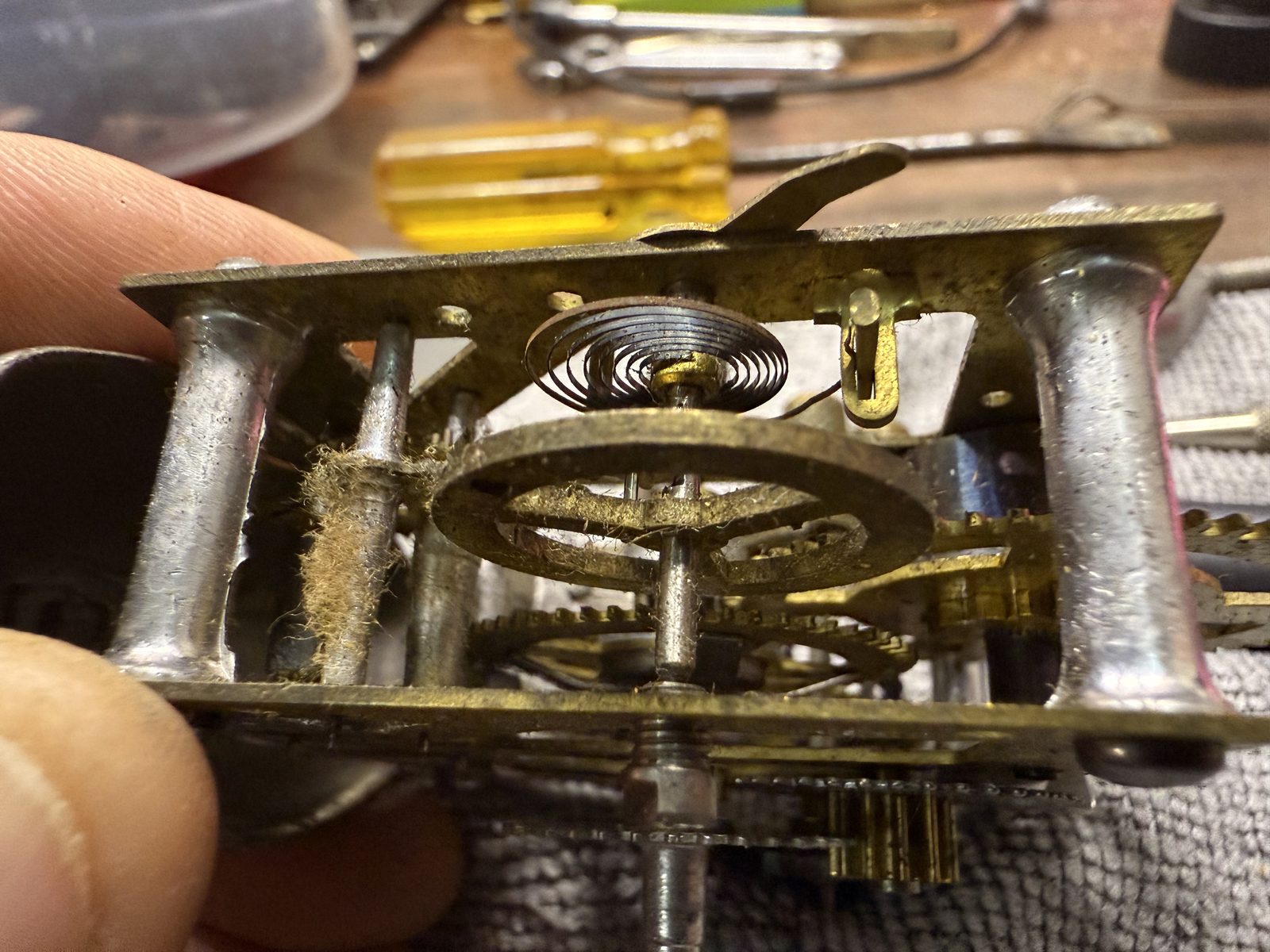
- The clock will tick and run, but not for very long. I think the main issue is really just dirt. It’s filled with grime fuzz and hair. It is pretty unique in that the lantern pinions for the most part only have caps on one end, which I’m sure was a tactic for saving materials.
- The date stamp is from June 1945
- From 1942 to 1945, Westclox ceased all production intended for domestic civilian sale and dedicated its production resources to the war effort, becoming a major manufacturer of fuses for military ordnance. ( https://www.alarmclockdoc.com/Westclox-History.htm)
- So this model represents the first of a renewed production of Alarm Clocks since 1942 for Westclox.
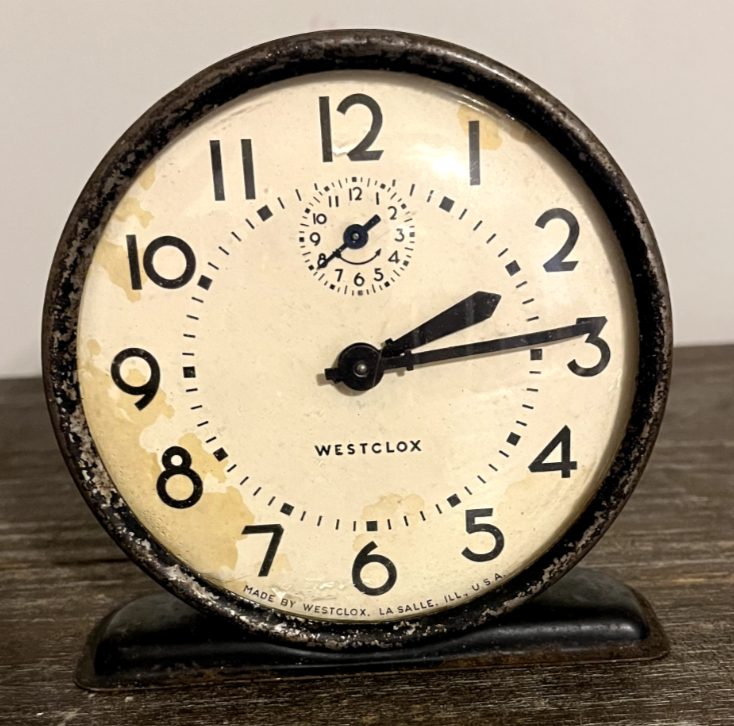
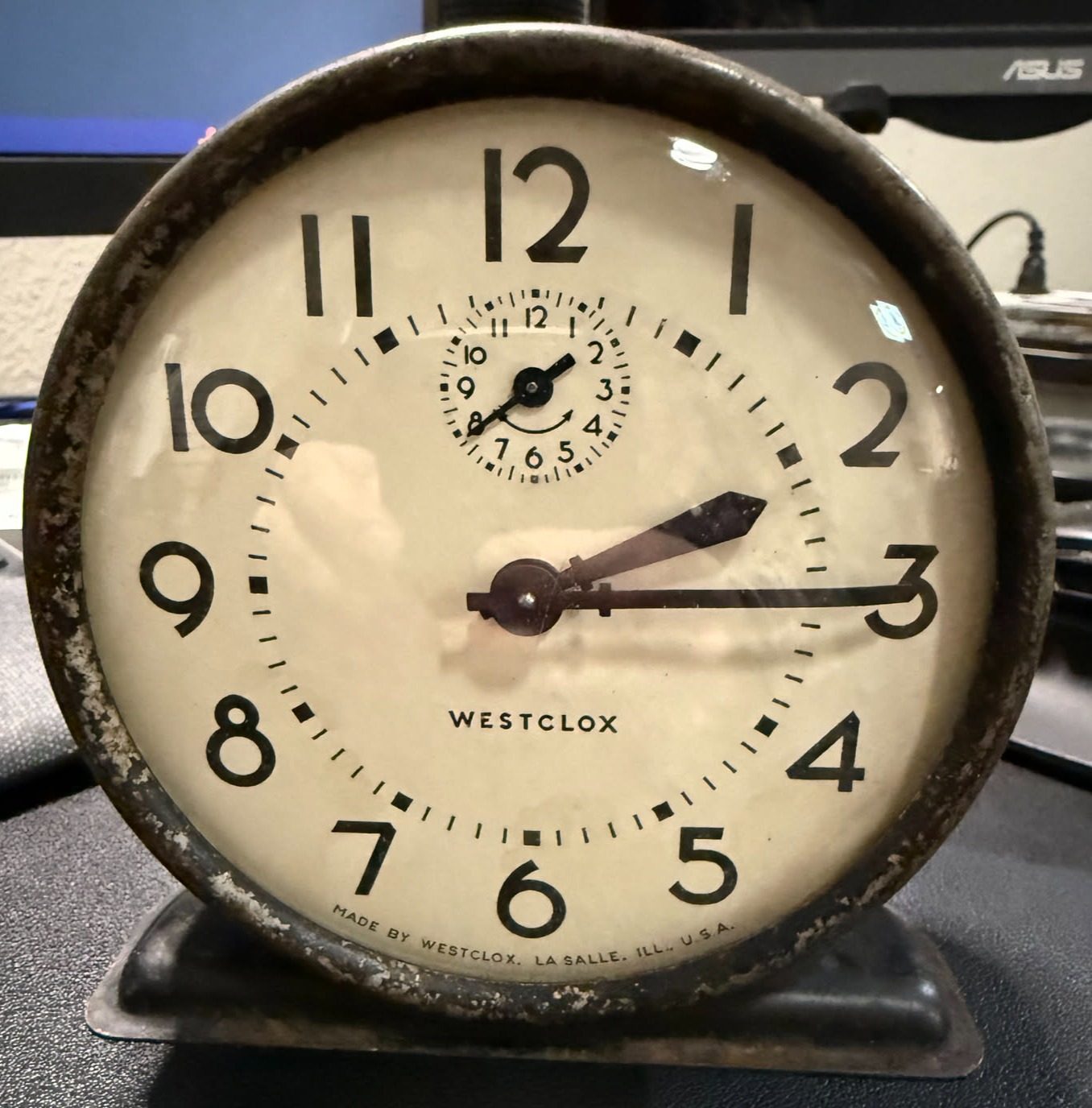
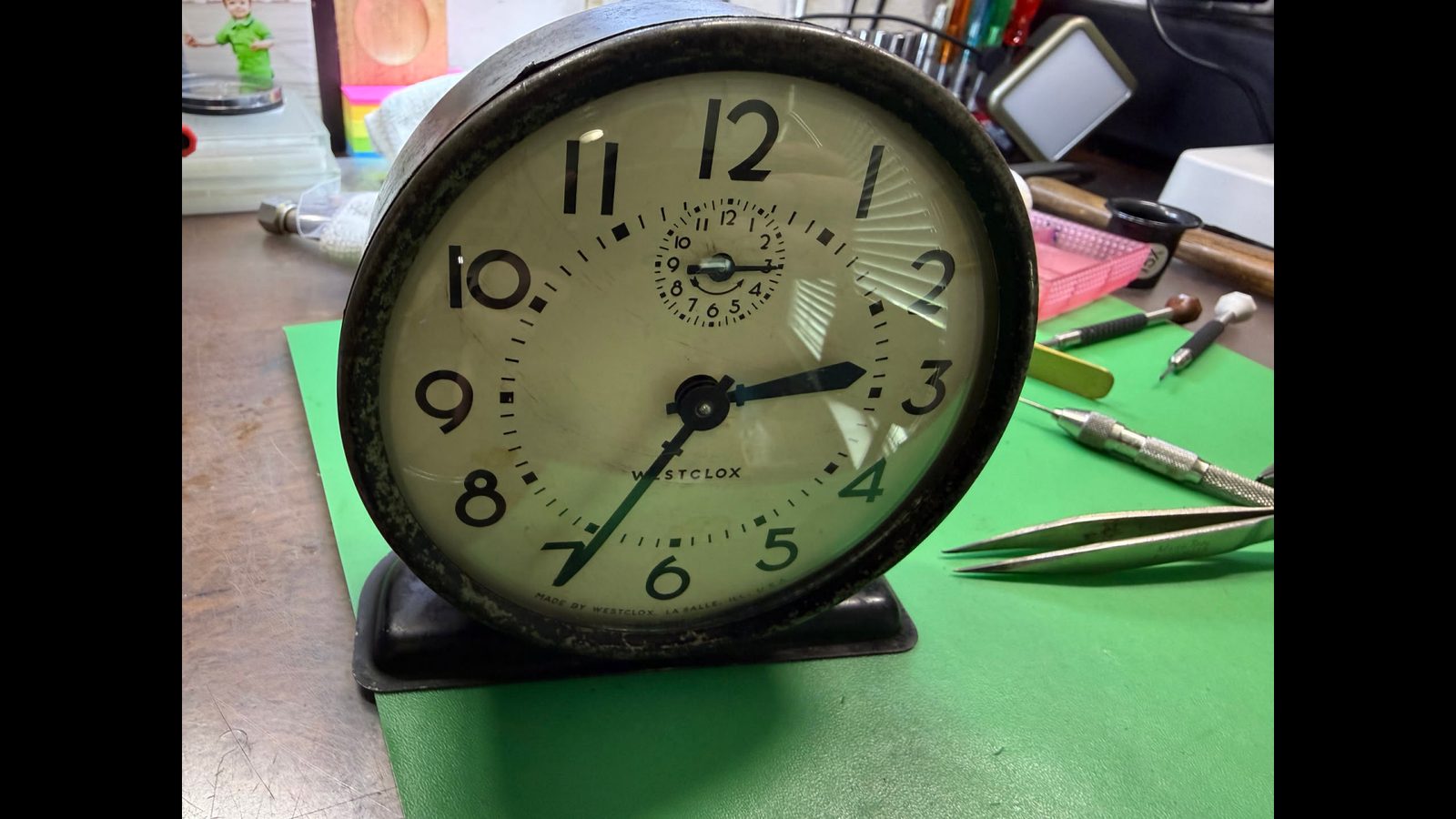
- The face of this does not say "big ben" and it does not appear in the above identification guide.
- The above are photos I took after receiving the clock.
- The alarm setter knob is kind of frozen. These are usually hard to move anyway but I can’t move this with finger pressure.
- The time setter knob turns freely and the hands move.
- Wound the alarm up a little, seems to wind. Took the time around and heard a click when it got close to the alarm’s set time but it did not go off.
- I shook it and it started running. Ah… the winder on the clock is for the time, the alarm winder is missing. So I was not winding the alarm but the time.
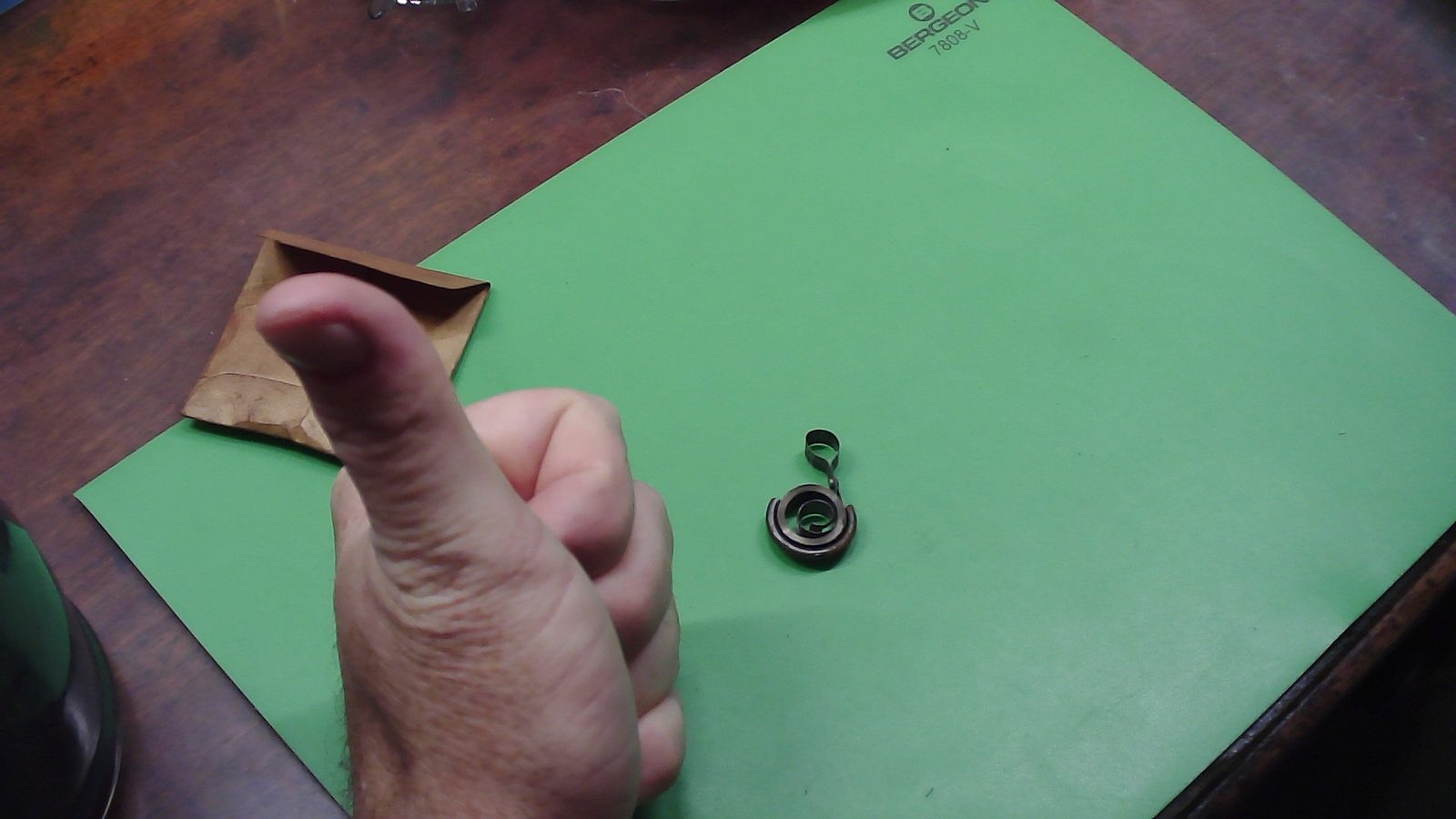
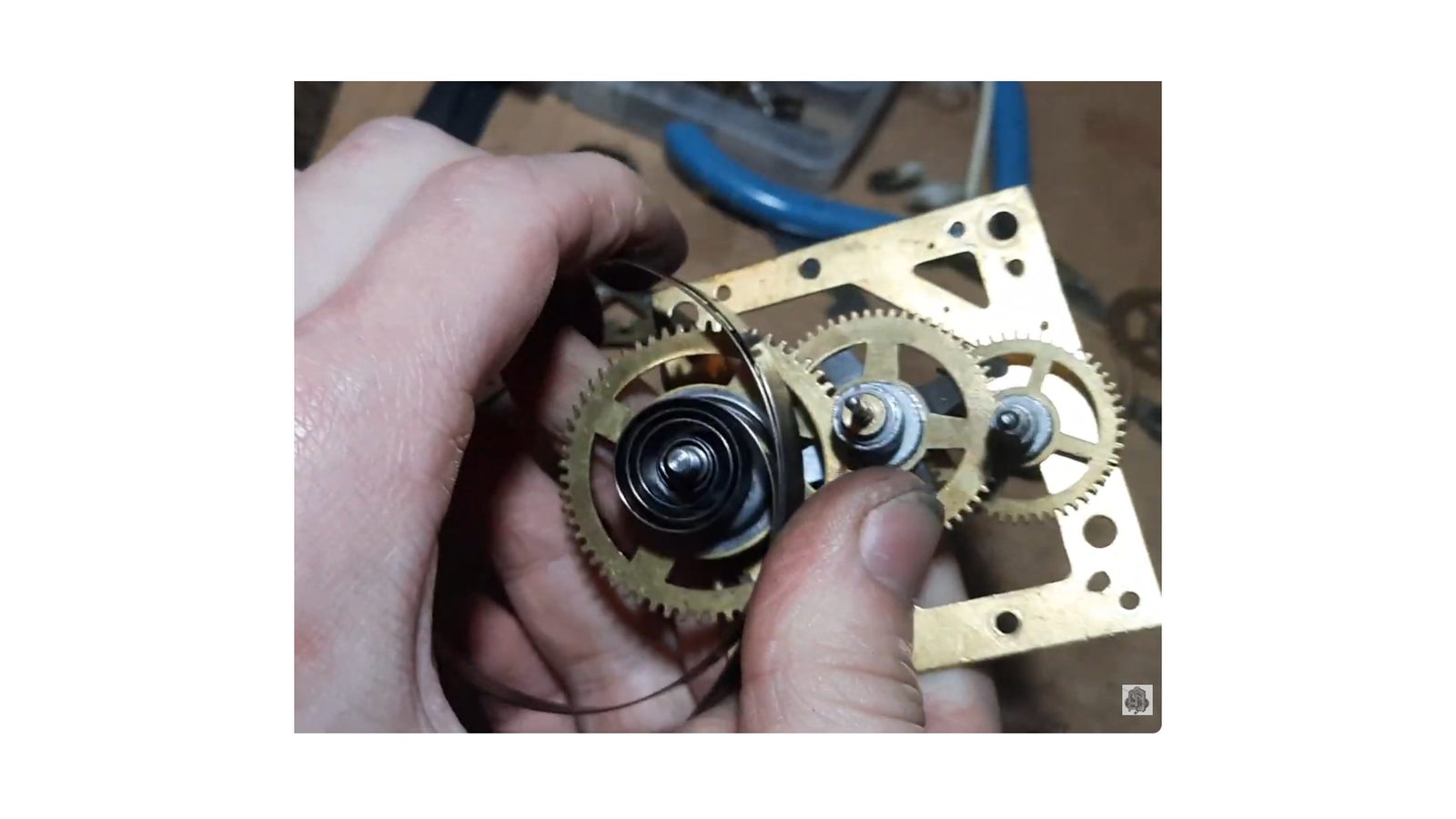
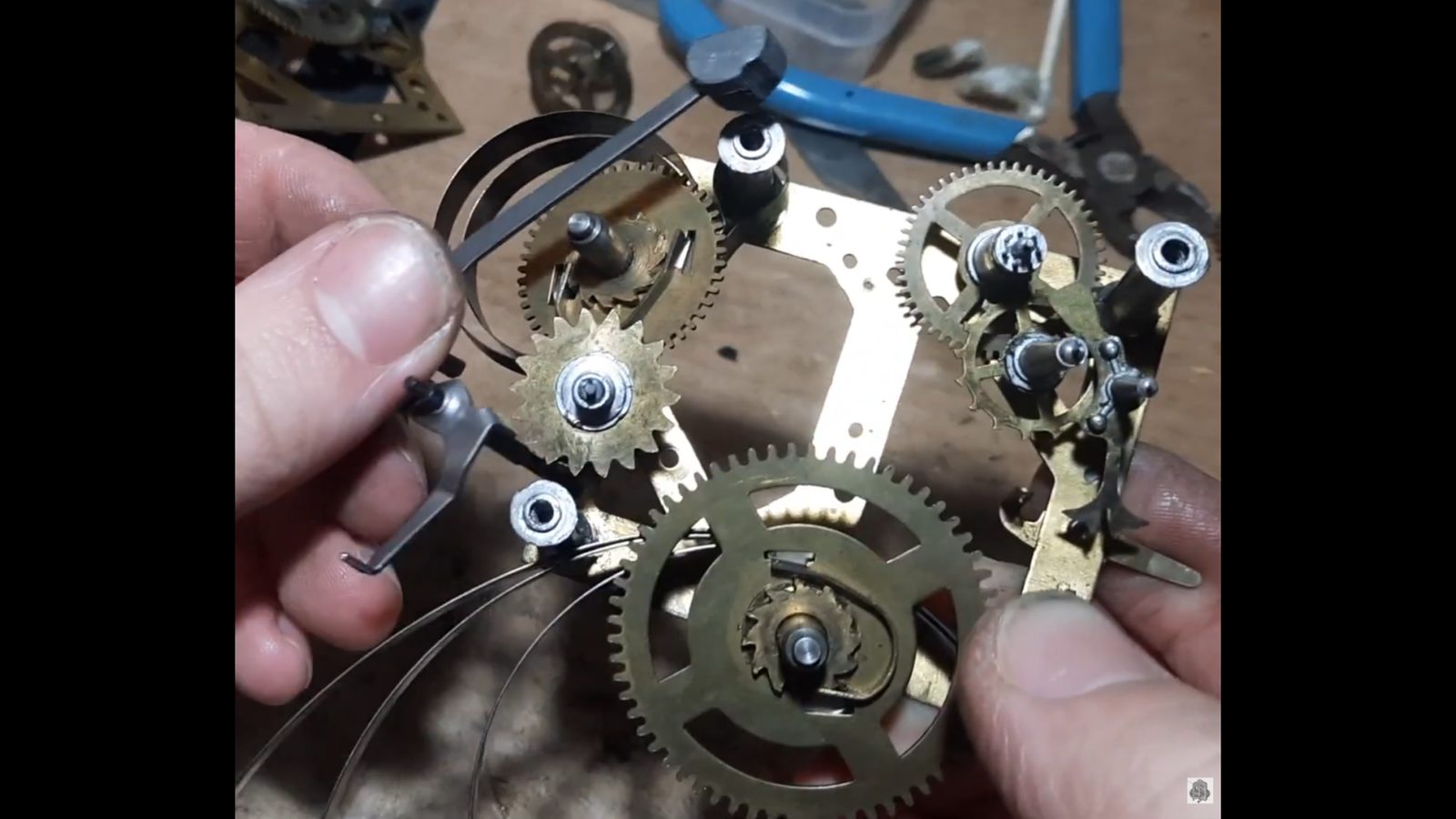
- Alarm spring is broken. Will need to replace.
ClockHistory.com
https://clockhistory.com/0/model-570-1.html
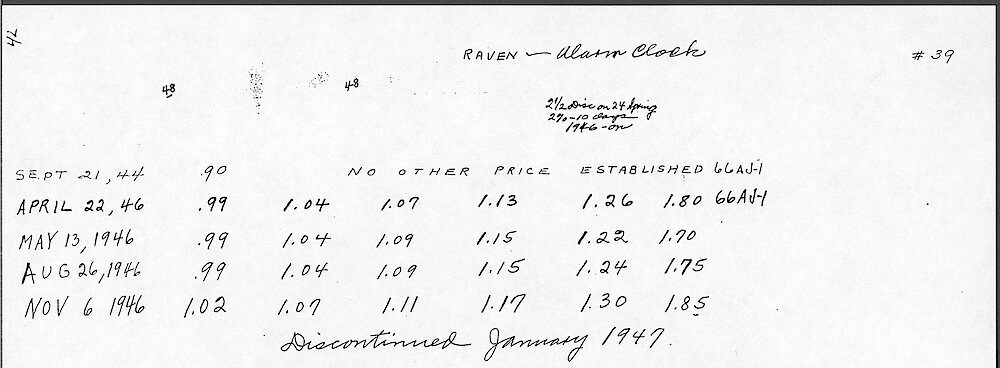
Raven was made from September 1944 to January 1947.
Chat GPT identification:
Below is an identification for your clock based strictly on the photos you provided — no guesswork.
✅ Your Clock Identified: Westclox “Raven” Alarm Clock (WWII Price-Controlled Model)
What you have
You have a Westclox Raven, produced in La Salle, Illinois, during the early 1940s, specifically during the WWII Office of Price Administration (OPA) price-control period.
Key Features That Confirm the Identification
|
Feature in Your Photos |
Meaning |
|
“RAVEN” stamped on back |
Raven was a low-cost wartime Westclox alarm clock line. |
|
“MAXIMUM PRICE $1.65 EXCLUSIVE OF TAXES” |
Mandatory OPA price stamping (1942–1945). Confirms wartime manufacture. |
|
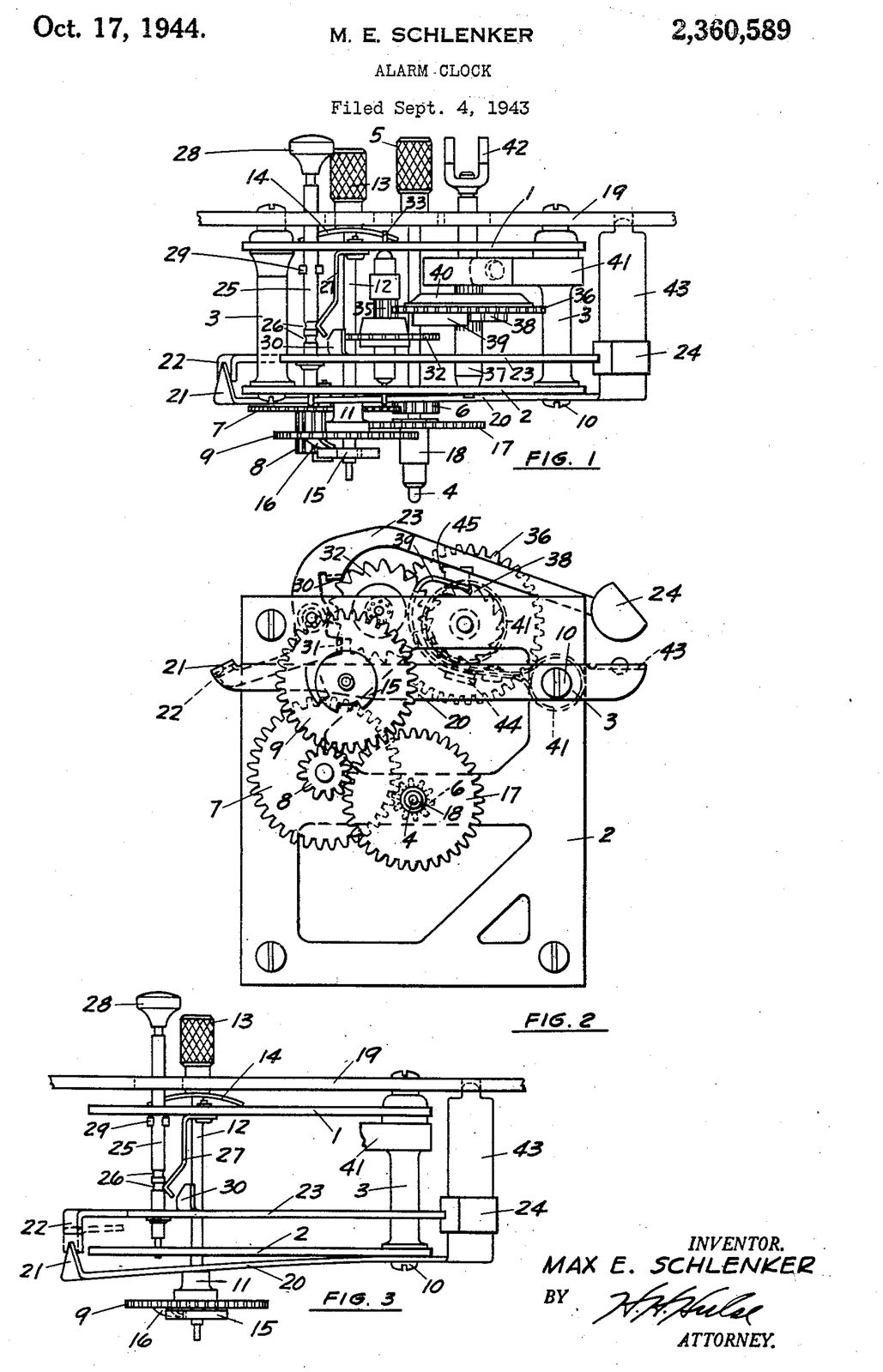
Patent number 2,360,589 |
Westclox patent issued in 1944, related to alarm movement construction—commonly stamped on wartime units. |
|
Simple black-on-white dial with seconds sub-dial |
A common dial design on the Raven and similar low-cost Westclox clocks. |
|
Stamped metal back, knurled winders, pull-to-set alarm post |
Standard Westclox Big Ben/Baby Ben construction methods adapted for the Raven. |
🕰️ Production Date
Your clock was almost certainly produced between 1944 and 1945.
This clock’s actual date stamp on the plates is June 1945.
Why:
- Patent 2,360,589 issued Oct. 10, 1944
- OPA enforced mandatory maximum retail pricing 1942–1945
- Westclox LaSalle plant resumed consumer-clock production during this period with simplified “economy” models like the Raven.
🧩 About the Raven Model
The Raven was one of Westclox’s budget alarm clocks introduced to provide inexpensive timekeeping during wartime material restrictions.
Characteristics:
- Painted metal case (often found rusty today, as in yours)
- 30-hour movement
- No luminous paint (due to radium restrictions during WWII)
- Minimal trim and simplified hands
- Stamped steel back plate identical to yours
About Waralarms
The Westclox "Waralarm"
by Richard C. Tjarks
The clock you are inquiring about is a spring-driven "Waralarm" in a pressed wood fiber case, with black finish, produced by Westclox during WWII. Your photo shows, as you mentioned, that the bottom of the dial is marked "Made in La Salle, Ill. U.S.A.," but the name Westclox does not appear.
"Waralarms" were also produced in black finished round steel cases on a stamped steel base. This steel-cased model replaced the molded wood fiber cased model at some time during the war, and after the war it continued in production as the "Raven" model.
These "Waralarm" clocks in the pressed cases seem to have held up well, as examples do show up on mart tables occasionally. Also, during WWII Westclox produced a few "Baby Ben" style clocks, some apparently for military use. However, in the research that Bill Stoddard and I have done on the Western Clock Company and Westclox, we have learned little about this Baby Ben production.
Regular production at the Westclox plant was halted by government order on July 31, 1942 and was not reinstated until the fall of 1946. During the interim the 3,000-plus Westclox employees were put to work fulfilling military contracts. Especially important was the production of fuses for bombs. However, there was a definite need for replacement alarm clocks for our war production workers, and in April 1943 the War Production Board authorized Westclox to produce what was to become the pressed wood fiber cased "Waralarm." Other clock companies were also permitted to produce a limited number of their own version of the waralarm.
Due to military needs there were serious constraints on the allowable use of brass and many other materials. In the consumer world this led to the formation of the Ration Board, with goods ranging from gasoline and tires to white sugar being rationed. Westclox, in order to reduce their use of brass, redesigned their model 66 movement that had been used in their least expensive alarm clocks. In the redesigned model for the new "Waralarm," they went from using 300 pounds of brass per 1,000 clock movements to the incredibly low figure of seven pounds of brass per 1,000 clock movements. These clocks were in production by the summer of 1943. The pressed wood fiber case also reduced the use of steel in these clocks.
The maximum price mentioned in the inquiry appeared on all "Waralarm" production clocks. The price was fixed by the Office of Price Administration, usually referred to as the O.P.A., and Westclox was required to show this information on the clocks. The O.P.A. Maximum Price of $1.65 appeared in straight lines stamped into the back of the cases.
Even though their clock production was severely curtailed during the war, Westclox continued their national advertising campaign to keep their name before the public. Their ads often admonished people to take good care of their Westclox so that they would last through the war. One of the wartime advertising slogans used by Westclox was "Victory won’t wait for the nation that’s late."
Work Completed
The clock was not in the best condition, not surprising as it was made in 1945 in a time when the materials allowances were still limited.
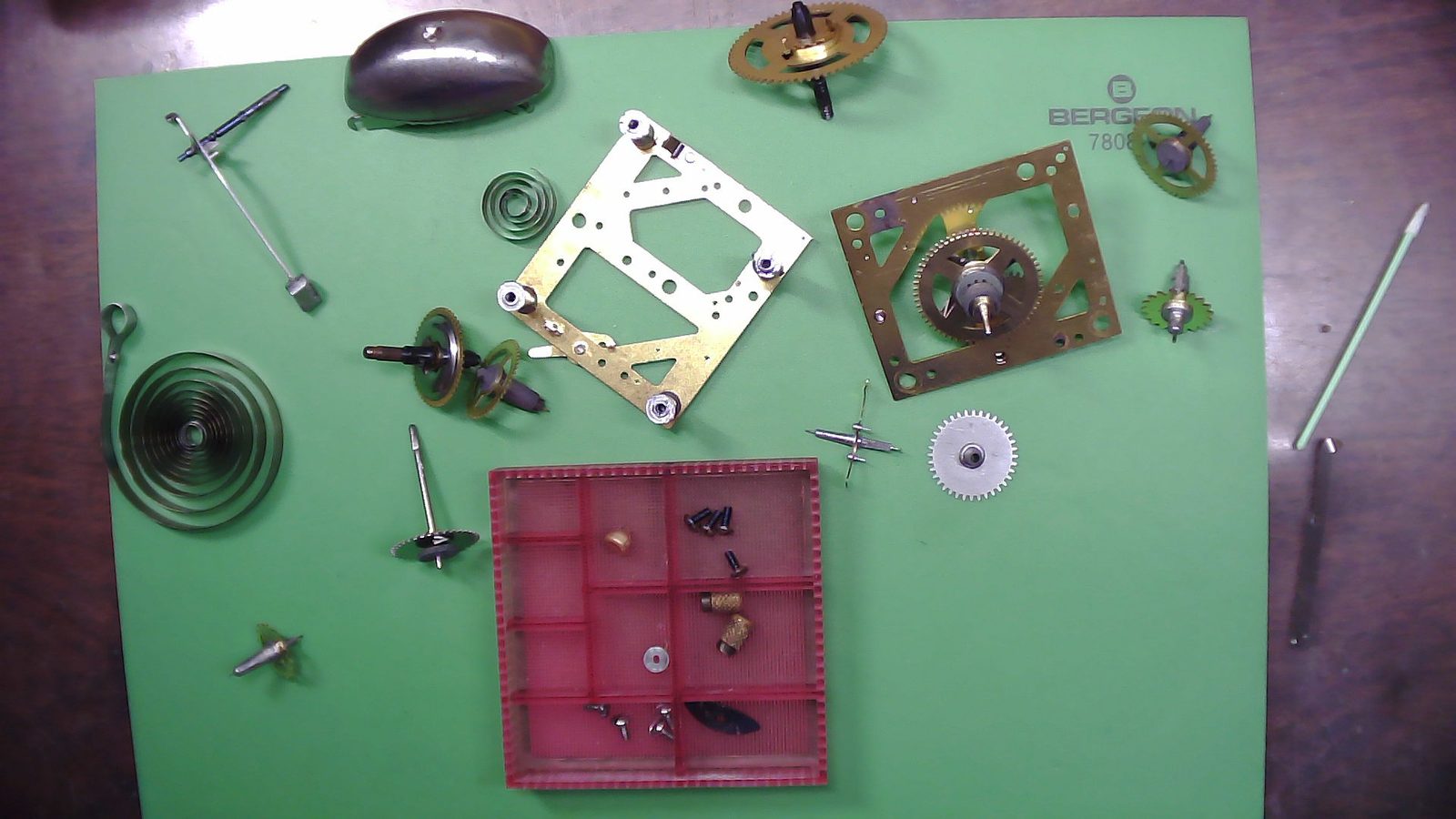
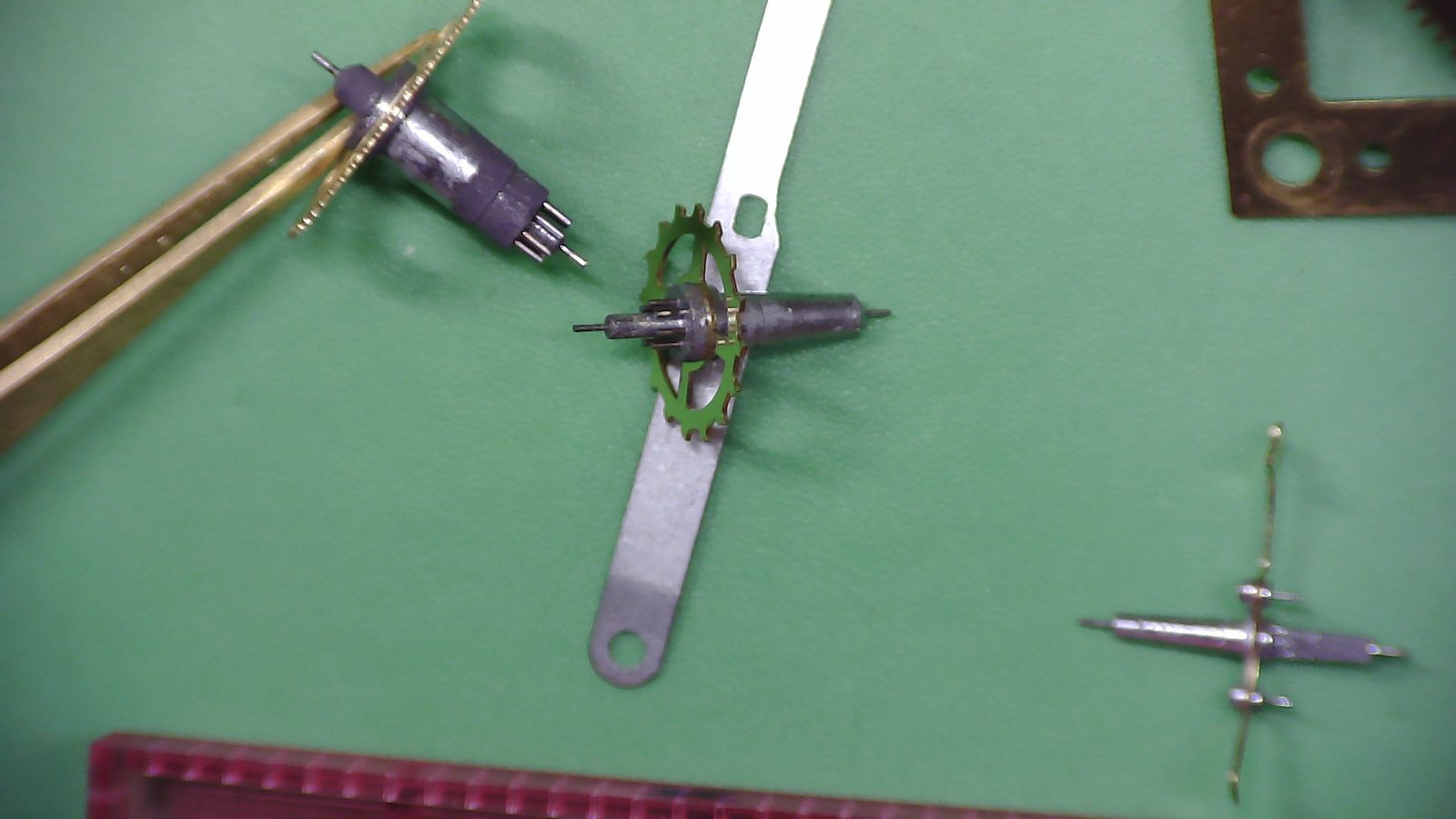
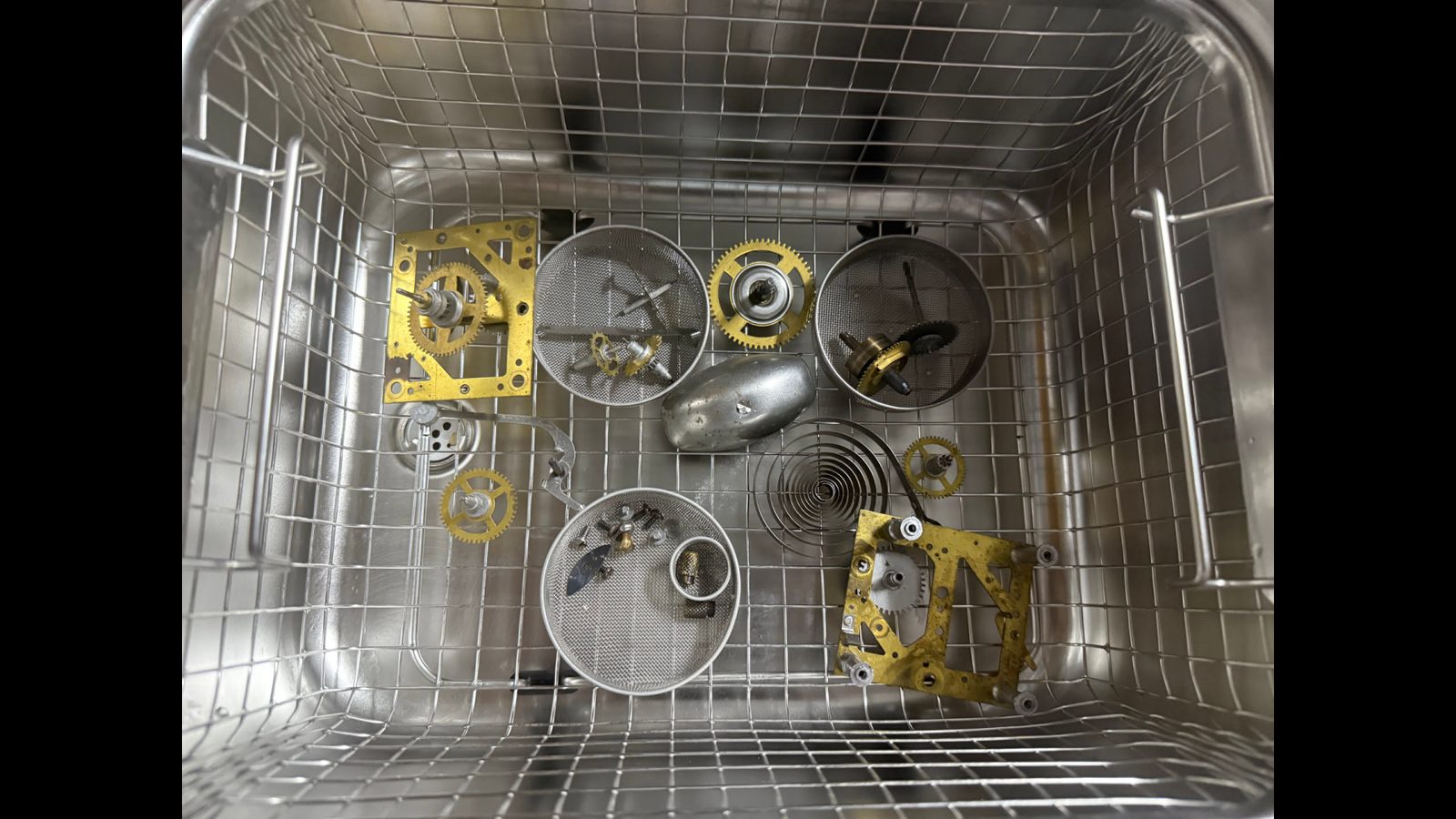
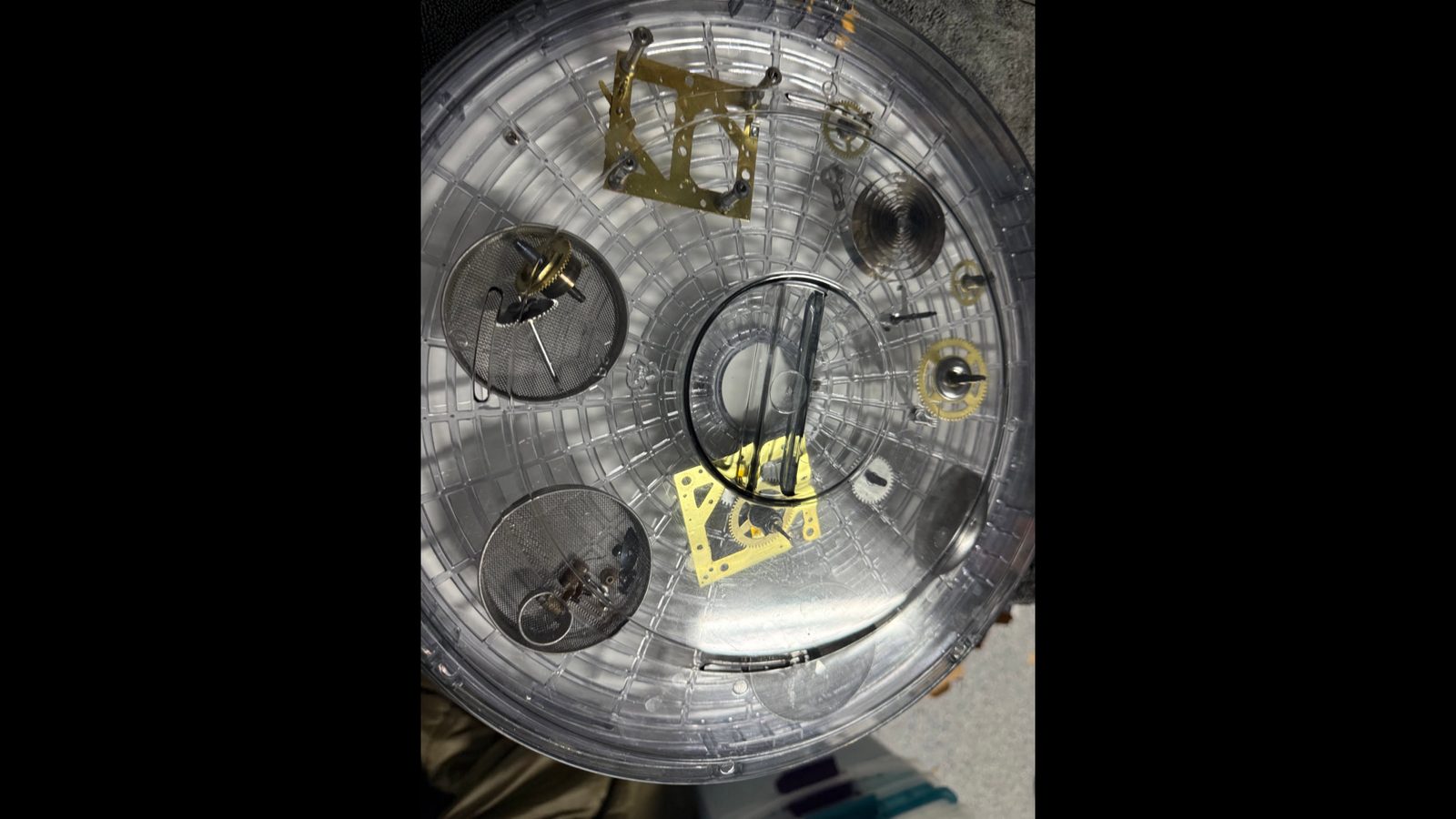
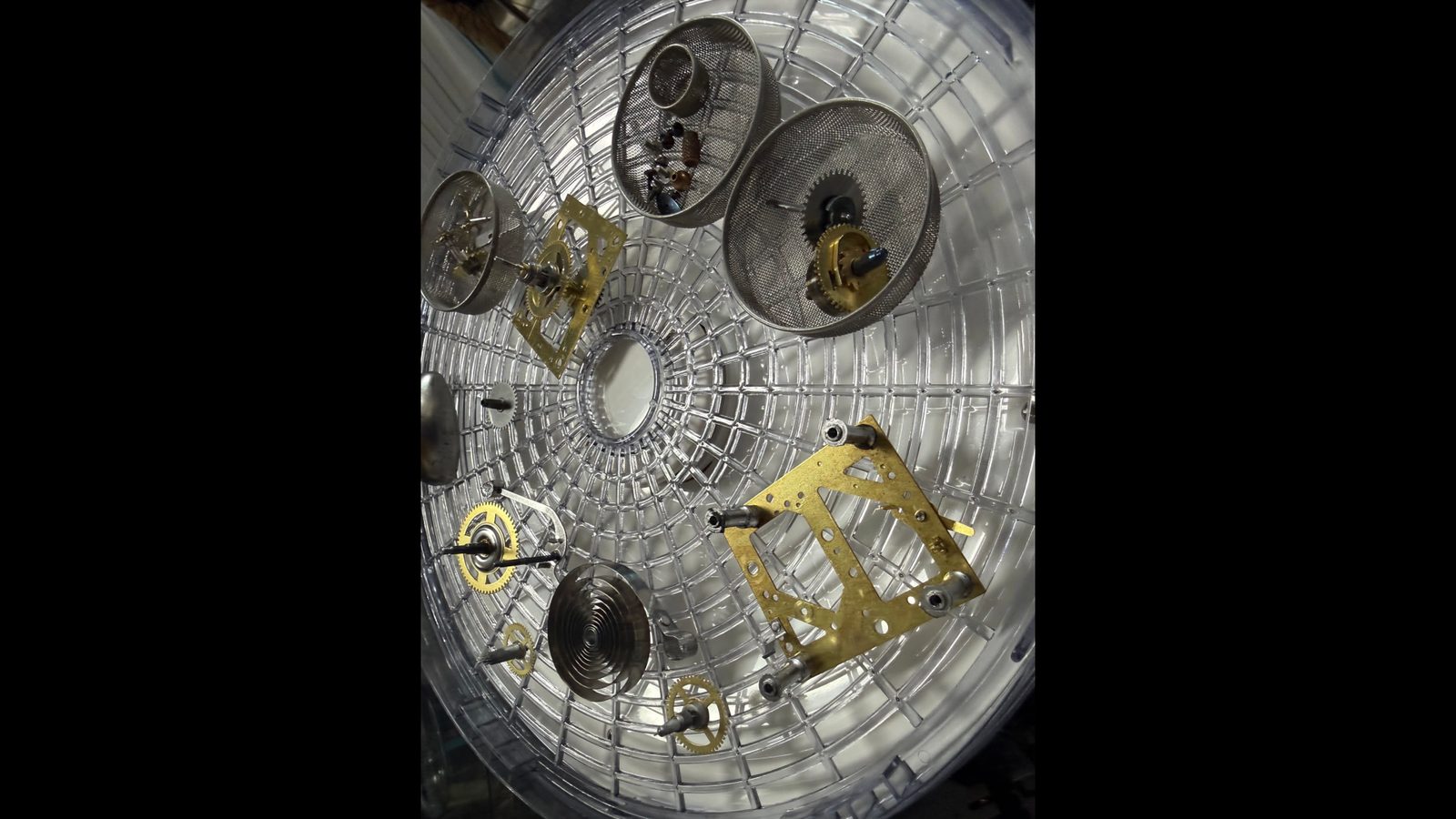
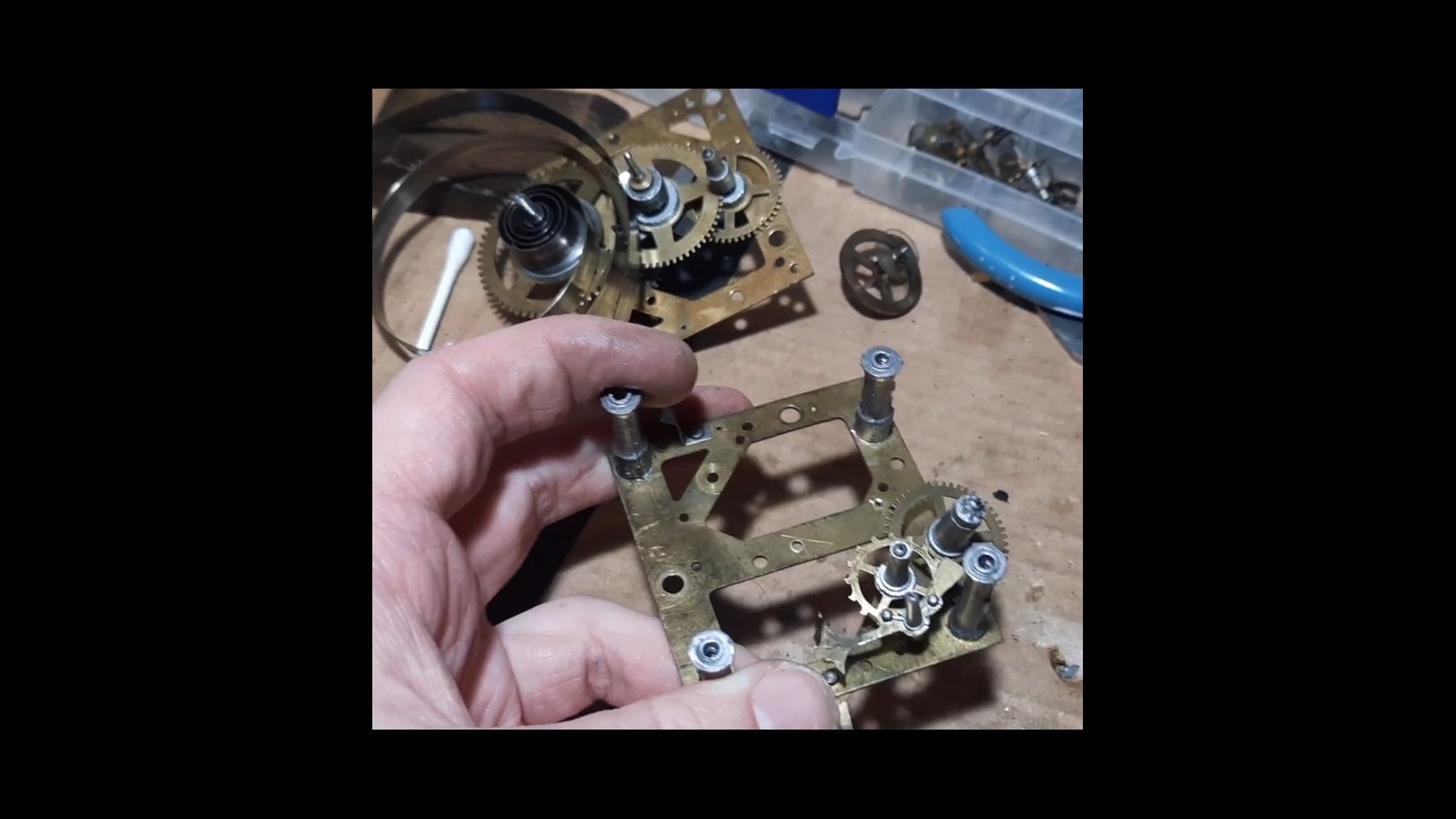
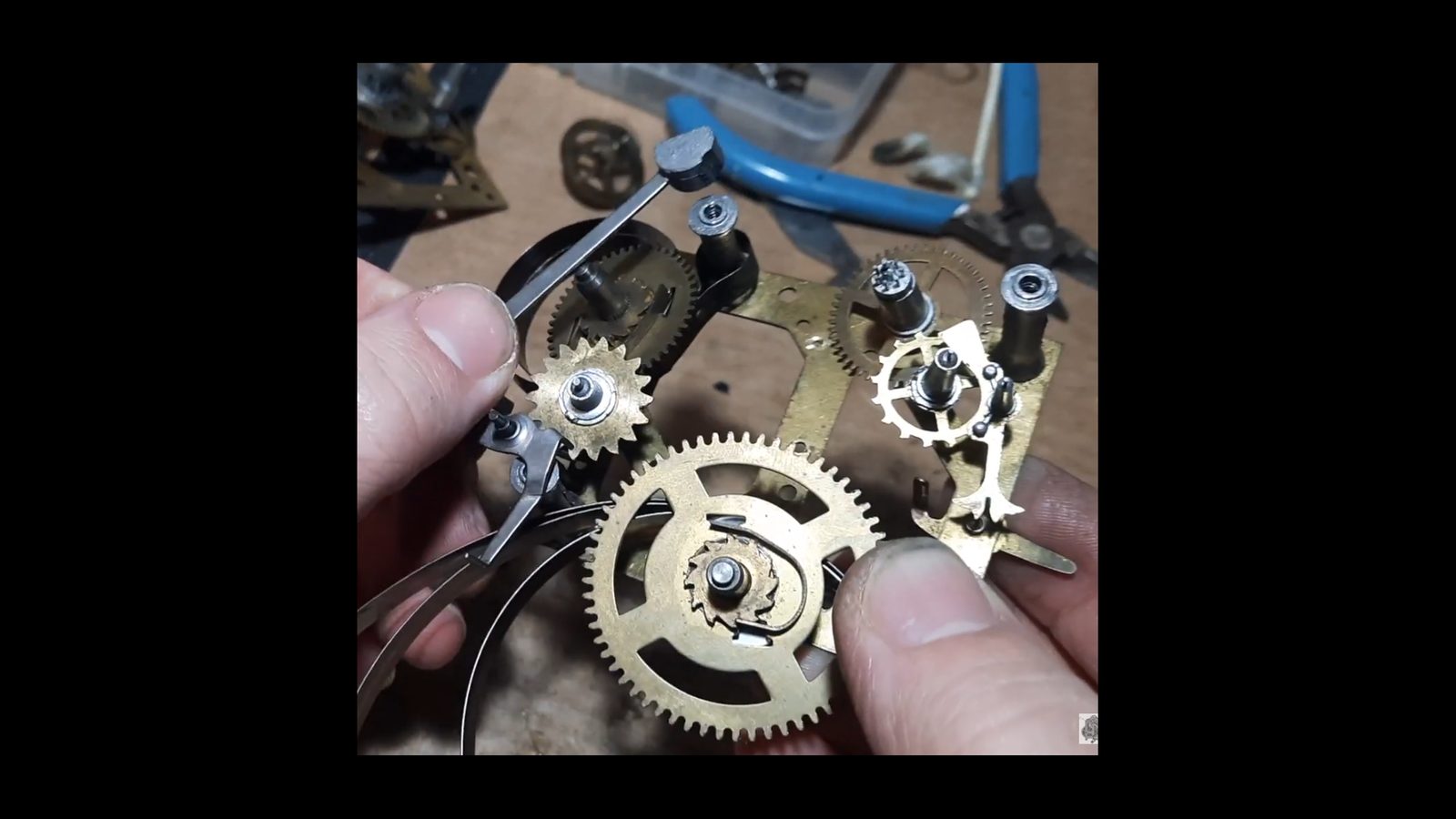
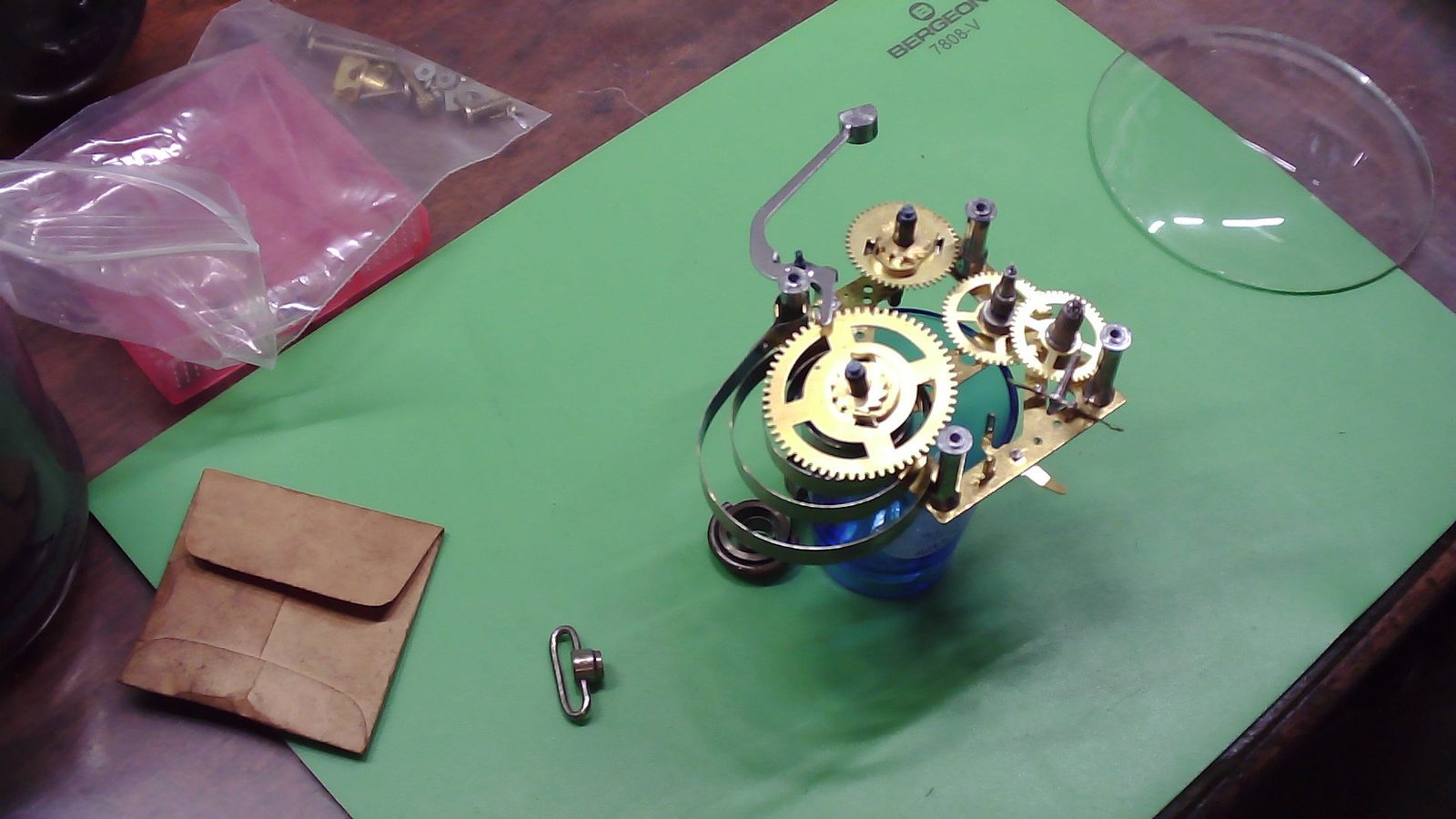
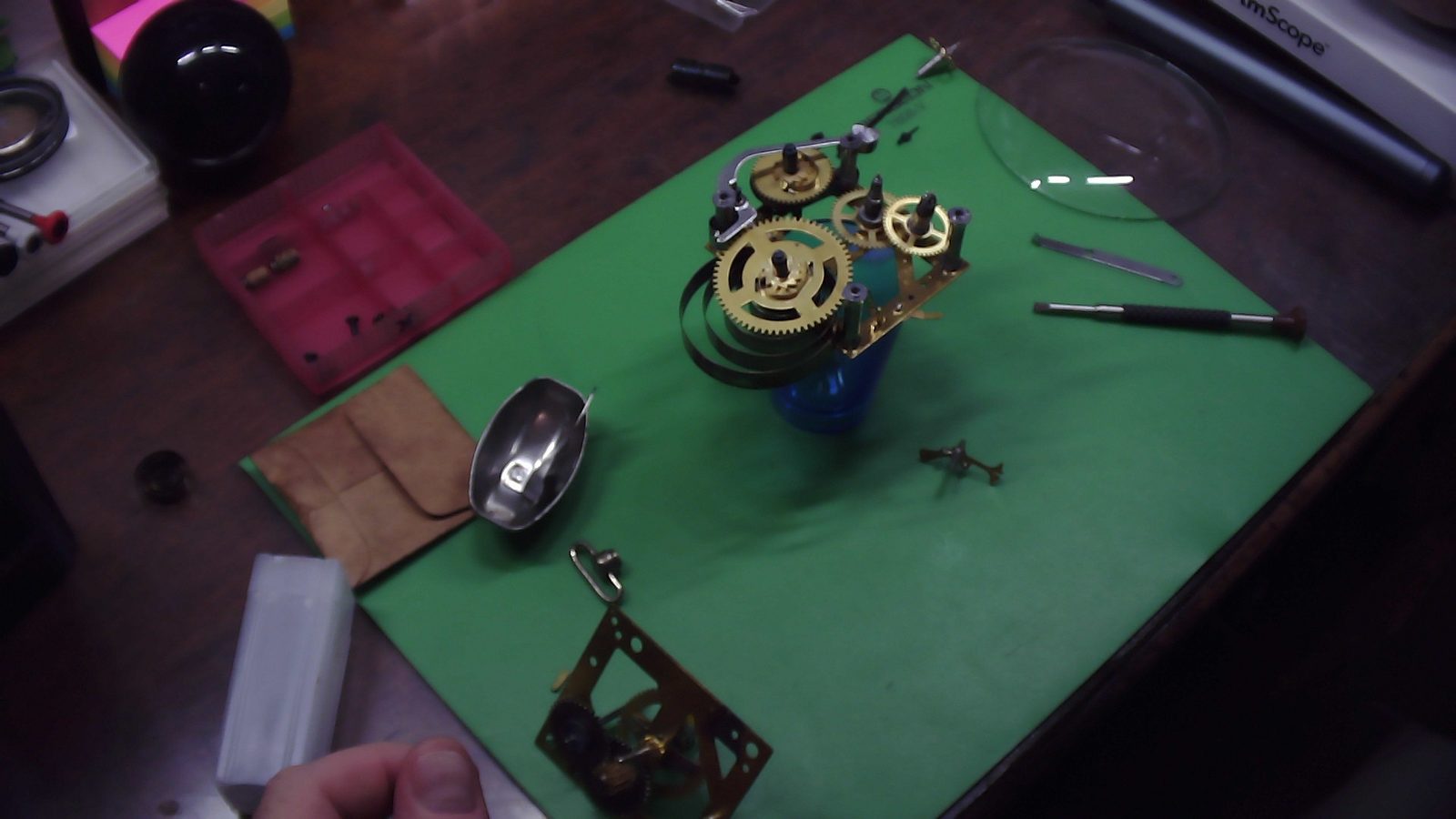
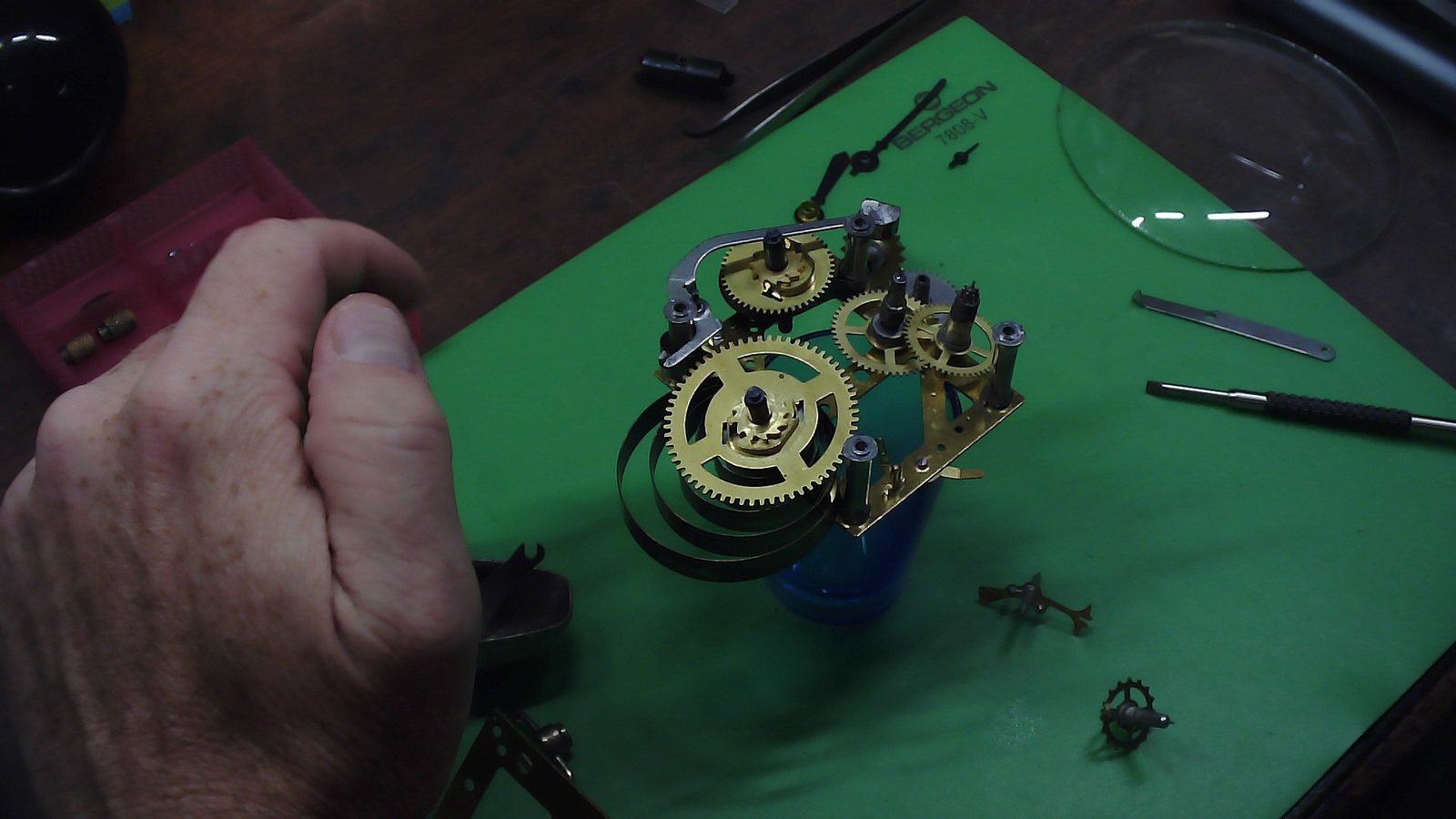
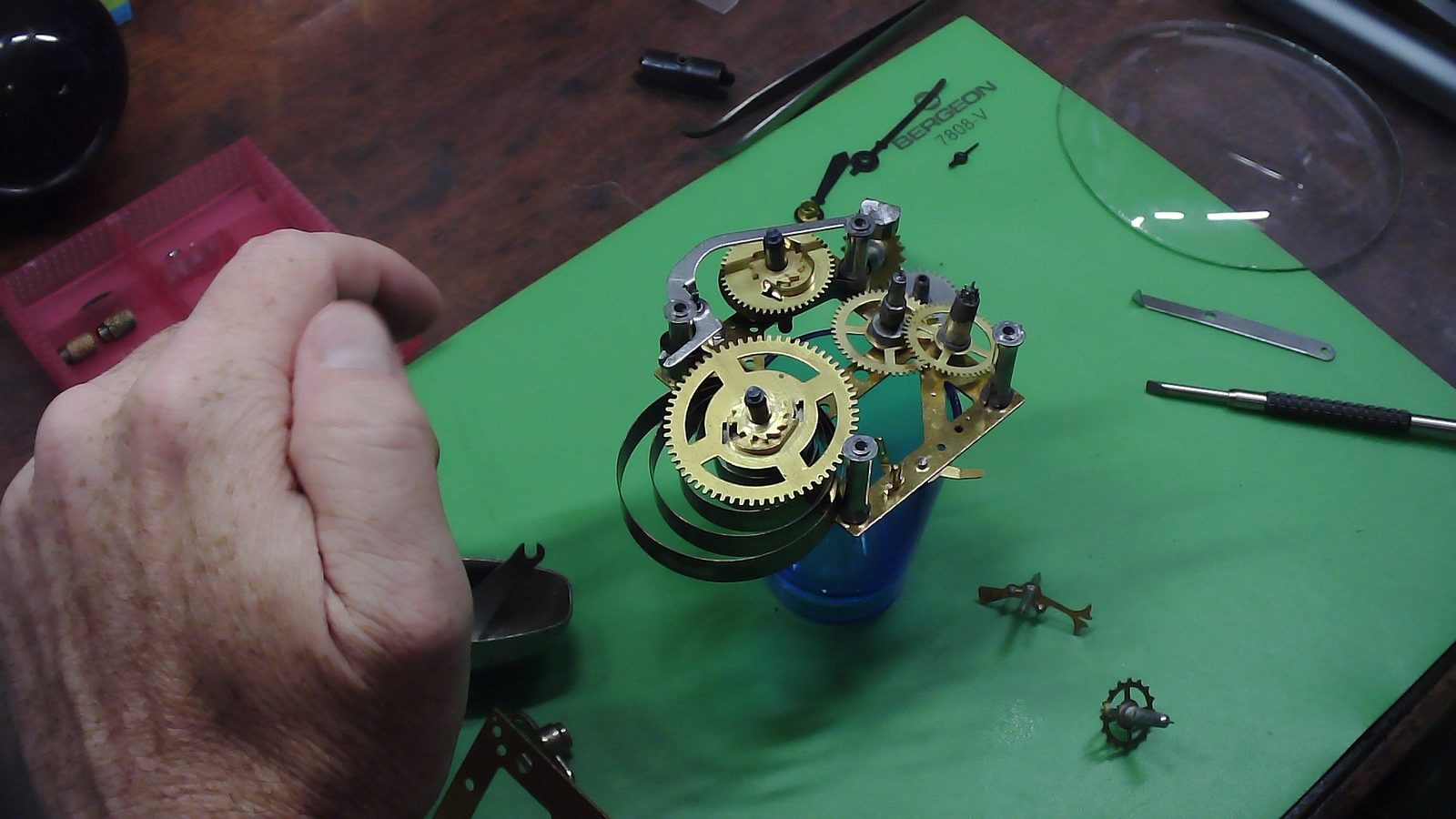
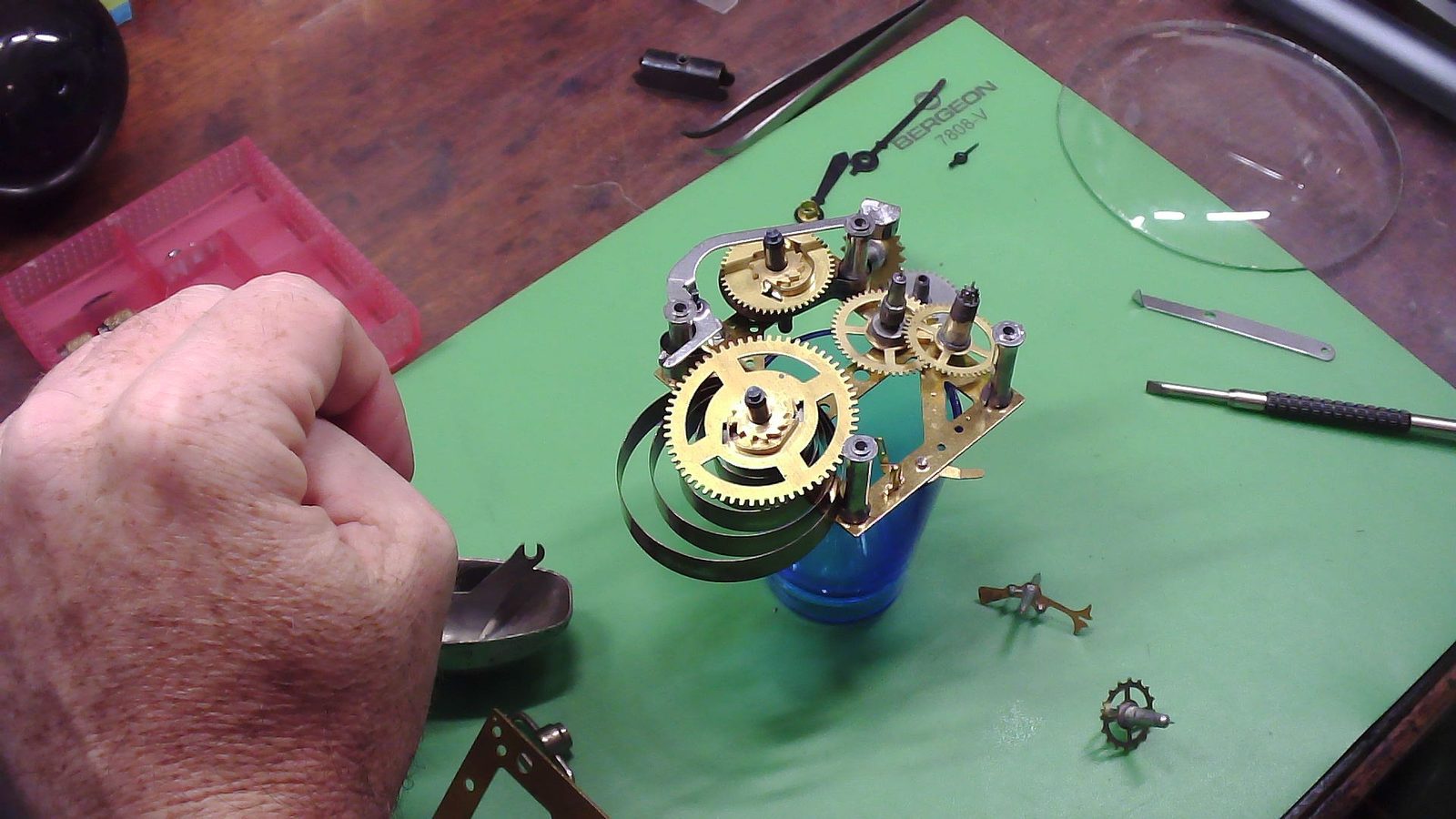
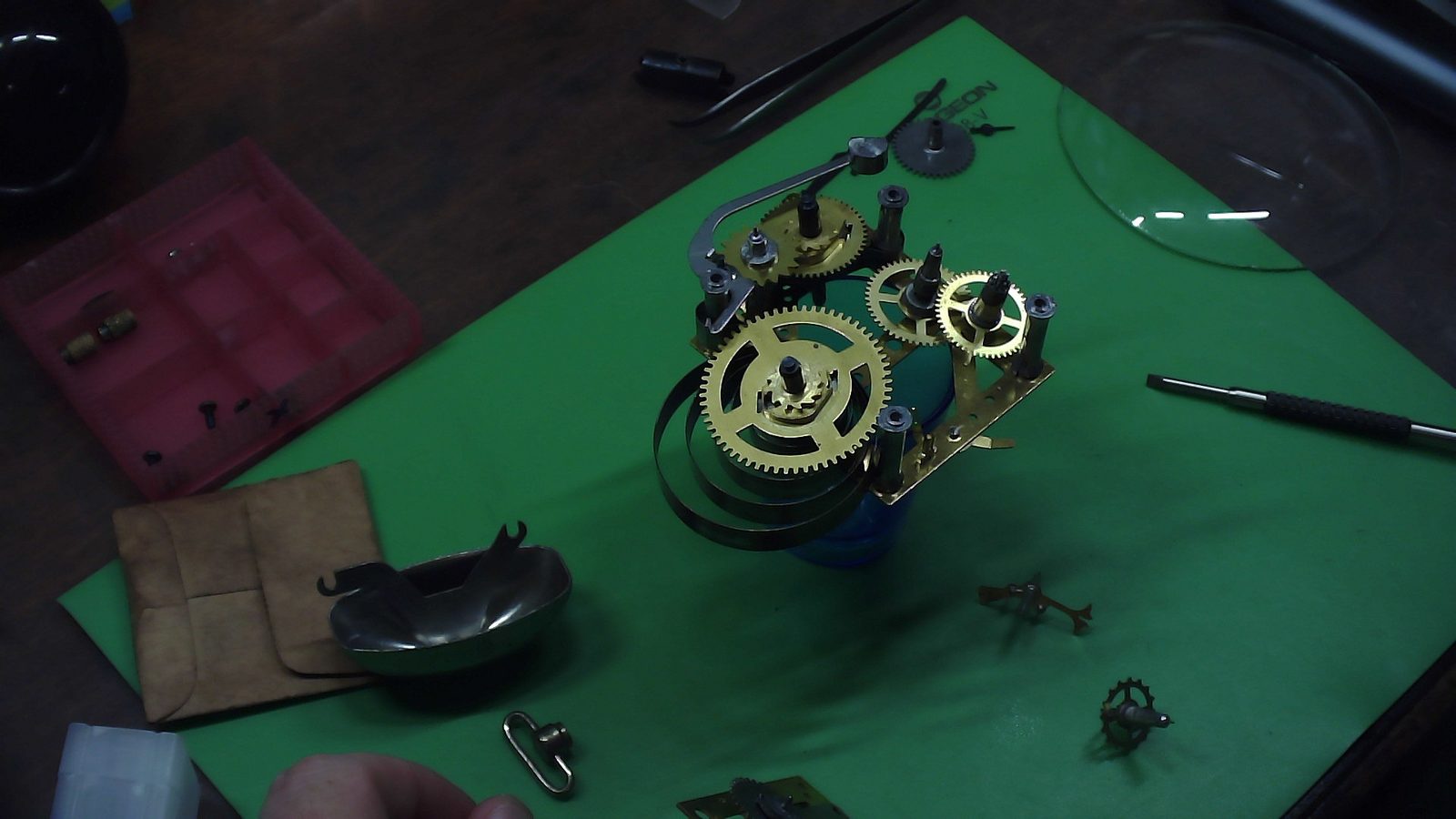
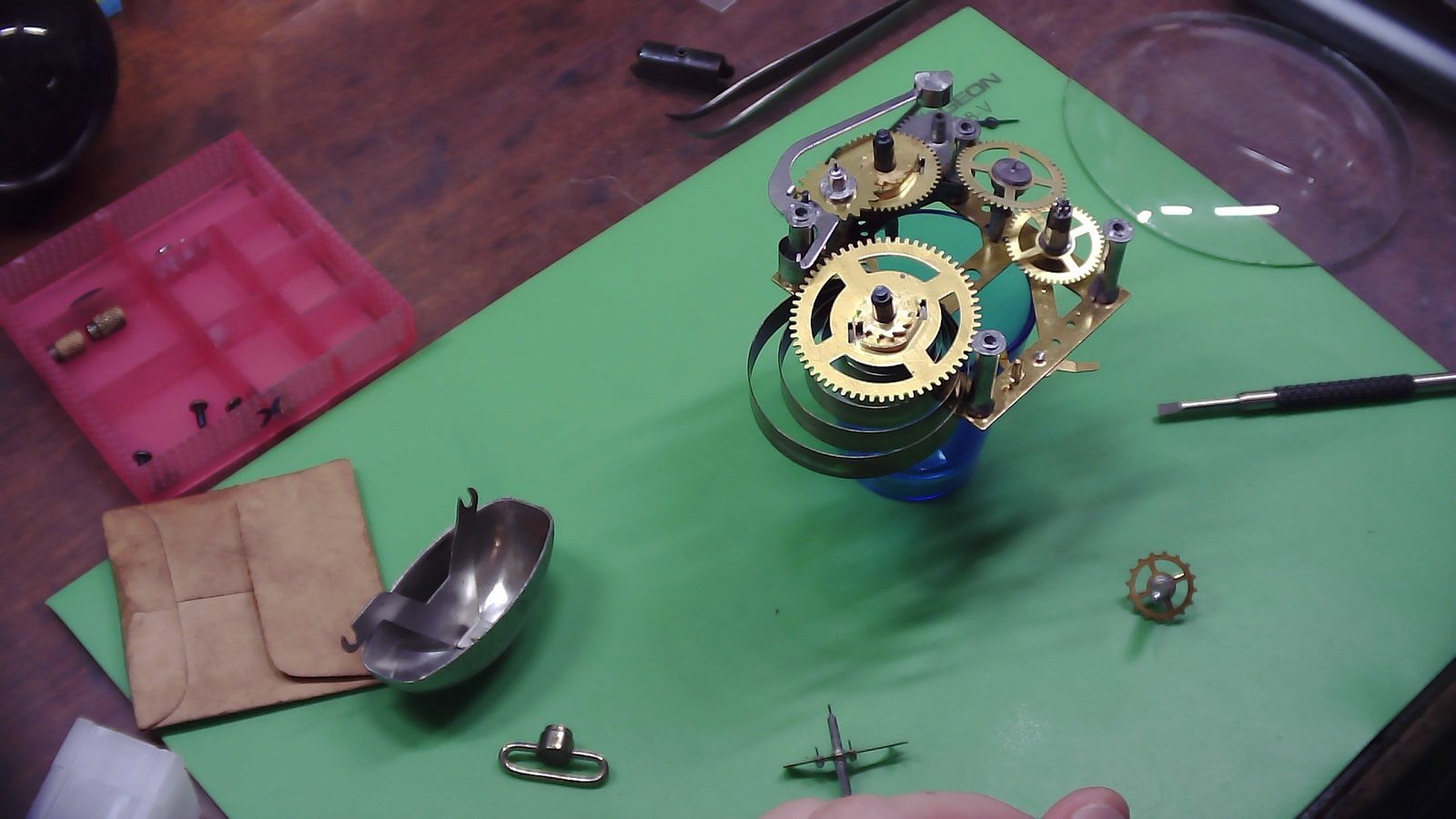
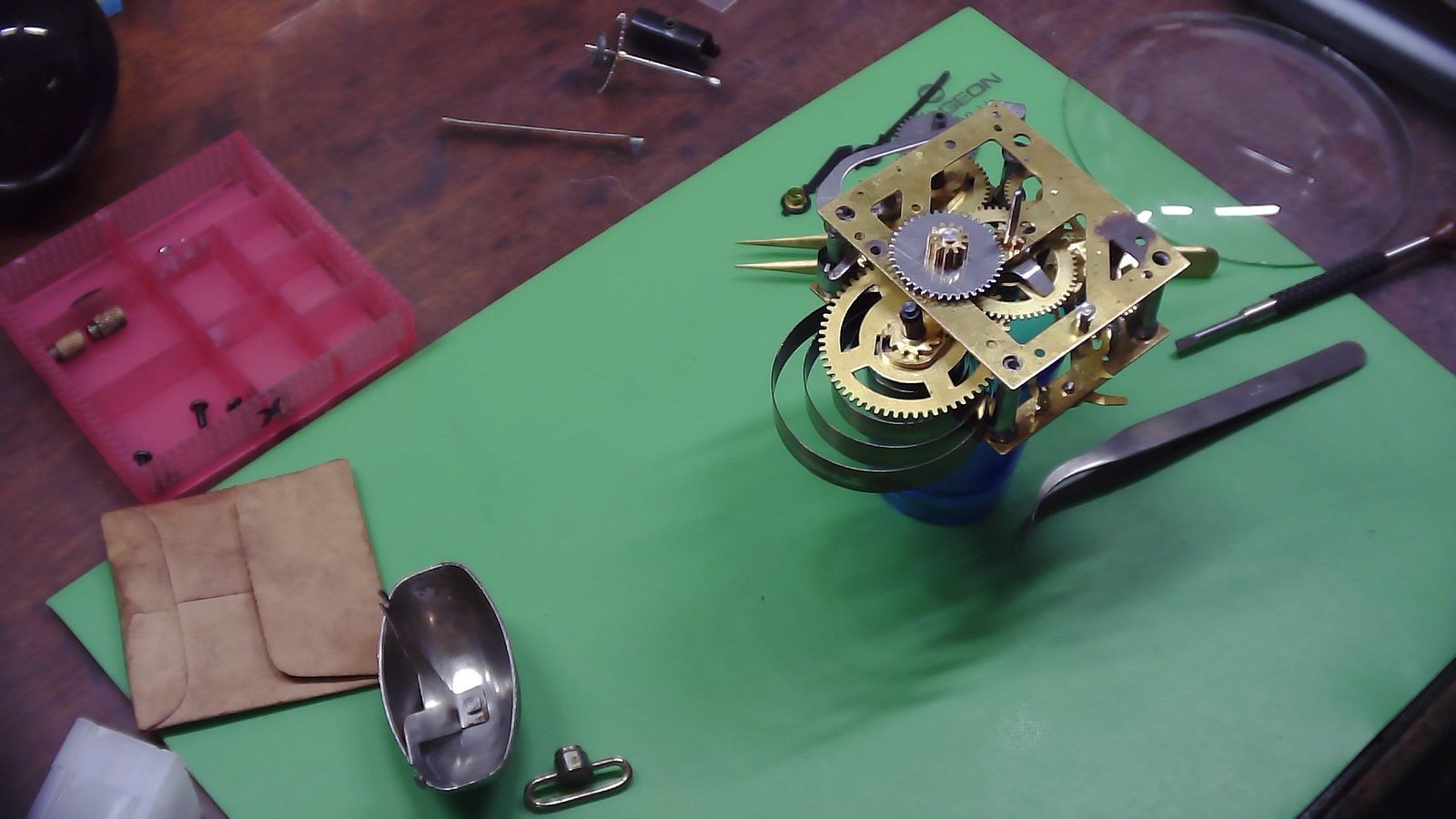
The clock was fully taken apart.
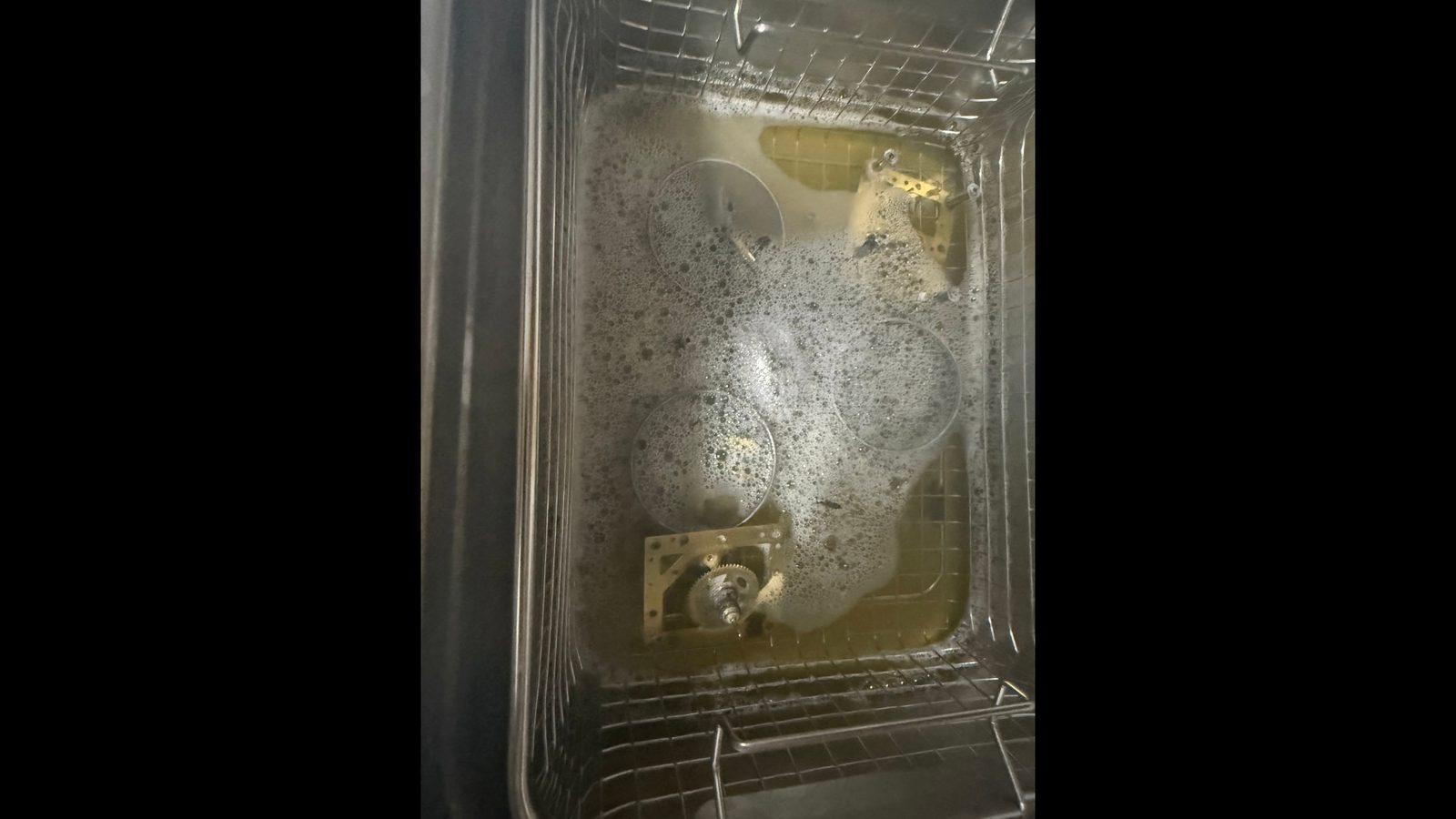
All parts were thoroughly cleaned.
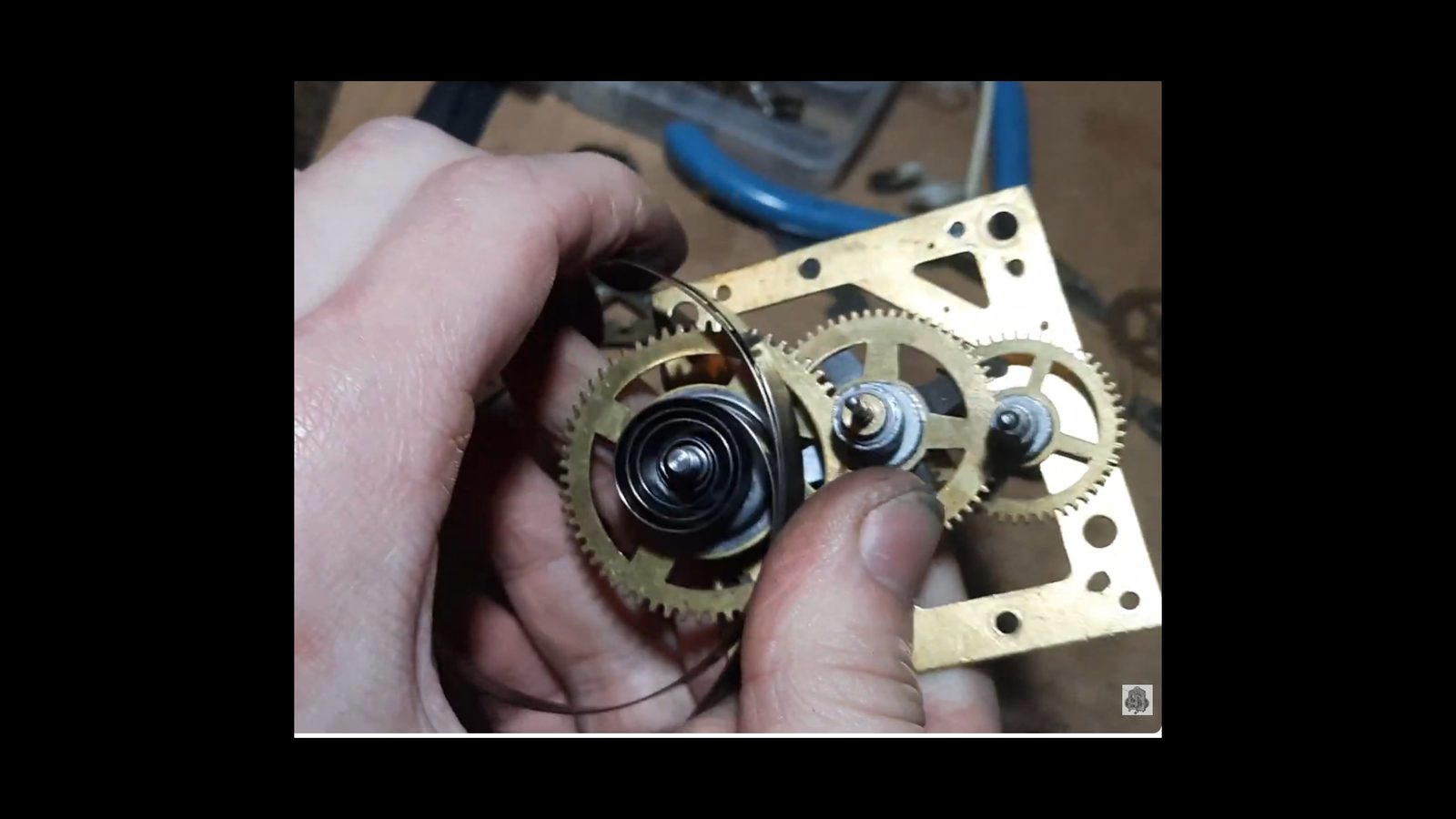
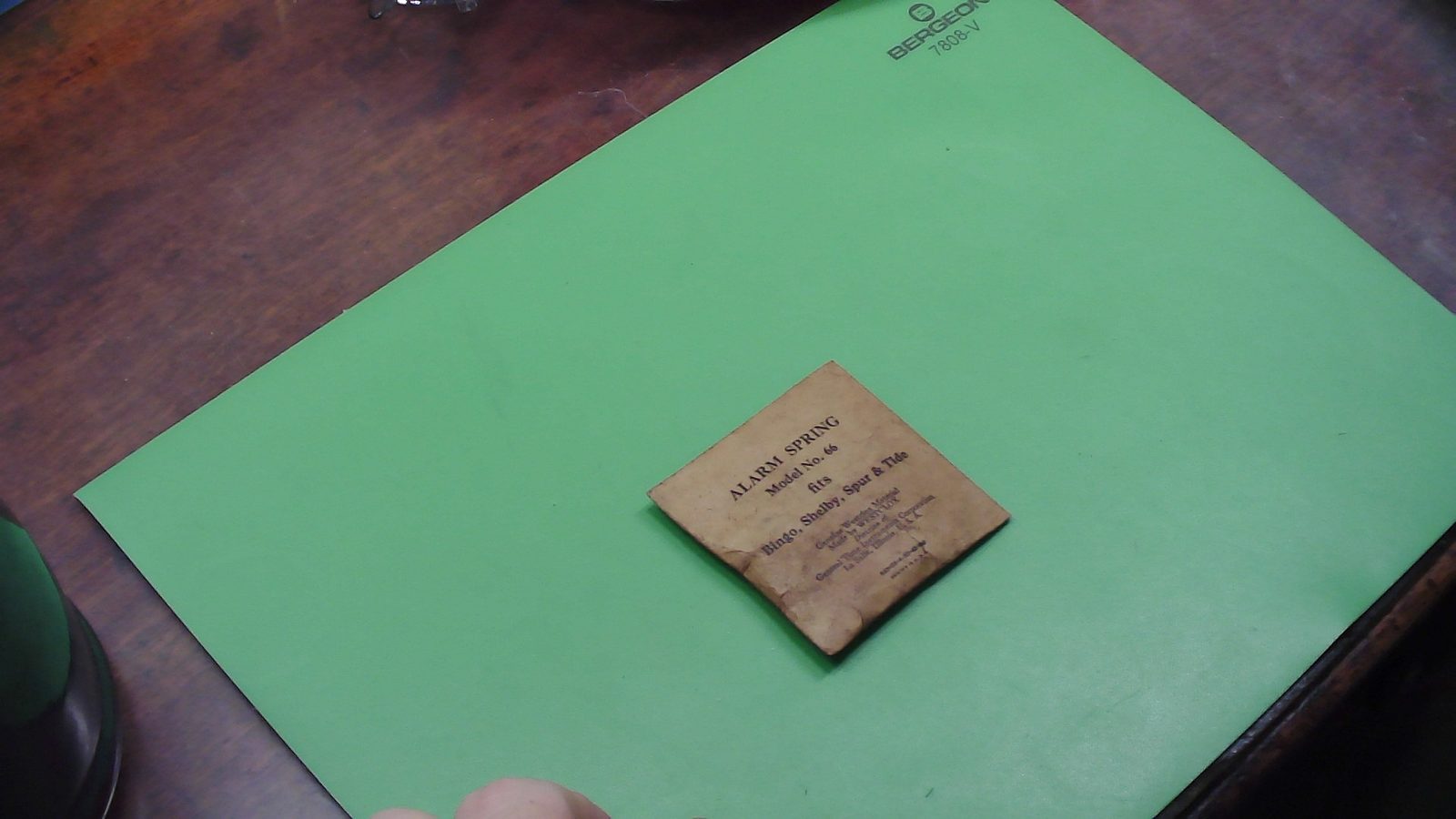
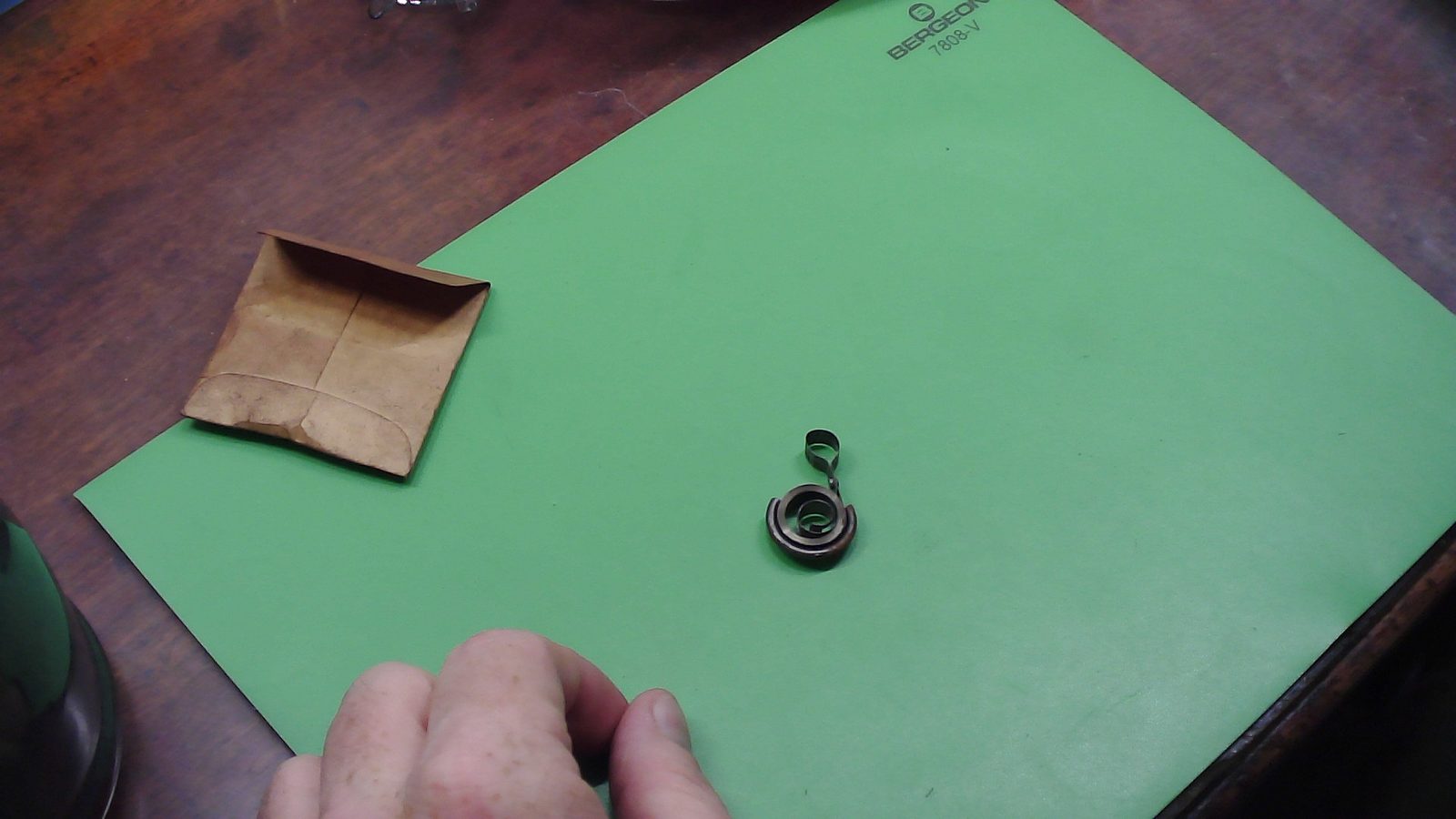
The alarm spring was broken and was replaced with an original spring.
The alarm winder was missing, I have currently used a non-original winder.
Found it — the Raven uses Westclox’s Model 66 movement (shared with the Bingo and Waralarm), and this chart gives exact alarm spring specs.
Model 66 alarm spring specs (from the ClockHistory.com mainspring chart, compiled by Bill Stoddard, a well-known Westclox researcher):
- Type one (older): 1/4" wide × .008" thick × 18½" long, loop end
- Type two (later): 1/4" wide × .0085" thick × 14" long, open-loop end — factory part number SPR-3254 (labeled "model 66AH"). This one’s notable because it’s designed to be installed without disassembling the movement.
Practical replacement path:
- Confirm which type you have — pull the old spring (or peek at the barrel) and measure width/thickness, or note whether it’s a closed loop or open loop. Type two (SPR-3254) is the more common "drop-in" repair spring and is what most suppliers stock under the Model 66 designation.
- Sourcing genuine/period-correct stock:
- Ronell Clock Co. periodically lists genuine Westclox mainsprings by SPR number (as I found for other Model 66-family clocks) — worth checking their Model 66/66AH listings directly.
- eBay is a real source here — the NAWCC forum community notes Westclox alarm/time mainsprings surface there regularly, though pricing varies wildly seller to seller.
- S. LaRose and Timesavers (the major clock material houses referenced throughout that chart) stock generic CML/CMH-series stock spring by dimension if you can’t find an exact Model 66 branded one — you’d order the closest stock size and trim/punch the end to match.
- NAWCC forums are worth a post too — several members there specifically mentioned having Westclox spring stock on hand and trading/selling to fellow members, which is often cheaper and more reliable than retail.
One thing worth double-checking before you buy: verify your Raven actually has the standard Model 66 movement and not a variant — Westclox reused case names across slightly different movement generations, so if the spring doesn’t seat right, that’s the first thing to suspect.
US2360589.pdf
https://clockhistory.com/0/westclox/document-9515-1.html
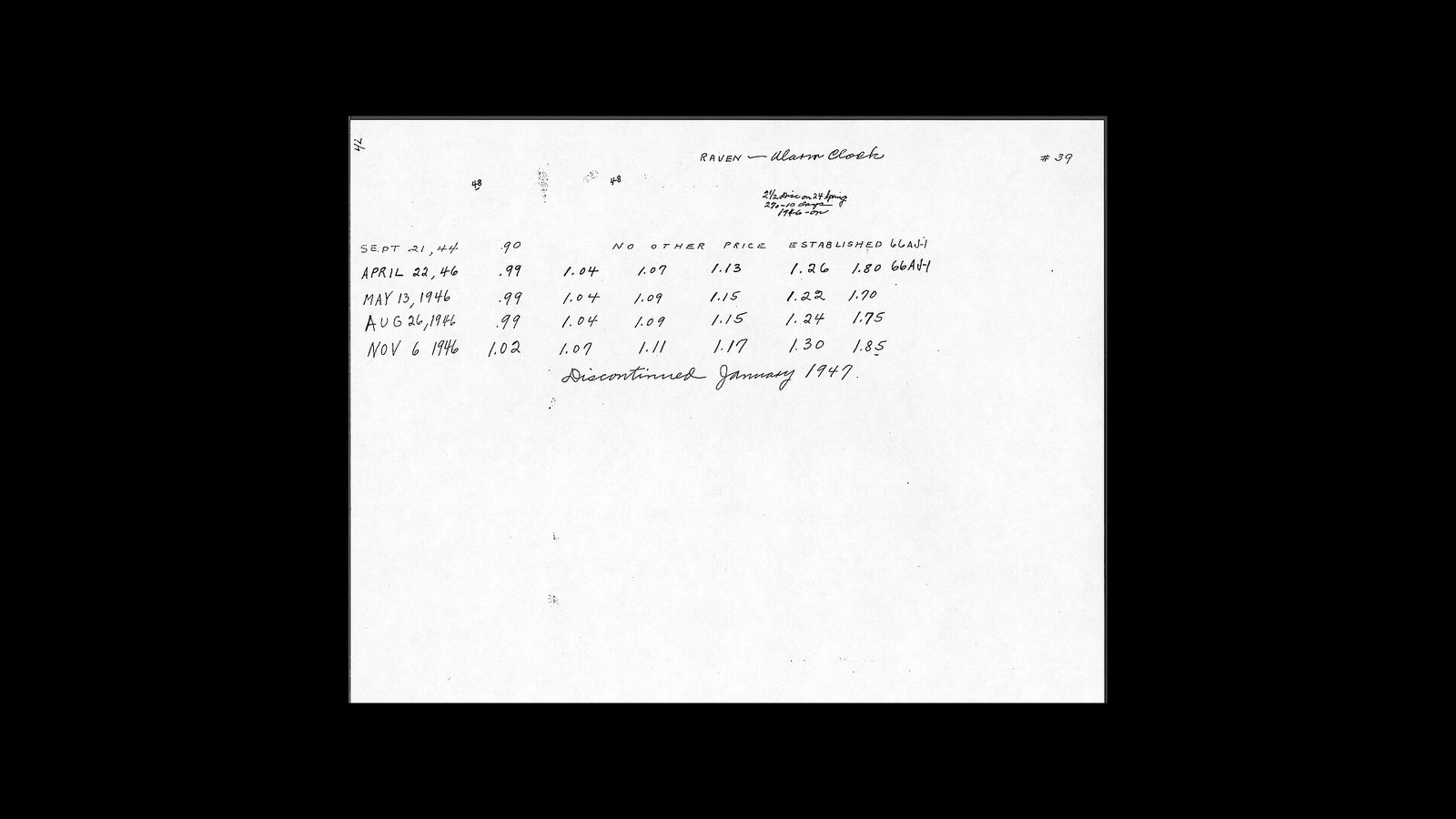
This book was in the possession of of Ellworth Danz (Chief Stylist of Westclox). It consists of a black loose-leaf binder filled with hand written pages. Each page covers one model or group of models. On side has a picture of the item cut out from a catalog and pasted on. The other side of the page gives the following information: 1) The dates of any price changes; 2) Retail prices and dealer prices; 3) The date the model was discontinued and/or last shipped. This photocopy has just windup models. The original (for which I am searching) has electric clocks, too.
Raven alarm clock. Data from 1944 to 1947.
Published with Bench Buddy.